
Commercial Solar-Ready Roofing in Kent, WA
Commercial Roofing Services
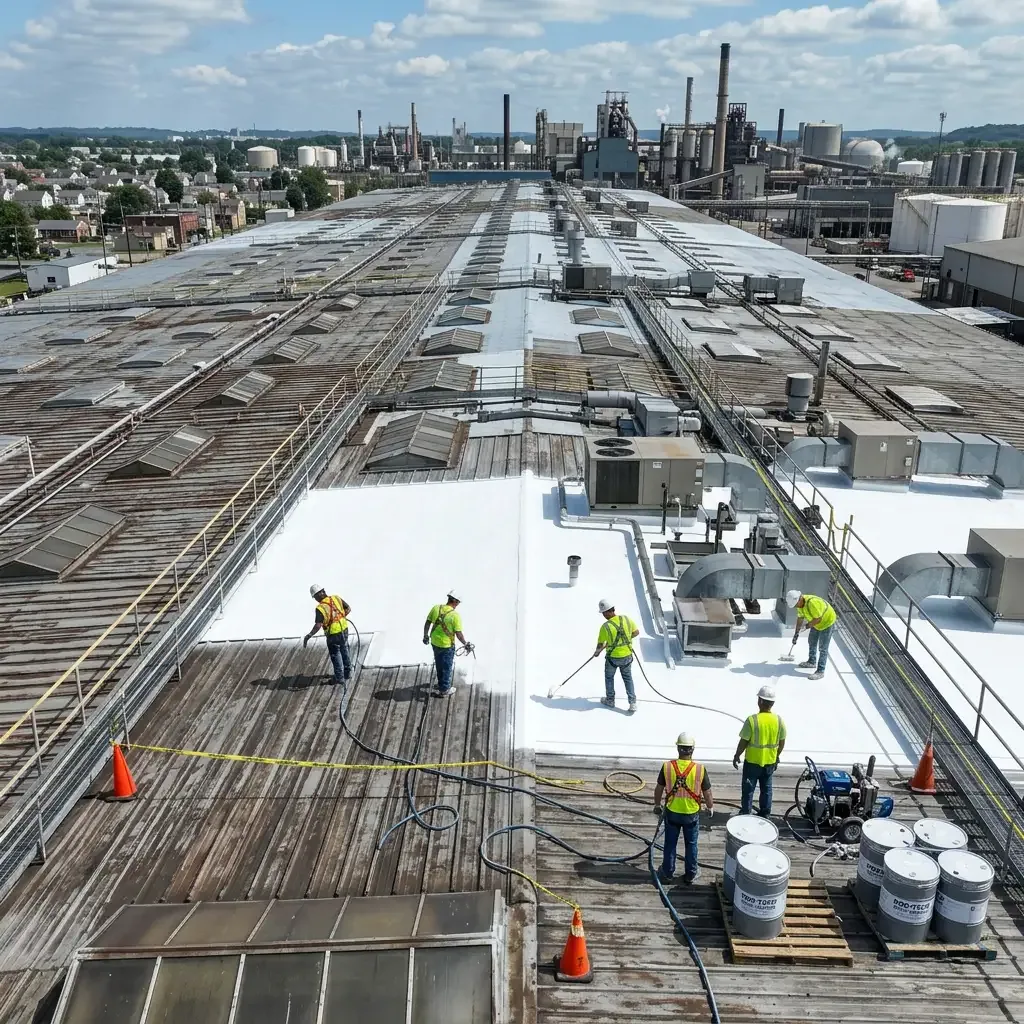
Solar plans should be compared with the roof's remaining service life before an array is placed on it. In Kent, we review the membrane, insulation, drainage, attachment, and proposed panel layout, then identify which roof decisions must happen first. A sound assembly may be suitable for solar preparation; a roof with wet insulation or recurring leaks may need renewal before equipment blocks access. The building owner, roofer, and solar contractor should agree on attachment locations, penetrations, walk paths, and responsibility for closing each roof detail.
Is the existing roof ready for an array?
We inspect seams, flashings, drains, curbs, edges, repairs, and moisture findings. The roof record identifies defects and areas needing tests. A visible membrane cannot show whether insulation is dry or a concealed deck issue remains. Infrared screening or test cuts can clarify uncertain areas before the array layout is set.
Compare roof service life with the array's planned term and maintenance needs. Installing panels before a needed replacement can make later roofing more complex and require equipment removal. A replacement assessment can establish the roof scope before the solar schedule is fixed.
Kent Valley's industrial base includes aerospace, advanced manufacturing, logistics, and distribution operations. That does not indicate whether a specific roof is suitable for panels, but it does mean operating and electrical constraints should be confirmed. We ask about rooftop equipment, service routes, production hours, and the areas solar technicians must reach. The roof plan should protect clear access to drains, curbs, and equipment rather than placing panels where later service will be difficult.
How should roof attachments and penetrations be handled?
The solar layout sets where rails, supports, wiring, and equipment meet the roof. We review how each support connects to the assembly. Structural and electrical design belong to the appropriate professionals; our scope defines roof preparation, flashing, and membrane restoration. Each attachment needs a defined water path around its base.
Some systems use ballast, while others require mechanical attachment or penetrations. The roof membrane and deck influence which method can work. We review the proposed layout, examine the existing assembly, and specify the roofing detail for supports that pass through or bear on the roof. The bid should name who installs the base, who seals the membrane transition, and who tests the completed detail. A roof support review can be part of coordination where rails and equipment interact with existing curbs or mechanical units.
Drainage paths must remain clear after panel placement. We check access to drains and scuppers, low roof areas, and walk paths used for maintenance. A panel layout that blocks a drain or concentrates debris can complicate inspection. The solar team can adjust placement before installation if the roofing review identifies a conflict. If slope or ponding needs correction, coordinate drainage work before supports and arrays limit access.
Which timing and access details matter?
Roof and solar work share staging, crane access, deliveries, and weather exposure. We sequence preparation, membrane work, supports, and panels. The plan states how each opening will be protected at shift end and who can revise the next area if operations or deliveries change.
Nearby Sea-Tac normals show wetter conditions from October through March than during the drier summer months. These figures are a regional reference, not a Kent property forecast. The actual weather window affects membrane work, flashing, and any application requiring a dry surface. Solar schedules should leave room for roof-side work to cure or be checked before panels limit access. We confirm the building's operational calendar and the current forecast before planning a sequence.
Downtown Kent is planned as a regional center with business, civic, cultural, housing, and transit connections. A property near Kent Station may need shared access or tenant coordination. A Kent Valley facility may have larger delivery and production limits. We confirm the actual property access point and staging area with the contact. For a Kent Valley roof project, list roof access, material staging, clear routes, and who controls each work zone.
What should the solar-ready roofing scope include?
A useful scope records the inspected assembly, repairs completed before solar, support and penetration details, flashing materials, access paths, and excluded areas. It defines which party installs each attachment and which party is responsible for roof waterproofing. If the solar layout changes after roofing work begins, the change should be documented before a new penetration is made. Those definitions reduce confusion when the roof and array are delivered under separate contracts.
Cost drivers include roof preparation, moisture removal, insulation, curb or support changes, membrane detailing, equipment protection, and the number of mobilizations. Timing changes with the size of the array, access, and coordination among trades. We separate roof work from solar hardware and electrical scope so the owner can see what the roof contractor is pricing. If a roof needs both renewal and energy improvements, a reflective roof option can be evaluated with the solar layout, but the system choice should follow the building's needs and the approved design.
For a portfolio manager, a condition report can document the roof before installation and preserve the attachment locations for future service. A capital plan can align roof renewal and solar work to avoid paying twice for access. The record should include the roof area included, test results, completed details, and items the solar installer may disturb later.
How do we preserve access after panels go in?
Closeout identifies roof zones under panels, open service corridors, drain access, and any areas that remain outside the roofing scope. Photographs show supports and penetrations before the array covers them. We note the repair materials and which contractor completed each step. The owner should keep the panel layout and roof record together so a future leak call can be traced without removing equipment unnecessarily.
Panel maintenance may require access to seams, drains, or rooftop units. The array plan should leave the roof service routes that the owner needs and should not require a technician to step on fragile details. If future equipment or conduit changes are expected, reserve a route and define the process for a new penetration. Those practical details are easier to settle before installation than after the roof is crowded.
The final roof review checks the visible flashing, support bases, and exposed membrane. It does not certify the solar system or replace its electrical inspection. We document the roofing conditions we can verify and any deferred item. The owner then has a defined record for the next maintenance visit, roof repair, or capital review.
Commercial Roofing Questions
Should we replace the roof before installing solar panels?
Compare the membrane's observed condition and remaining service life with the array's planned term and future access needs. Wet insulation, recurring leaks, or broad deterioration can make roof work first a better sequence. We inspect and document the assembly, then show the roof scope that should be resolved before panel placement.
Who is responsible for flashing solar attachments?
The project documents should name the party handling each roof transition. We define the roofing detail and coordinate with the solar contractor so the base, membrane tie-in, and closeout are assigned clearly. The electrical and structural work remains with the qualified parties responsible for those designs.
Can panels block roof drains or service access?
They can if the array layout is not coordinated with roof drainage and equipment routes. We review the layout against drains, low areas, curbs, and maintenance paths before installation. The final record should identify accessible routes and areas beneath the array so future roof work can be planned safely.
Can solar be installed on a roof that has had leaks?
A prior leak does not by itself determine suitability. We review the repair history, inspect the affected area, and test for moisture if needed. The roof should have a defined repair or replacement scope before supports are installed. We state what is confirmed and what remains uncertain so the owner can choose the next step.
Related Roofing Work
Coordinate the array with the roof record
Send the panel layout, equipment plan, roof drawings, leak history, and intended installation window. We will review roof condition, define attachment and flashing responsibilities, and identify work that should happen before the array is installed.