Commercial Roofing for Real Estate Investors and REITs in Kent, WA
Industries We Serve
An acquisition or refinance deadline changes what a roof review needs to answer. Investors may need to separate a near-term repair from a capital reserve, confirm whether reported moisture changes the replacement threshold, or compare roof condition across several assets. Commercial Roofing Contractors Kent can inspect the defined building areas and return findings that identify visible condition, testing limits, and the work options supported by the record.
Kent Valley is a regional center for aerospace, manufacturing, distribution, and supply-chain employers, and the Kent Valley Manufacturing and Industrial Center spans industrial areas in Kent and nearby cities. That designation provides market context for portfolio owners, but a district boundary cannot identify an individual property's assembly or remaining service life. Downtown Kent has a separate mix of commercial, government, cultural, housing, and transit uses. The property address, tenant profile, roof history, and access window define the due-diligence scope.
Share roof plans, previous reports, leak calls, invoices, known capital dates, and the decision deadline. We can distinguish a condition observed on site from a question that needs additional testing before underwriting or project pricing.
Separate roof condition from portfolio assumptions
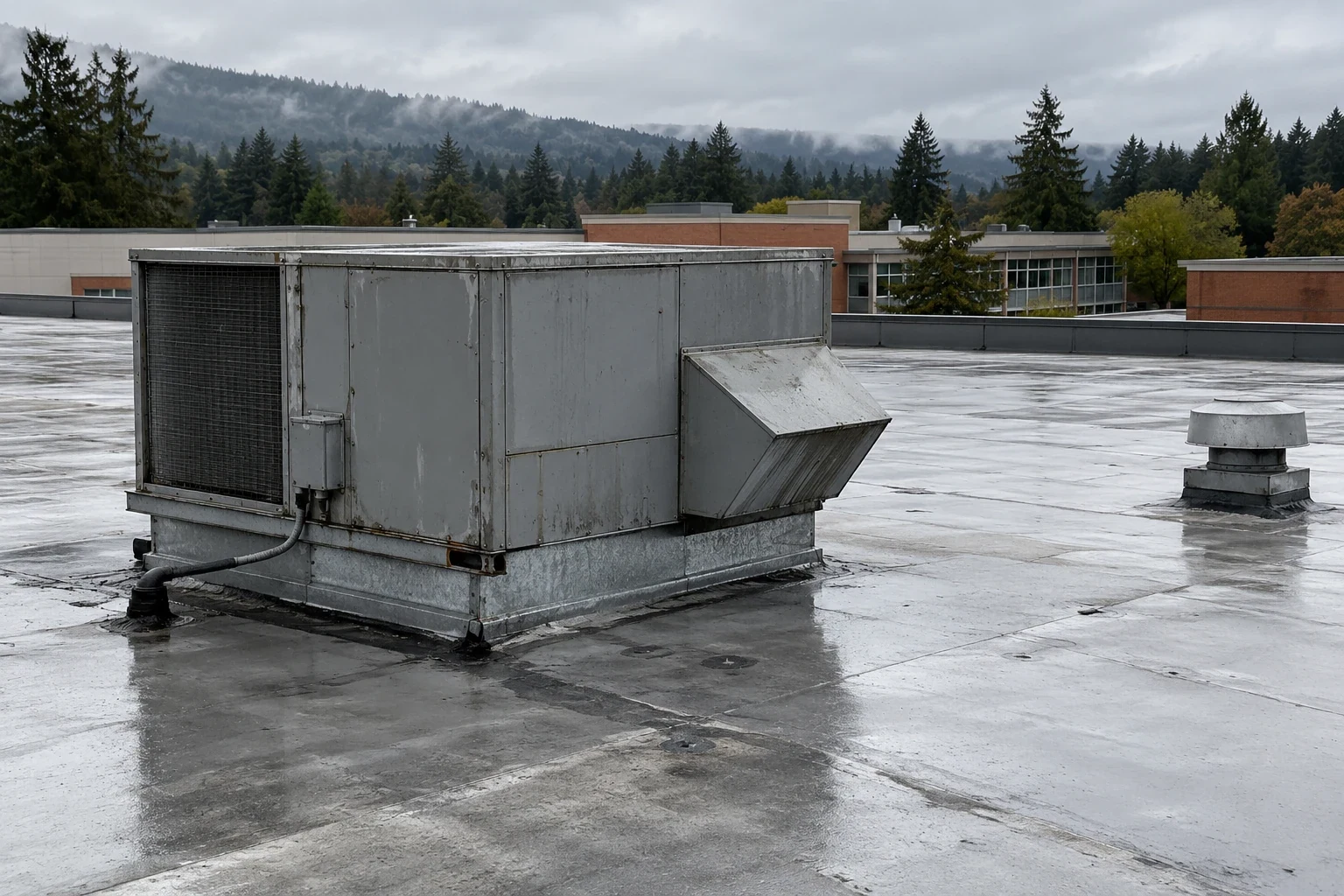
A property-level roof record should identify which sections were inspected, what was accessible, and which assumptions came from drawings or prior reports. A survey of one building does not establish the condition of another asset in the same fund. We map findings by structure and roof zone, note visible seams, transitions, penetrations, drains, and edge details, and compare them with the repair history provided.
Water reports need dates and locations. A stain can be displaced from the entry point, and a previous patch may not match the current leak path. We state what the inspection confirms and what remains uncertain. If concealed moisture could change a repair boundary, identify the specific area and decision that a test would inform. That gives an investment team a usable diligence item rather than a broad condition label.
For acquisitions with a compressed schedule, distinguish a limited visual review from a full condition assessment. List inaccessible roof areas, missing plans, and any requested follow-up. A due-diligence roof survey can be tied to the transaction scope, while a roof condition report can organize findings and open questions for the asset file.
Compare immediate spend with the replacement year
A repair can support the asset plan if the defect is localized and surrounding materials remain suitable. Repeated leaks, failures at several transitions, or broad deterioration may point to a larger capital need. The proposal should define the roof boundary, observed evidence, and any testing still required. A reserve estimate should not treat concealed damage as a measured quantity unless the assembly has been opened or otherwise evaluated.
For a repair, identify preparation, method, footprint, access, and limits. For replacement, state removal depth, insulation and deck assumptions, drainage, flashing, equipment interfaces, tenant protection, and phasing. Cost drivers include access, number of mobilizations, roof sections, testing, temporary cover, and the operating schedule. When an investor compares bids, consistent boundaries and assumptions matter more than a single total detached from the roof scope.
Nearby Sea-Tac climate normals show a wetter October-through-March pattern and drier July and August conditions. Those values are regional reference, not a building forecast. They can inform seasonal scheduling assumptions, but the actual work window follows current weather and the property access plan. Use the capital planning process to connect documented findings with the asset's hold period and capital year.
Compare Kent assets without flattening their differences
A logistics property in the Kent Valley may have different roof access and tenant operations from a commercial building near Downtown Kent or Kent Station. The Kent Valley Manufacturing and Industrial Center supports aerospace, advanced manufacturing, and distribution activity. Kent Station is a downtown mixed-use retail and services center served by Sound Transit. Those local contexts help frame access and leasing questions, but each property manager must confirm loading windows, tenant rules, and roof entry conditions.
For a portfolio comparison, use common fields while retaining building-specific findings: system if known, repair history, active leaks, drainage, tested areas, inaccessible sections, and immediate recommendations. If two assets have the same nominal roof type, their exposure, transitions, penetrations, and past work may still differ. We keep the report tied to the inspected property and show where a capital estimate depends on an unverified assumption.
Ownership can then rank follow-up by consequence, timing, and evidence quality. An emergency response is available at any hour when a roof condition threatens an operating asset, but temporary protection is recorded separately from permanent correction. A 24-hour emergency roof response can stabilize an urgent issue while a defined repair or replacement scope is prepared.
Keep the diligence file useful after closing
Assign a decision-maker to receive the findings and authorize additional testing. If removal exposes a different assembly or concealed damage, document the location and provide the options before expanding the work. At closeout, record the completed area, photographs, materials, and any maintenance item outside the project. Attach the report to the asset record so the next manager can compare new calls with the prior inspection.
For multi-site ownership, separate property records and maintain a clear date for each inspection. A single portfolio score can hide a building that was not accessed or a leak zone that still needs testing. If a capital model assumes replacement in a particular year, keep that assumption distinct from the condition observed today and update it when new evidence arrives.
Owners with several buildings can use roof planning for property managers to keep repair and access records by address; a logistics portfolio roof needs the same separation around dock and tenant schedules. A commercial roof inspection can establish visible conditions before pricing a replacement scope. For an industrial property in the Kent Valley Manufacturing and Industrial Center, confirm access and roof records with the site's contact. Send the asset list, transaction date, roof record, and decision deadline to define the review.
Commercial Roofing Questions
Can an inspection provide a remaining-life estimate for an acquisition?
We can document observed conditions, repair history, accessible roof areas, and factors that may affect remaining service life. A visual inspection cannot establish concealed layers or future performance with certainty. The report should state its limits and identify testing that could change the capital assumption.
What should an investor request before comparing roof bids?
Compare the same buildings and roof zones, preparation, removal depth, insulation and deck assumptions, access, temporary protection, and concealed-condition process. We identify what is included and which quantities remain uncertain. If proposals use different boundaries, clarify them before comparing totals.
How do you handle roof findings during a short diligence period?
For a short diligence period, we can focus the visit on transaction priorities and state which areas were accessed, what was observed, and what remains open. If a test is needed, identify its location and schedule impact. A quick visual review should not be presented as a complete assessment of concealed materials.
Do Kent Valley industrial statistics indicate a roof's condition?
No. The regional inventory and employment profile describe the market, not an individual asset's assembly or maintenance history. We use the property address, plans, reports, and field findings to determine the roof scope and any additional diligence needed.
Related Roofing Work
Tie roof findings to the transaction decision
Send the asset address, roof records, known repair history, tenant constraints, and transaction or capital deadline. We will define the inspected areas and separate verified findings from open diligence questions.