Commercial Cool Roof Installation in Kent, WA
Commercial Roofing Services
A reflective roof can change how much solar energy the roof surface absorbs, but the first decision in Kent is whether the existing assembly is ready for that system. We inspect insulation, membrane condition, drainage, attachment, and the building's cooling needs before proposing a cool roof. A reflective finish does not correct wet insulation, poor slope, or failed seams. The recommendation should connect the selected surface to the roof below it, the applicable code path, and the operating pattern of the facility.
What should a cool roof accomplish here?
Reflective surfaces return more sunlight than darker ones, which can affect roof temperature and heat flow. Results depend on insulation, construction, occupancy, equipment, and climate. We do not assign utility savings from color alone. We compare the building's cooling needs with the proposed assembly.
Kent Valley has a substantial industrial base, including aerospace, advanced manufacturing, logistics, and distribution businesses. Those operations can have different internal heat loads and HVAC schedules. A sector label does not tell us how a property uses energy. We confirm the building's HVAC schedule and process needs. A warehouse with intermittent conditioning can present a different decision from a cooled production area or office.
Nearby Sea-Tac normals show relatively dry July and August conditions and a wetter fall and winter. These measurements describe a nearby station rather than the Kent property. They provide seasonal context but do not establish the building's cooling load or the best roof choice. We check the owner's energy objectives and project data before recommending reflective materials. A capital plan can compare this work with insulation, repairs, or replacement when budgets cover several roof needs.
Which roof surfaces and details are suitable?
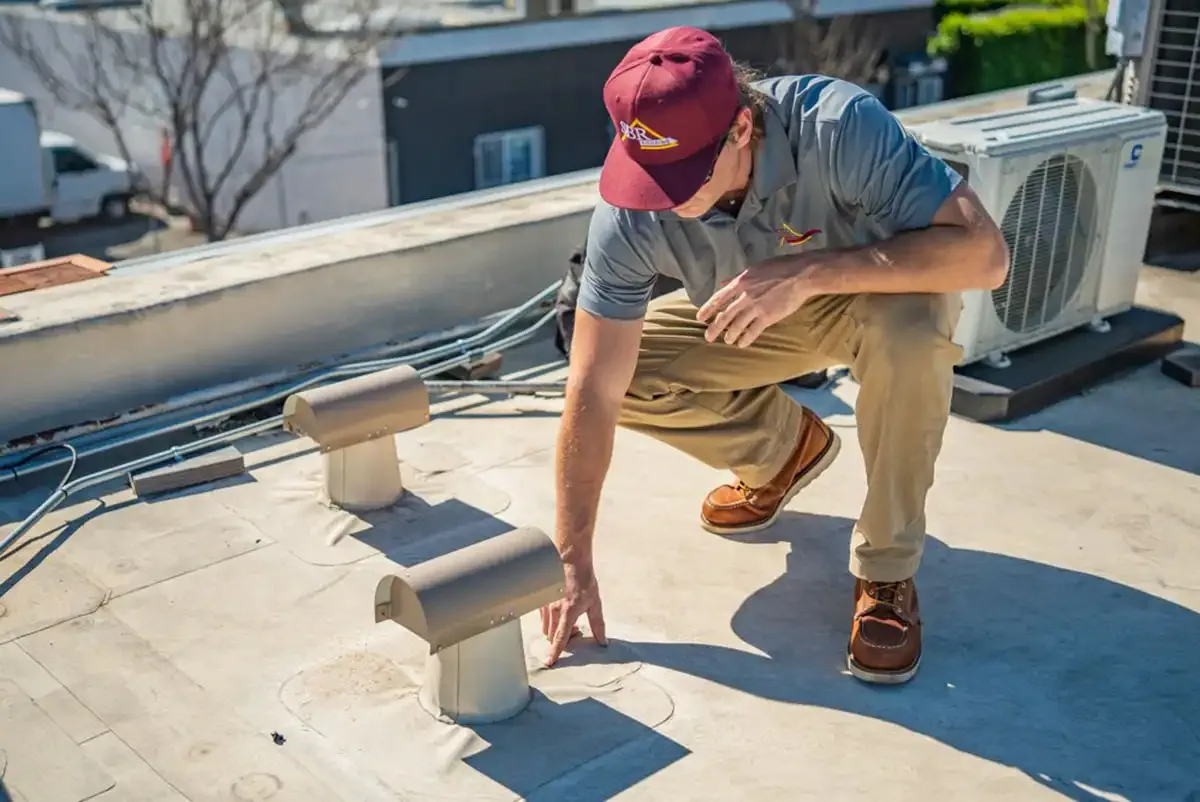
The membrane must be sound, dry, and compatible with the proposed finish. We inspect seams, flashings, penetrations, edges, and ponding areas. Applying a reflective finish over weak attachment or wet insulation preserves the defect. We map and test uncertain areas before setting the scope, and list prerequisite repairs separately.
System selection considers slope, drainage, traffic, equipment, and attachment. A white membrane or liquid-applied coating has its own preparation and detail requirements. We specify a compatible transition at curbs, drains, and edges. The TPO system or acrylic coating should fit the substrate and project.
Drainage still matters on a cool roof. Reflective color does not move water toward a drain or correct a settled section. We look for ponding, blocked outlets, and insulation changes that affect slope. If the roof needs tapered insulation or drain work, those items should be priced with the reflective assembly. A drainage correction can be coordinated with the membrane work so the new finish is not installed over an unresolved water path.
How do energy rules affect the proposal?
Washington's 2021 State Energy Code for commercial buildings took effect statewide on March 15, 2024. A project's energy requirements depend on the existing assembly, proposed work, and applicable provisions. We document insulation and confirm the permit path with the jurisdiction. A reflective surface does not replace required insulation or project review.
A change in roof color may also affect a property standard or project specification. The owner should identify any design requirements, maintenance criteria, or compatibility limits in the bid documents. We can state the measured roof areas, system components, preparation, and closeout information, then allow the project team to confirm what approvals apply. If added insulation raises the roof height, the proposal should show changes at parapets, curbs, skylights, and edges.
For an occupied Kent building, work sequencing can affect tenants and equipment even when the installation itself is straightforward. Downtown Kent's mix of business, government, cultural, residential, and transit uses may call for shared access coordination. A project near Kent Station can have pedestrian or parking constraints. An industrial property in the Kent Valley may instead prioritize loading lanes and process schedules. We confirm the building's restrictions before setting the weather window and staging plan.
What should the owner compare before authorizing work?
Compare the proposed reflective assembly with the current roof condition, insulation, drainage, and maintenance needs. The bid should identify removal or preparation, membrane or coating materials, repairs, edge and curb details, access requirements, and testing. If a reflective option is an alternate to full replacement, both scopes should address similar areas and details. The owner can then compare expected project life, disruption, and near-term cost drivers without treating color as the only difference.
Cost may change with substrate cleaning, seam repair, moisture removal, insulation, equipment protection, edge transitions, and application conditions. Timing depends on dry surface requirements, cure time, access, and the size of the daily work zone. Nearby Sea-Tac's seasonal precipitation pattern can inform planning, but the live forecast and roof surface decide when materials can be installed. We identify what can be completed in each phase and how an occupied space below will be protected.
The Kent Valley's regional access to SEA Airport and the Ports of Seattle and Tacoma supports industrial and freight activity. That context can matter for planning deliveries and material handling, but it does not describe a particular facility's traffic plan. The building contact supplies the actual routes, lift locations, and work-hour constraints. If solar is planned, coordinate a solar-ready roof review before selecting the reflective assembly.
How should performance be documented?
Record the existing assembly, repairs, selected system, preparation, application areas, and any limitations. Photographs show the roof before and after work, including drains, curbs, and edges. If the owner is measuring energy or comfort outcomes, establish a baseline and use comparable periods and operating conditions. We can describe the work and observed roof condition, while utility analysis should account for equipment, occupancy, and weather that also affect energy use.
A condition report can tie the installation to the earlier inspection and preserve the scope for maintenance staff. If the surface later needs repair or another coating, the product and preparation record help identify compatible next steps. The owner should know which areas were included and which were not, especially where rooftop equipment or tenant work may disturb the finish.
A cool roof is a system choice with roof and building implications. If the proposed work is mainly to extend the life of a sound membrane, compare it with coating restoration. If the assembly needs broad removal, a replacement assessment may be the better basis for a capital decision. We make the alternatives visible and tie the recommendation to the observed condition.
Commercial Roofing Questions
Will a reflective roof lower our energy bill by a set amount?
A roof surface alone cannot establish a specific savings figure. The result depends on insulation, HVAC operation, occupancy, climate, and the existing roof. We can define the proposed assembly and document its condition, while a utility analysis should compare similar operating periods and account for other changes in the building.
Can a reflective coating go over our existing membrane?
Only if the membrane is sound, dry, prepared, and compatible with the selected coating. We inspect seams and details, assess suspect moisture, and test adhesion where needed. If failures or wet insulation remain, those conditions need correction before a coating can be considered.
Does a cool roof replace the need for insulation?
No. Reflectance and insulation perform different roles. We review the assembly and applicable energy-code requirements, then identify the insulation scope separately from the roof surface. The permit path depends on the work and existing construction, so we confirm it before presenting the project as code-compliant.
Can a cool roof be coordinated with solar panels?
Yes, but the solar layout, attachment, access paths, and roof service life should be reviewed together. The owner should resolve the array plan before selecting a reflective system so penetrations and future maintenance are included. We can coordinate roof details with the solar team and record the limits of each scope.
Related Roofing Work
Connect reflectance to the roof and building
Share energy objectives, roof history, equipment schedule, and access limits. We will inspect the assembly, verify code questions, and compare reflective work with repairs, insulation, or replacement.