
Commercial Roof Replacement in Kent, WA
Commercial Roofing Services
A replacement decision in Kent should answer two questions: can the existing assembly carry the next operating cycle, and when can the building give us a safe work window? Repeated wet insulation, failed seams across broad areas, or repairs that keep returning to the same details can move the replacement threshold closer. A single leak does not. We inspect the membrane, penetrations, drainage path, edges, and repair record before setting the scope. For a Kent Valley facility serving manufacturing, aerospace, or distribution, we also need the production schedule and loading constraints before dividing the work into phases. A roof capital plan is useful only when its assumptions match what is on the roof now.
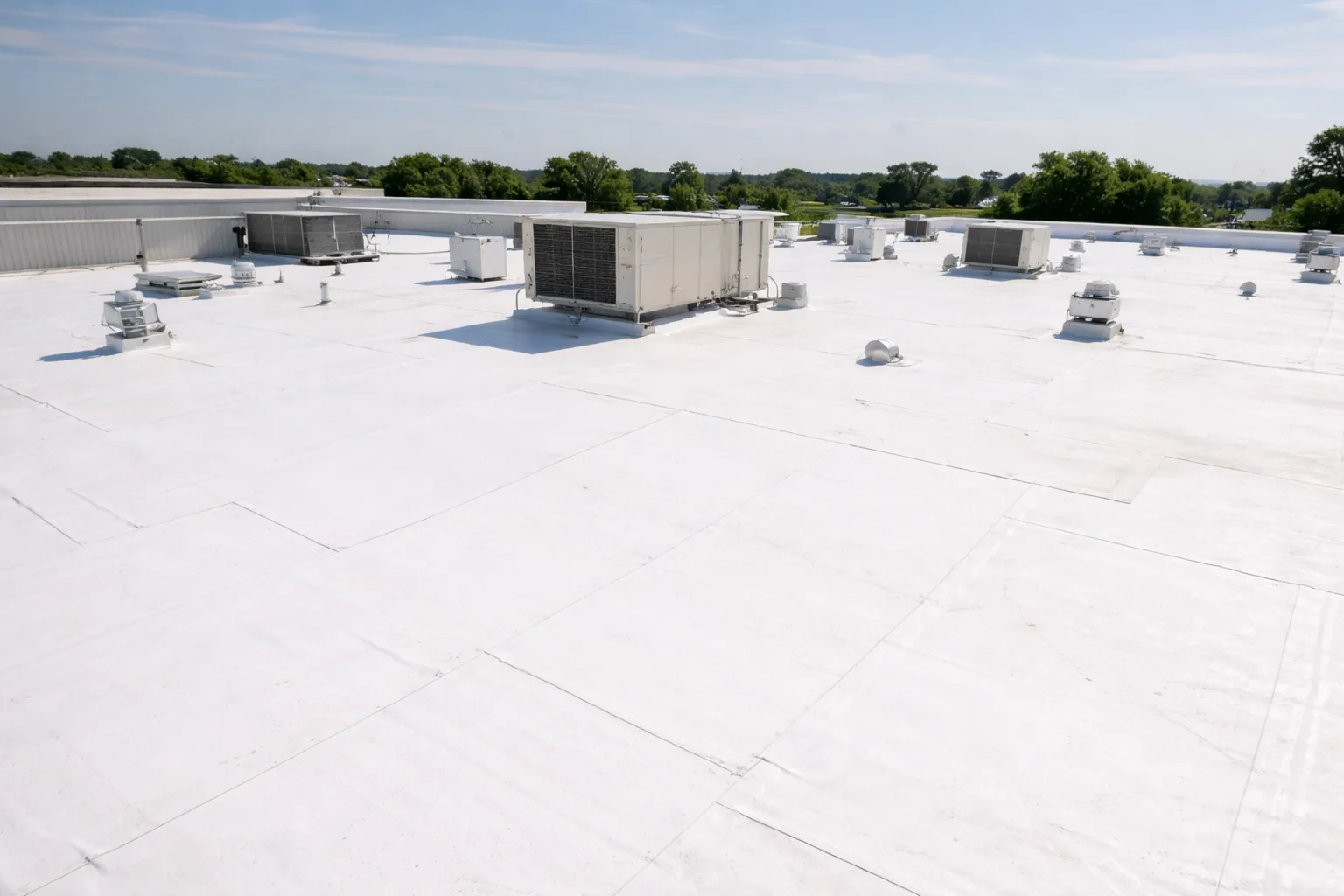
What evidence supports a full tear-off?
Wet or deteriorated material below the membrane can justify removal, but the finding must be mapped. We note where moisture is present, whether the deck is sound, and whether affected areas connect to recurring leaks. Isolated damage may remain a repair candidate. Broad saturation, failing attachment, or deck concerns can leave no dependable base for another layer. The report separates confirmed conditions from areas that need a test cut.
Kent Valley's industrial inventory exceeds 125 million square feet, so a replacement may involve an occupied facility with multiple operating zones. That regional figure is not a roof measurement. We use field measurements and drawings for the bid. At a distribution center, dock activity may set the sequence; at a manufacturing site, equipment access and shifts can control it. Those constraints belong in the scope before materials and labor are scheduled.
A leak at a curb or drain does not prove that the whole roof field has failed. We check seams, flashing, edges, drains, scuppers, and insulation separately. If the membrane remains sound outside a few details, targeted commercial roof repairs may extend the repair window. Repeated failures across unrelated areas support a replacement comparison. The mapped condition, not a preset age rule, drives the recommendation.
Which details change the replacement scope?
Drainage changes the scope and can limit service life. We check open drains, low areas that hold water, and settled insulation that alters slope. A new membrane over a poor drainage layout can preserve the ponding problem. We can price drain work, tapered insulation, or curb corrections separately so the owner can distinguish required repairs from improvements.
At the edge, loose coping, unsecured metal, and failed terminations can expose the membrane perimeter. We also measure curbs, pitch pockets, conduit supports, and equipment access rather than assuming old flashing can be reused. If mechanical equipment is due for replacement, coordination before roofing begins can avoid cutting into a new assembly later.
Nearby Sea-Tac normals show a wetter period from October through March than July and August. They are a regional reference, not Kent station data. We schedule exposed work against the forecast and the size of each opening, closing each area within the shift where possible. A condition report with photographs records why the selected scope fits the field findings.
How can production and access keep moving?
On an occupied building, phasing is a design constraint. We identify material staging, doors and loading lanes that must stay clear, roof access rules, and departments that need notice before noisy work. Kent Valley manufacturing and distribution make those details material to the sequence. A shift-change route or outbound loading court is not spare staging space.
A work map can show zones, daily tie-ins, material drops, crane locations, and protected areas. The owner can compare sequences before award. We document temporary protection at each end-of-shift boundary and identify who can adjust the next phase if operations change. That ties the bid to the facility's actual plan instead of a broad promise about tenant coordination.
Downtown Kent has a different access pattern. The city plans a regional center with business, government, cultural uses, housing, and transit. Near Kent Station or accesso ShoWare Center, pedestrian activity, shared parking, or event traffic can affect staging. We confirm the address and access rules. A Kent-area commercial roof replacement schedule should fit that block and operator.
What belongs in a decision-ready bid?
A useful proposal separates replacement from optional corrections. It states removal limits, deck inspection steps, insulation and cover-board assembly, membrane attachment, flashing, edge treatment, drain work, cleanup, and closeout records. It also explains how concealed conditions will be documented and priced. That lets an owner compare bids on the same scope rather than reconcile hidden assumptions.
System selection depends on deck, use, equipment, access, and applicable energy and building codes. Washington's current framework includes its 2021 commercial building and energy codes, effective March 15, 2024. We confirm the permit path for the project and jurisdiction before promising a detail. A TPO assembly, an EPDM assembly, or another system may fit, but material names do not settle attachment or flashing design.
Cost and duration change with tear-off depth, deck repair, insulation, edge and drain work, disposal, access equipment, and occupied-area protection. Weather exposure also affects sequencing. We price viable alternates and tie each to a measurable condition. For several facilities, a site-by-site condition format keeps priorities comparable without assuming every building needs identical work. Where insulation changes are part of the scope, cover-board and insulation decisions should be priced with the membrane assembly.
Commercial Roofing Questions
How do you decide whether repair is still a reasonable option?
The mapped condition sets that call. If failures cluster around a few curbs or seams and the field membrane remains sound, we price targeted repair and note the remaining uncertainty. Broad wet insulation, recurring failures across separate roof zones, or deck deterioration can make a replacement comparison more useful. We show the evidence behind the threshold so the owner can match the work to the capital year.
Can tear-off be split around a distribution schedule?
Yes, the phasing plan can be set against loading activity, shift windows, and the routes that must remain open. We identify daily work zones and tie-ins, then confirm how material delivery and roof access will affect the facility. At a Kent Valley site, the operator's own schedule is the controlling detail. We do not set a sequence from a building type alone.
What happens if the deck is damaged under the old roof?
A defined inspection and change process should be in the bid before tear-off begins. We photograph concealed conditions, identify the affected area, and document the repair needed before proceeding there. The owner can review the finding and the pricing against the agreed unit or allowance. That keeps deck repairs tied to observed conditions rather than an unrecorded assumption.
Does a new membrane fix ponding water?
Not by itself. We check drain performance, low areas, and the existing slope before recommending replacement details. If the roof holds water because insulation has settled or the drain layout needs correction, that work must be scoped with the membrane. A repair or replacement should not hide a drainage problem that will remain after the roof is closed.
Related Roofing Work
Set the replacement decision against the roof record
Send the available roof history, access window, and decision date. We will inspect the assembly, document confirmed conditions, and prepare a bid scope that separates required work from priced options.