
Commercial Roof Inspection in Kent, WA
Commercial Roofing Services
A roof inspection in Kent should produce a decision, not a stack of photographs without context. We examine the membrane, seams, flashings, edges, drains, penetrations, and accessible rooftop equipment, then record what can be confirmed from the surface. The report separates active defects from wear that can be monitored and from areas needing a closer test. That distinction lets an asset manager compare repair work with remaining service life and the capital year. At a Kent Valley facility, the inspection plan should also account for roof access, equipment routes, and the operating schedule below.
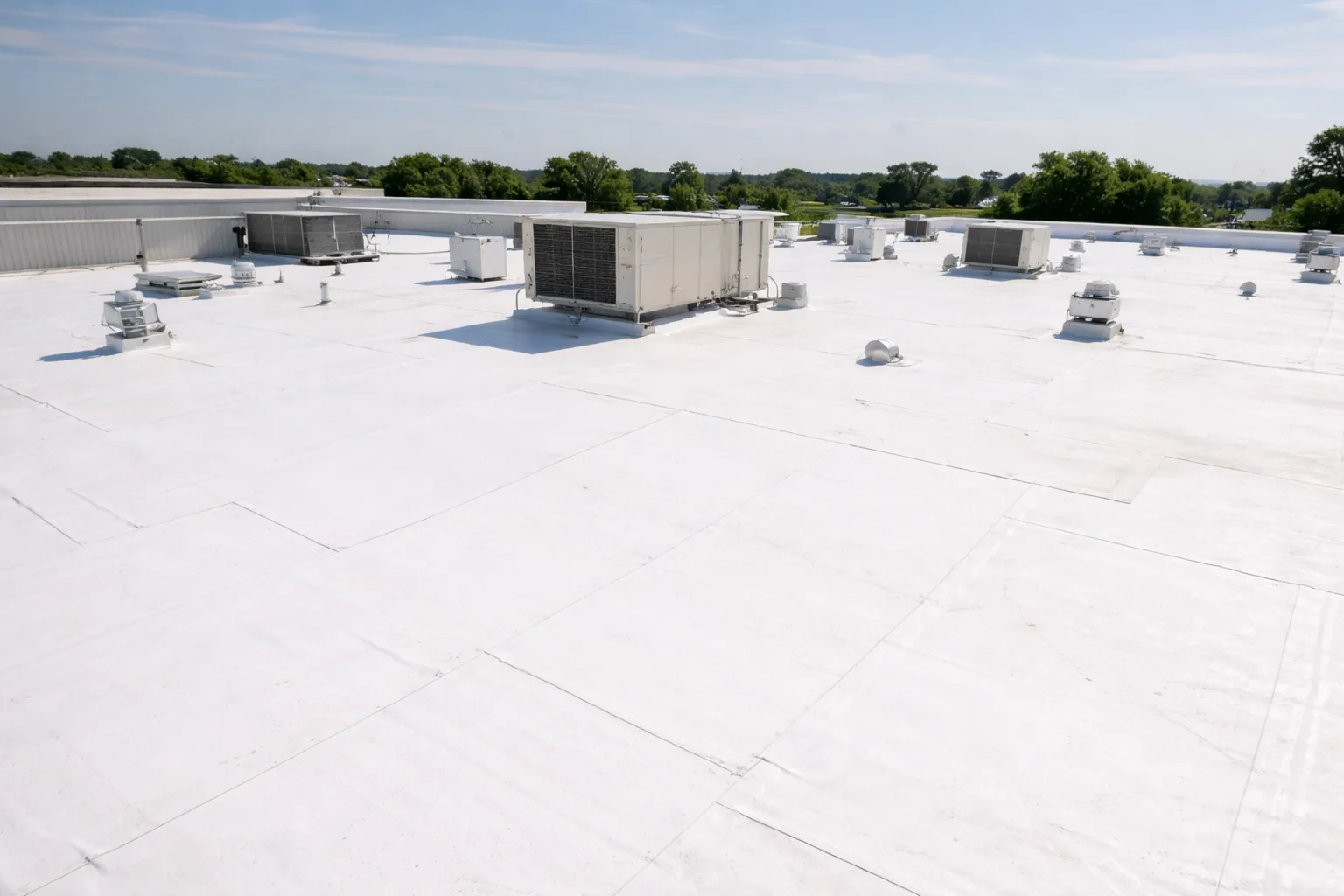
What does the hands-on review cover?
We walk the accessible roof area and note membrane condition, open or stressed seams, patch history, flashing transitions, edge metal, drainage, and penetration details. We look for punctures, abrasion, loose terminations, displaced materials, and signs that water is not moving toward the drains. The findings are tied to a roof zone or recognizable detail so a maintenance team can return to the same location. A statement such as “roof needs work” does not tell the owner what to authorize.
Interior observations can help connect an exterior condition to a leak. We ask about recent water entry, ceiling stains, equipment below roof penetrations, and prior repairs. If access allows, we inspect the area below the suspected detail and compare it with the roof surface. A leak may travel before it appears indoors, so the report identifies possible paths without treating the nearest point as a proven opening. For active water, a separate leak tracing visit may be needed to test the suspected source.
Inspection limits belong in the record. Snow, standing water, locked spaces, unsafe surfaces, or inaccessible equipment can restrict what is observed. We note where access stopped and what additional method could answer the unresolved question. If a roof zone needs close visual documentation but safe walking access is limited, a drone survey can supplement the field visit. It does not replace hands-on testing where a seam or flashing must be checked directly.
How should findings be ranked for action?
Each condition should connect to a consequence and a next step. An open flashing detail over a sensitive room may require prompt correction. A small surface scuff in a dry area may be logged for monitoring. A drain with debris needs clearing, while a low area that continues to hold water may require a slope review. We describe the observed evidence, the likely exposure, the recommended action, and any uncertainty. That gives the owner a reason for the priority rather than relying on a color-coded score alone.
Photos work best with a location note and a short description. We label the roof zone, show a broad view to orient the reader, then capture the detail that supports the recommendation. When the same condition appears on several parts of a roof, each occurrence should be counted or mapped rather than illustrated by a single representative photo. The owner can then compare the report with repair history and decide which items need a work order now.
Kent Valley's industrial property base is unusually large, with aerospace, advanced manufacturing, logistics, and distribution among its sectors. One facility's inspection should not be generalized to another, even if both operate in the same market. For multi-building portfolios, consistent observations allow the owner to compare urgency and cost drivers without assuming roofs share age or condition. A roof condition report can serve as the record for the specific facility, and multi-site tracking can carry those findings into a portfolio review.
How does Kent weather affect inspection timing?
Nearby Sea-Tac climate normals show roughly 39 inches of annual precipitation and a wetter October-through-March period. These numbers are a regional reference, not a Kent-specific station record. In the field, we schedule around the actual weather and surface condition. Rain can conceal seam openings or limit safe movement, while a dry interval can make some tests more practical. If an inspection follows a leak, its timing should preserve evidence rather than wait so long that the repair history becomes unclear.
Winter snowfall at Sea-Tac averages 6.3 inches in the same normal period, a modest lowland reference rather than a roof load calculation. We do not infer structural capacity from that station figure. If the roof shows unusual deflection, blocked drainage, or a building-specific snow concern, the report can identify the need for an engineer or other qualified review. The inspection should state what was observed and avoid turning regional climate context into a structural conclusion.
State Route 167 runs through the Downtown Kent study area and links the Kent Valley along the Green River Valley. That regional corridor can help coordinate site visits, but building access remains a property-specific question. For a downtown building near Kent Station, shared parking or pedestrian movement may affect setup. For a manufacturing property, shift schedules and production routes may dominate. We confirm the contact, access point, and roof safety rules before setting an inspection window.
What should the owner receive after the visit?
A useful report includes the inspection date, areas reached, inspection limits, roof-system observations, photographs, and a prioritized action list. Recommendations should separate repair, monitoring, further testing, and replacement review. We can note where moisture testing or test cuts would improve confidence, but those actions require their own scope. The report also preserves the roof record so a future visit can compare the same details and see whether deterioration has advanced.
Cost drivers should be visible before work is authorized. A repair price can change with access equipment, surface preparation, replacement of wet material, detail complexity, and the amount of occupied-area protection required. A larger capital scope may need phasing, a new drainage plan, or coordination with equipment replacement. If the finding appears to cross a replacement threshold, compare the repair alternative with commercial roof replacement while the evidence is current. A capital plan can then line up the work with the budget cycle.
Downtown Kent has a planned mix of business, government, cultural uses, housing, and transit. The Kent Station district includes retail, services, and health providers; that mix makes tenant and customer access a practical inspection consideration for some properties. Industrial sites in the valley need different coordination. We confirm how the roof visit affects that building, then deliver findings that the owner can use to set a date, approve a repair, or request a more detailed investigation.
Commercial Roofing Questions
What is included in a commercial roof inspection?
We review accessible membrane areas, seams, flashings, edges, drains, penetrations, and rooftop details, then document findings with locations and photographs. Interior leak history can help direct attention to suspect zones. The report also records access limits and distinguishes confirmed defects from issues that need testing.
Can an inspection tell us exactly how many years remain?
A visual inspection cannot assign a precise lifespan to every assembly. We describe condition, repair history, visible deterioration, and factors that may shorten or extend the repair window. If moisture or concealed attachment is uncertain, testing may be needed before estimating remaining service life. The report should connect each conclusion to what we actually observed.
Should we inspect after a leak is repaired?
A follow-up can confirm the repaired detail and check nearby conditions that may have contributed to water entry. We compare closeout photographs with the prior report and note whether the repair appears intact. If moisture remains below the membrane or the source was not confirmed, further testing may be needed before closing the issue.
How should we use the report to set a budget?
Separate urgent repairs from planned corrections, monitoring, and investigation. We identify access, materials, and concealed-condition items that may change cost, then compare capital work with the roof's observed condition. A consistent record across facilities helps set priorities, but each roof still gets its own scope and assumptions.
Related Roofing Work
Turn roof observations into a capital decision
Share the roof record, recent leak or repair notes, access restrictions, and target decision date. We will inspect accessible areas, document limits, and deliver findings tied to practical next steps.