Commercial Roof Repair in Kent, WA
Commercial Roofing Services
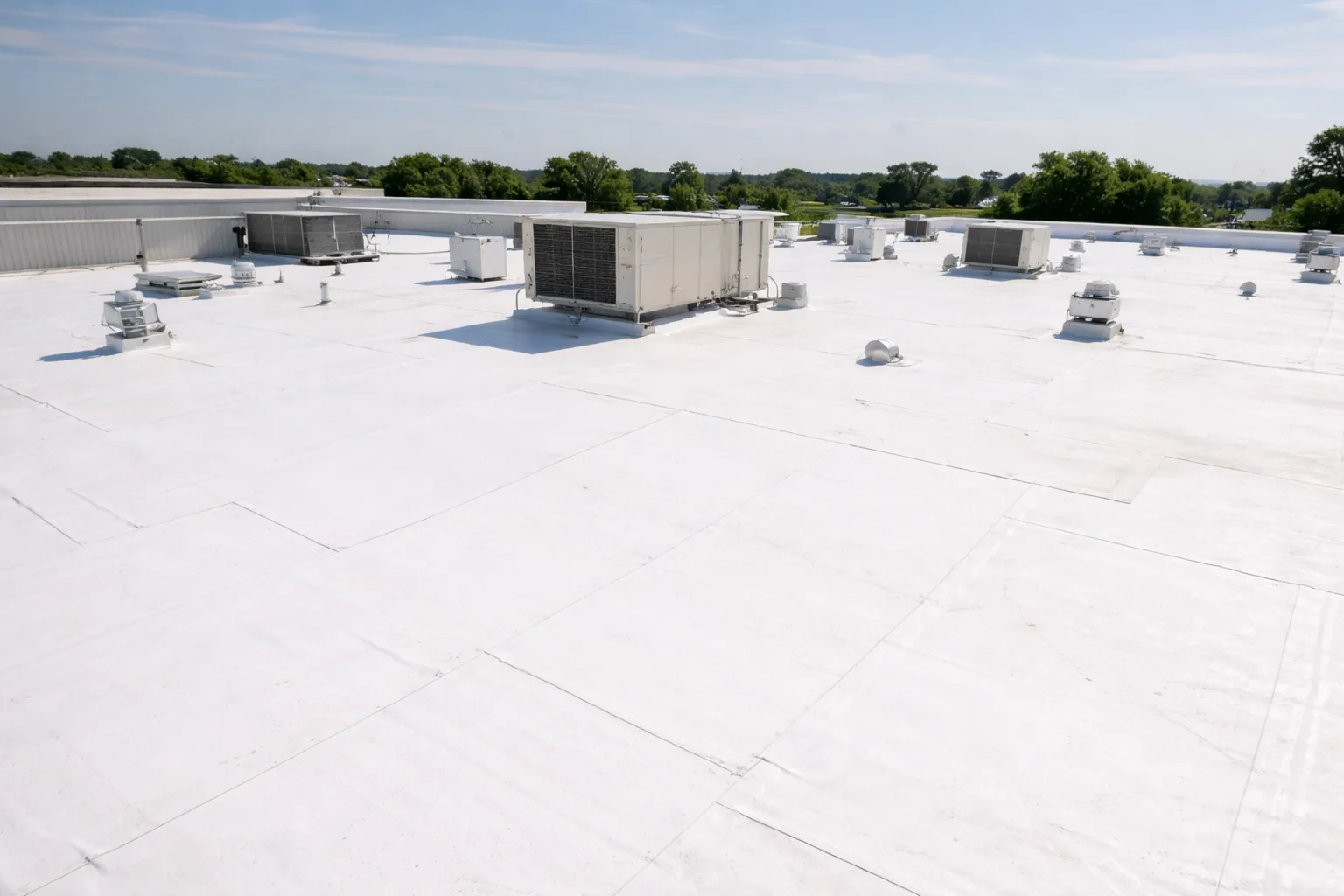
A repair call in Kent is most useful when it separates the failed detail from the condition of the larger roof field. A loose seam, split flashing, puncture, or backed-up drain may have a defined repair. Repeated failures across separate zones point to a broader decision. We inspect the membrane, edge, penetrations, and drainage path, then mark what is confirmed and what needs monitoring. The Kent Valley's manufacturing and distribution activity means a repair plan also has to account for loading, shift changes, and roof access. A leak investigation can be part of the work when water has reached the interior, but the visible stain is only one clue.
Which defect is actually driving the repair?
Water can travel along a deck flute, insulation joint, or membrane lap before it appears inside. We trace likely paths toward penetrations, seams, drains, wall transitions, and edges, then test and record the suspect detail. A repair should name its defect: open lap, failed termination, puncture, cracked sealant, loose metal, or obstructed drain. A patch over the indoor symptom can leave the entry point open.
The roof record helps distinguish a one-time failure from a recurring one. We compare work orders, prior repair locations, leak dates, and photographs with current conditions. If the same curb or seam has been patched repeatedly, we check for movement, drainage, or material compatibility issues. A condition report can show each defect and let the owner choose immediate repair, planned correction, or a replacement review.
Kent Valley includes aerospace, advanced manufacturing, logistics, and distribution employers. At an operating property, we confirm equipment routes, active work areas, dock activity, and notice windows before sending a crew up. A repair near a loading area needs a different plan from an isolated detail above a closed office.
How should a repair scope be written?
The scope should describe the affected location, the preparation required, the repair material, and how the completed detail will be checked. For a membrane lap, that may include cleaning, drying, testing adhesion, and installing a compatible patch or new welded seam. For flashing, it may require removing failed material and rebuilding the transition rather than applying sealant over a contaminated surface. We identify the boundary of the repair and photograph it before and after the work.
Drainage repairs require a separate check. We remove debris only where access and safe handling allow, verify the inlet and outlet condition, and note whether water is still collecting after the drain is clear. If the ponding reflects a settled area or incorrect slope, clearing the drain does not correct the geometry. The bid can separate a maintenance task from a roof alteration, so the owner can decide whether to schedule the larger work now. On Kent's wetter months, a clear drainage path matters because repeated rain can expose a small obstruction quickly.
Edge details need their own limits too. Loose coping or termination metal can let water and wind affect the membrane edge. We check fastening, joints, corners, and transitions into walls. Where the issue extends beyond a small isolated area, edge metal and coping work can be scoped with the membrane repair. We avoid combining unrelated conditions into one vague line item because the owner needs to know what was fixed and what remains open.
What should happen before the next wet period?
Nearby Sea-Tac normals show more precipitation from October through March than in July and August. We review the live forecast, roof access, repair cure conditions, and the time needed to secure the area before committing to a date. If a permanent repair cannot be completed in the available weather window, we can identify temporary protection separately from the final correction.
State Route 167 crosses Downtown Kent and connects the Kent Valley through the Green River Valley. That corridor helps explain how industrial facilities and service crews move through the area, but it does not determine an individual site's access. We ask where the crew can stage, whether a lift or escort is needed, and which production windows must remain uninterrupted. For properties near the Kent Valley manufacturing center, freight traffic and shift operations can affect when the repair team reaches the roof and where material can be placed.
Urgency should follow the consequence of waiting. Water entering near electrical equipment, stored goods, or active work areas requires prompt containment and a clear repair sequence. A dry, stable defect away from operations may fit a scheduled maintenance visit. We record which condition drives the timing and what observation would move the work forward. When a repair cannot be completed immediately, our emergency response can protect the opening while a permanent scope is prepared.
When is repair no longer the economical choice?
Repair remains sensible when the area is limited, the surrounding assembly is sound, and the detail can be corrected without repeat visits. The case weakens when leaks recur across zones, wet insulation expands, attachment fails broadly, or drains and edges need substantial rebuilding. We compare the history with current mapping and state what remains uncertain. The decision follows what can still be repaired and how long that solution can serve the building.
Consistent condition labels help an owner compare maintenance with capital work across properties. We can record urgent, planned, and monitor items, then update the capital plan. If broad renewal is supported, a replacement comparison should show removal limits, drainage corrections, and phasing rather than only a new membrane price.
Downtown Kent's civic, business, cultural, and transit uses create different access conditions than the industrial valley. A repair near Kent Station may involve shared parking or pedestrian activity, while a Valley facility may prioritize docks or shift schedules. We confirm the access window and protection plan with the building contact before the visit.
Commercial Roofing Questions
Can you repair one area without replacing the whole roof?
Yes, when the defect is limited and the surrounding assembly can still perform. We inspect nearby seams, insulation, edges, and penetrations before defining the repair boundary. If the evidence points to a localized failure, the estimate can cover that area and note any separate items to monitor. Broader moisture or repeat failures may justify comparing repair with replacement.
Why does a roof keep leaking after it was patched?
A patch can miss the water entry point, fail to bond to the surface, or address a symptom while movement or drainage continues. We compare the new leak location with earlier work and inspect the surrounding details. The next scope should state what changed, how the repair will be tested, and whether a larger condition remains unresolved.
Can a blocked drain be handled as a repair visit?
A clear obstruction may be a maintenance repair if the drain and connected piping are sound. We also look for a damaged drain bowl, loose clamping ring, standing water, or settled insulation. If water remains after debris is removed, the proposal should separate drain clearing from slope correction or membrane work.
What information helps set a repair priority?
Send the affected room or equipment area, when water appeared, prior repair locations, and any roof photos or access restrictions. We use those details to choose the first inspection points, then confirm the condition on the roof. The repair record should show what was fixed, what remains uncertain, and what observation would trigger the next decision.
Related Roofing Work
Put each repair against a known roof condition
Share the leak dates, prior work notes, roof access window, and operating constraints. We will inspect the suspected details, document the repair boundary, and identify any condition that deserves a separate capital decision.