Manufacturing Plant Roofing in Kent, WA
Property Types We Roof
A manufacturing-plant roof decision must account for the process below it and the equipment that sits above it. A leak over a control cabinet, production line, or material store can create a different shutdown risk than one over an unused service bay. We inspect the membrane, drains, penetrations, curbs, and insulation, then map the findings against areas the plant contact identifies. Kent's advanced-manufacturing and aerospace base makes operating schedules a real planning input. The scope should state which repairs can proceed during production and which need a coordinated outage.
Which process areas need roof attention first?
Start with the interior use and what a water entry could interrupt. The facility contact can identify sensitive equipment, product handling zones, electrical rooms, and areas with restricted access. We then inspect the roof above those locations and trace nearby water paths. Roof plans and maintenance logs help organize the visit, but they do not replace field evidence. A plant roof inspection should separate active leaks, past repairs, and areas that need a test cut.
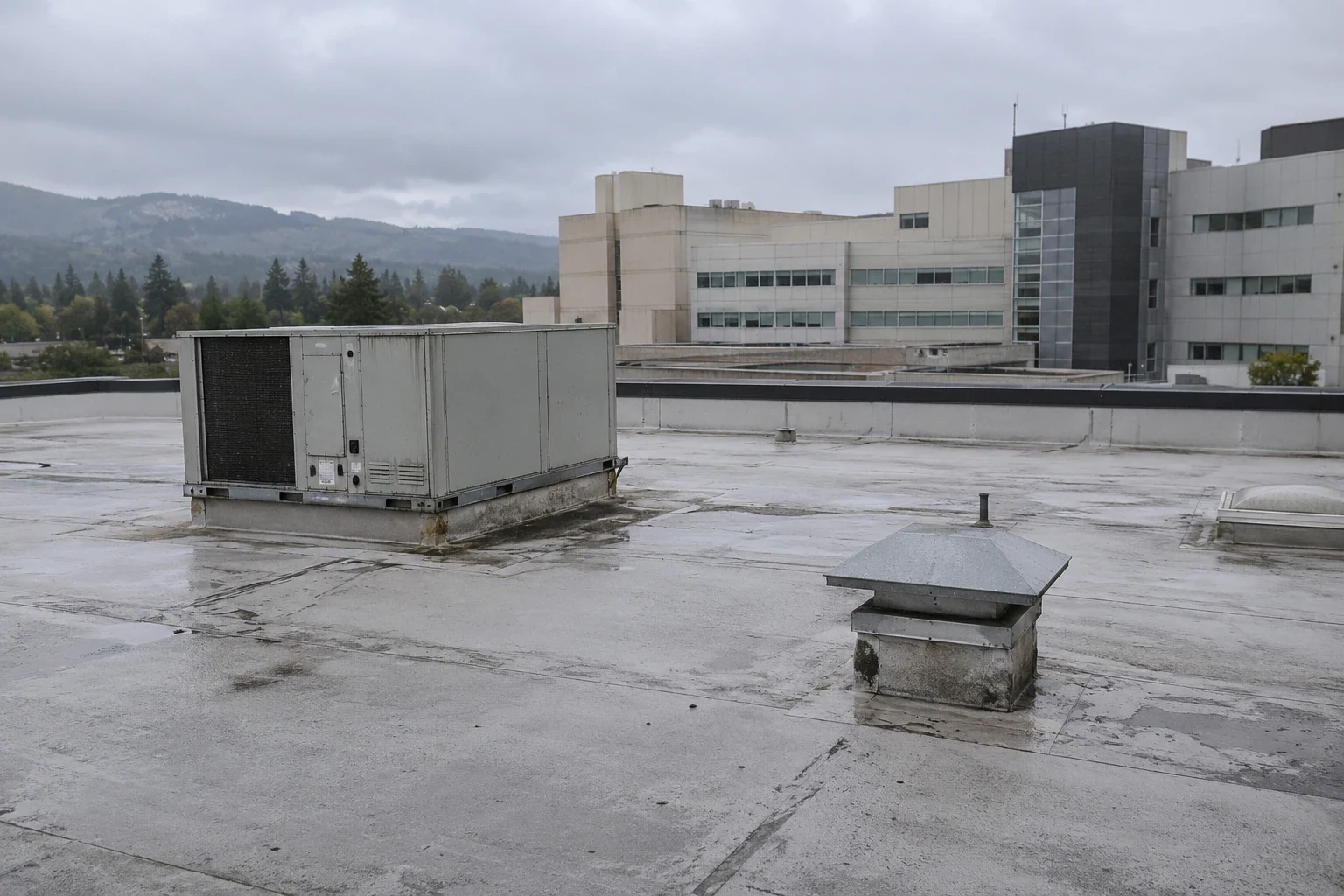
Manufacturing roofs often carry exhaust, make-up air, piping, cable supports, and service walkways. Each penetration or support can interrupt the membrane and concentrate foot traffic. We inspect flashing, fasteners, support pads, and wear around equipment routes. If a unit is being replaced, we coordinate curb dimensions and responsibility for closing the roof opening. A curb and support scope can define that handoff before mechanical and roofing work overlap.
Kent's Kent Valley Manufacturing and Industrial Center is part of a wider regional cluster for aerospace, advanced manufacturing, food processing, and distribution. The mix helps explain why one roof project may include process exhaust and a production schedule, while another does not. We ask the site's contact which conditions apply. Industry labels do not tell us the roof assembly, exhaust chemistry, hours, or whether an operation can pause.
Where can moisture enter the plant assembly?
Water may enter at a field seam, curb corner, roof drain, edge, skylight, or pipe flashing. It can travel along a deck or beneath insulation before showing inside. We compare the reported area with roof conditions above and adjacent to it, then record the likely path and test needs. If wet insulation appears beneath a small opening, the affected boundary must be established before the patch area is set. A local repair is only useful if the surrounding assembly can support it.
Drains and scuppers can affect a larger section of the plant when flow is obstructed. We look for debris, loose clamping rings, ponding, and changes in slope. A drainage correction may be separate from the membrane repair if the outlet or roof geometry is the issue. Near the Port of Tacoma Tideflats, industrial and freight buildings rely on their own site drainage and access plans; regional port operations do not establish drainage conditions at a Kent plant.
Where test results vary across construction phases, the bid should preserve those distinctions. One addition may have a different membrane, insulation, or deck than the original plant. We mark tested zones, compare them with accessible roof records, and list any unknown assembly. A replacement scope should identify removal depth and what changes when hidden deck or insulation conditions are exposed.
How can roof work fit the production schedule?
Work timing begins with the process calendar, shift handoffs, and any maintenance shutdown already planned. We confirm where a lift can be placed, which routes remain open, and what protection is needed over equipment or finished goods. A large roof can be divided by structural or operating zones, but each phase needs a defined start, closeout, and access route. If a shutdown is required to isolate rooftop equipment, the decision owner and notice period belong in the sequence.
Weather can affect how much assembly is opened in a shift. Nearby Sea-Tac normals are wetter in the cooler part of the year than in midsummer, though they are a regional reference rather than a plant forecast. We use current conditions to set exposure limits and agree on temporary protection before removal begins. The work plan should say how the roof will be secured if rain, process needs, or an access issue stops the phase early.
Kent Valley connects industrial businesses with regional freight routes and the Ports of Seattle and Tacoma. The Port of Tacoma Tideflats is a separate marine and rail freight district, while each Kent plant controls its own truck court and loading hours. We confirm the actual staging area and materials path with the facility contact. For an occupied manufacturing site, the phased reroof approach should protect people and production below without implying that the line can stop on demand.
What should the plant budget compare?
Cost depends on roof area, assembly, tear-off depth, insulation, deck condition, number of penetrations, equipment density, access, and shutdown requirements. We list the details included at curbs, drains, roof edges, and equipment supports. A proposal should also state whether testing, temporary protection, material removal, and disposal are included. Concealed deck or moisture findings need defined allowances and an approval step so the plant can evaluate a changed scope before work continues.
Repair may fit when defects are limited and the assembly around them remains stable. Recover or replacement may need review when moisture, attachment failures, or recurring leaks extend across several zones. We compare those choices against the remaining service life and capital year, using confirmed findings rather than roof age alone. If the facility includes both production and warehouse areas, a warehouse roof scope may share access constraints but not the same process risks. A data-center roof review carries a different consequence map for critical equipment.
Closeout should include roof-zone photos, the work completed, insulation or deck changes, and remaining maintenance items. A capital plan can connect that record to planned equipment upgrades or future shutdowns. Send the roof record, process constraints, access window, and decision date so the recommendation separates what can be completed now from work that needs another operating window.
Commercial Roofing Questions
Can roof work happen while the production line is running?
The answer depends on the work zone, equipment, safety controls, and whether the roof opening affects the process below. We coordinate phases with the facility contact and identify any task that needs an outage. The bid should show the operating assumptions and protection required for each phase.
How do you inspect a roof over sensitive equipment?
We confirm the interior zones and access rules before starting, then inspect the roof above the reported area and adjacent details. The contact identifies equipment that needs protection or shutdown. We record visible defects separately from areas requiring a test cut or further review.
What if a roof leak is near an exhaust or process vent?
We inspect the flashing and surrounding membrane, confirm what the exhaust releases, and check whether heat or chemical exposure affects material selection. The plant's process owner must provide exposure details. We do not assume a generic manufacturing label answers that question.
How should roof and equipment replacement be coordinated?
The team needs curb dimensions, lift timing, opening protection, and a clear handoff for closing the roof. We identify which trade owns each step and what must be inspected before the new unit is set. That avoids leaving a penetration or flashing transition outside both scopes.
Related Roofing Work
Set the plant roof scope against its operating calendar
Provide roof records, leak locations, process restrictions, access windows, and the next shutdown or capital deadline. We will map observed roof conditions and separate work that can proceed now from phases that need production coordination.