EPDM Roofing in Kent, WA
Roof Systems
An EPDM repair in Kent can be a sound capital choice when the field sheet and underlying assembly remain serviceable. The call changes if seam laps are separating across multiple zones, water has reached insulation, or earlier patches no longer hold. We inspect the membrane, seam type, flashing, edges, drains, and roof record before defining the repair limit. On a Kent Valley facility, the schedule must also account for loading, production, and roof access. A quick patch may stop a current entry point, but the recommendation should say what condition remains after the repair window closes.
Which EPDM defects are still local?
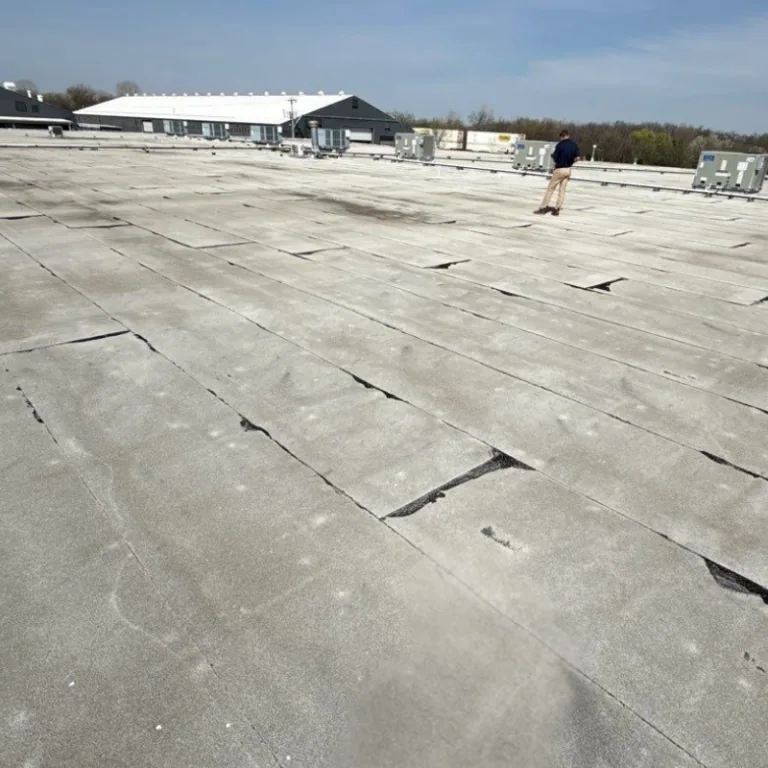
EPDM is a synthetic rubber membrane installed in sheets with seams and flashing details that depend on the system and installation method. We inspect laps for separation, fishmouths, contamination, or loss of bond, then check the nearby sheet for cuts and shrinkage. A defect at one curb is not proof that the field has failed. The roof record should show the observed opening, the preparation needed, and the condition on both sides of the repair.
Repairs require compatible materials and careful surface preparation. Dirt, moisture, oxidation, or residue can compromise adhesion. We confirm the existing membrane and seam configuration before selecting a patch or tape detail. If a previous repair has lifted, the scope should explain whether the cause is poor preparation, movement, trapped water, or an unsuitable material. A puncture repair is only appropriate when the damage and surrounding sheet support that limit.
Water can travel beneath a sheet before it appears indoors. We follow the likely water path around seams, drains, curbs, and penetrations and inspect the area below when access allows. Wet insulation may extend beyond the visible defect. A test cut can establish layer condition at one location, but it does not map the entire roof. When multiple areas show the same failure, a moisture survey paired with selective testing can help set removal boundaries.
When does repair stop being the lower-risk choice?
The replacement threshold is a condition decision, not simply an age. We compare repair history, seam performance, attachment, insulation moisture, drainage, and the deck. A stable membrane with isolated damage may remain a repair candidate. Repeated leaks, widespread wet areas, or extensive shrinkage can make more patches difficult to defend. The report should show what was inspected, where test cuts were made, and what evidence would change the recommendation.
Recovering EPDM can work when the existing assembly is dry and stable, attachment is acceptable, and the selected system can be installed over it. Additional layers affect drains, edges, curbs, and transitions. If tear-off exposes damaged insulation or deck, those quantities need a defined handling process. We compare a recover scope with a replacement scope on matching assumptions so the owner can see what each option includes.
System choice should fit the documented exposure and project requirements. A thermoplastic seam weld is different from EPDM's seam approach, so a TPO alternative should be evaluated on the same substrate, attachment, and detailing criteria. Another material does not correct a drainage problem by itself. The assembly decision follows verified condition and the building's next operating cycle.
How does Kent's weather affect the work window?
EPDM adhesives and tapes need suitable surface conditions, and an open roof cannot be left without a defined end-of-shift closeout. Nearby Sea-Tac normals show that rainfall is concentrated more heavily in the cool months than in July and August. That is regional context, not a property forecast. We plan exposed work around the current forecast, surface moisture, and the area that can be closed safely before crews leave.
On large industrial properties, a roof phase can affect receiving, production, or maintenance routes. Kent Valley is a major aerospace, manufacturing, logistics, and distribution area, and its industrial real-estate inventory exceeds 125 million square feet. Those facts describe the district, not the size or schedule of a particular facility. We confirm crane access, material drop points, rooftop equipment restrictions, and shift windows with the building contact before establishing a sequence.
Downtown Kent has a planned mix of business, public, cultural, transit, and residential uses. Near Kent Station, a project may need to protect shared circulation and customer access; a Valley facility may instead need a loading lane preserved. We set those limits with the contact and include them in the bid. When water gathers at low points, a drainage correction may belong in the same project, since a seam repair will not remove ponding.
What should the owner receive at closeout?
Closeout should identify the sheet and seam details repaired, the roof zones involved, any removed insulation, and conditions that remain unresolved. We attach dated photographs to locations on the roof plan and note whether a repair was temporary or permanent. If the work stops at an allowance or concealed condition, that should remain visible in the record. Clear limits help the next inspection distinguish new movement from a condition already documented.
For multi-building owners, the same roof-zone naming and condition language makes comparisons more useful. A roof condition report can track repairs, moisture findings, and remaining service life across the capital plan. We avoid treating a membrane product as a substitute for records: the owner still needs the attachment, substrate, drainage, and repair history. If the building specification favors a multi-ply assembly, compare an SBS or APP system against those same conditions.
Cost depends on repair count, surface preparation, access, insulation removal, edge work, and how much membrane can be handled in each mobilization. We mark confirmed quantities separately from concealed-condition allowances. Send the roof record, the access window, and the decision date, and we can define whether a localized repair, recover, or replacement best fits the evidence.
Commercial Roofing Questions
Can EPDM seams be repaired after they start to lift?
Often the area can be repaired if the surrounding sheet remains sound and the seam can be prepared properly. We identify the seam type, check for moisture below it, and inspect adjacent patches. Widespread separation or repeated failures may call for a larger scope. The repair record should show the exact area and any remaining uncertainty.
How do you know whether water has reached the insulation?
We combine the roof history, surface observations, interior reports, and testing where needed. Infrared can help identify areas for confirmation, while a test cut shows the layers at one point. Neither observation alone proves the full wet boundary. We map confirmed findings and keep untested areas separate in the recommendation.
Can EPDM go over an existing roof?
A recover depends on the existing assembly's moisture, attachment, deck, drainage, and compatibility with the proposed system. Added thickness may change edge and drain details. We state what stays, what is removed, and what concealed conditions could change the scope before pricing the work.
What affects EPDM work timing in Kent?
Surface moisture, rain, access, production shifts, and delivery or lift windows all affect sequencing. The nearby regional rainfall pattern is wetter in the cool season, but each workday still depends on the actual forecast. We agree on a secure end-of-day condition for every open phase.
Related Roofing Work
Set a repair limit from the EPDM condition
Share the roof record, recent leak locations, access limits, and the date the decision is due. We will inspect the sheet, seams, and assembly and show which findings support repair, recover, or replacement.