
Commercial Rooftop Equipment Curbs and Supports in Kent, WA
Commercial Roofing Services
A curb change in Kent can affect the roof, the equipment schedule, and the space operating below it. We inspect the existing curb, membrane transition, fasteners, supports, and nearby drainage before setting a repair or replacement scope. A unit that is being replaced may not fit the old opening or curb height. A support installed after the roof may have punctured or compressed the membrane. We map what is there, confirm what the mechanical contractor plans to change, and separate roofing work from equipment work that needs another trade.
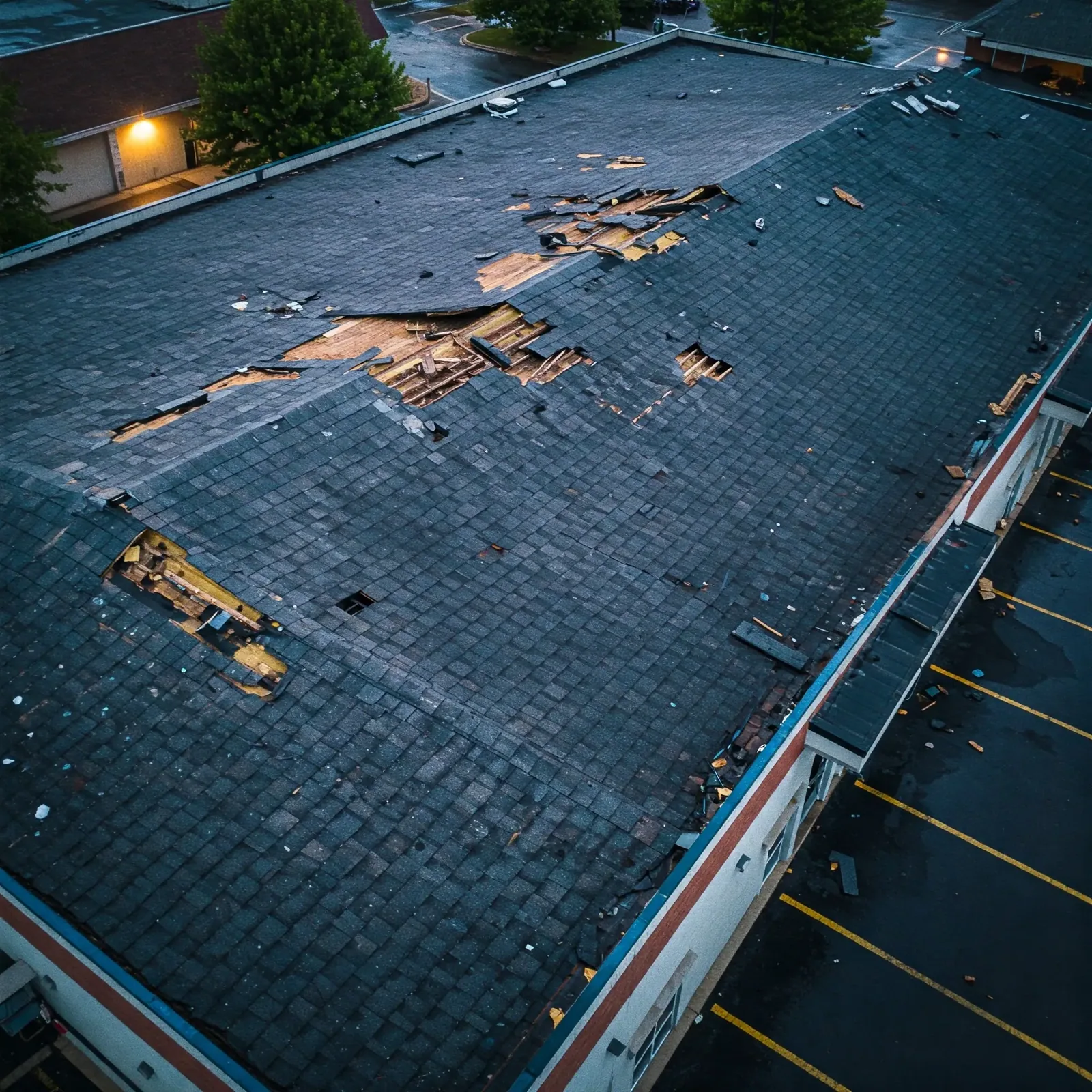
Which equipment details can admit water?
Water can enter at a split curb corner, loose counterflashing, open membrane lap, failed sealant, or a pipe support that moves against its flashing. We inspect all sides of each curb and compare the transition with the roof field. A small gap at the uphill corner can send water beneath the membrane before it appears in the room below. The report identifies the location and component that show a defect, rather than listing every rooftop unit as a generic leak risk.
Supports and pipe stands need attention where loads bear on the membrane. We look for crushed cover board, abrasion, loose bases, and improvised blocks that interrupt drainage. A support can leave the roof surface intact at installation and still create a wear point as equipment moves or vibration continues. We document the condition and identify whether a new support, pad, or flashing detail is required. Structural capacity and equipment loads should be confirmed by the appropriate design professional when the project changes those loads.
Rooftop replacement work can expose hidden conditions. Before a new unit is set, we coordinate curb dimensions, opening location, elevation, and the membrane tie-in. If the roof is being renewed, curb extensions or new flashing may need to be included in the replacement scope. A separate penetration flashing review can help when a project includes several curbs, pipes, or roof openings.
How should roofing and mechanical work be sequenced?
Start with the equipment submittal or field measurements, the planned lift date, and the work area below. We confirm who disconnects and reconnects equipment, who removes the old curb, and who is responsible for temporary weather protection. The roofer needs a defined point at which the roof opening is exposed and a clear handoff before the new unit is set. If each trade assumes another party will close the membrane, the building can be left with an incomplete transition.
On an occupied building, equipment shutdowns and roof access can affect production. Kent Valley includes aerospace, advanced manufacturing, logistics, and distribution businesses, so an operating schedule may control when a unit can be taken offline or when a crane can reach the roof. We confirm those details with the building contact instead of inferring them from the property's sector. The plan should include staging, crane setup, pedestrian limits, and the path for hauling old equipment or packaging away.
Downtown Kent has a planned mix of business, public, cultural, residential, and transit uses. Work near Kent Station can require coordination around shared parking or nearby customers, while an industrial facility may need its loading court left open. A Kent Valley work plan should identify the actual access point, roof hatch or ladder, and any check-in requirements. The curb detail stays the same technical problem, but sequencing depends on the building.
How can drainage change the curb repair?
Raised curbs can interrupt runoff, especially near a low area. We check whether water can pass around the base, whether a cricket directs it, and whether debris collects on the uphill side. A replacement curb may change the drainage path and flashing area. The scope should identify membrane transitions and any slope correction instead of listing curb dimensions alone.
Kent receives much of its normal rainfall in the cooler part of the year, while summer is typically drier. That seasonal pattern is useful for planning but cannot predict the weather at a specific building. We schedule openings and tie-ins against the current forecast. If the equipment change cannot finish in one shift, we define how the curb and roof opening will be secured overnight. A drainage review may be needed if runoff still collects after the curb is corrected.
Cost depends on curb count, access, fabrication, flashing area, temporary protection, equipment coordination, and concealed deck or insulation work. We distinguish confirmed repairs from allowances for hidden conditions. If the roof has broader deterioration, a condition survey can determine whether the assembly is suitable to remain or whether equipment work should align with renewal.
What should the final work record contain?
Closeout should name each curb or support changed, show the membrane transition from several angles, note any temporary protection, and identify equipment work completed by others. Photos should be tied to a roof zone and date. If a curb remains outside the scope or an insulation condition is still uncertain, that item should stay on the open list. The owner needs to know exactly which transition was repaired and what condition remains for follow-up.
For a Kent Valley property with a roof record, add equipment location, curb dimensions, and the contact responsible for future unit work. A condition report can preserve the before-and-after detail. If the work forms part of a planned facility upgrade, capital planning can connect the roof and mechanical budgets so a new unit does not force an unplanned membrane repair later.
Downtown Kent's tenant and public access conditions may differ from the Valley's operating yards, but both need an agreed roof access window and a clear handoff between trades. We provide the roofing closeout, identify what the next service visit should check, and leave the building contact with the scope record. That makes later leak diagnosis more direct if a curb detail is disturbed during equipment maintenance.
Commercial Roofing Questions
Should a new rooftop unit use the old curb?
Only after the curb dimensions, condition, height, and equipment requirements are checked. The replacement unit may need a different opening or support arrangement. We document the existing transition and coordinate the roof portion with the mechanical scope before removal exposes the building.
Who closes the roof after equipment is lifted?
The project scope should name that handoff before the lift. We coordinate the opening, temporary protection, curb or adapter placement, and membrane tie-in with the equipment contractor. The closeout record should show which trade completed each part and whether the final roof detail was inspected.
Can a pipe support be moved without replacing the whole roof?
Yes, if the surrounding membrane and insulation remain sound and the new support can be tied into the assembly. We check for abrasion, compression, and moisture at the current base, then define removal and flashing limits. A broader roof condition may change that recommendation.
How do you handle equipment work at an operating plant?
We confirm shutdown windows, roof access, lift routes, staging, and protected work areas with the facility contact. The sequence should keep required process or loading routes usable and leave a weatherproof end-of-shift boundary. If operations change, the next opening is rescheduled before the crew exposes another area.
Related Roofing Work
Coordinate the roof detail before the unit moves
Send equipment drawings, curb measurements, lift timing, roof history, and the building access contact. We will define the membrane and support work, coordinate the trade handoff, and document the completed transition.