
Roof Damage Repair in Kent, WA
Damage repair starts with the reported event, the affected roof zone and the building’s current condition. A leak near a drain, a loose edge after wind, or a puncture from rooftop work each needs a different inspection. Kent Valley manufacturing and logistics sites may add equipment or production limits; Downtown Kent retail and civic properties have their own access paths. We document what is visible before setting a repair boundary.
Roof Damage Repair
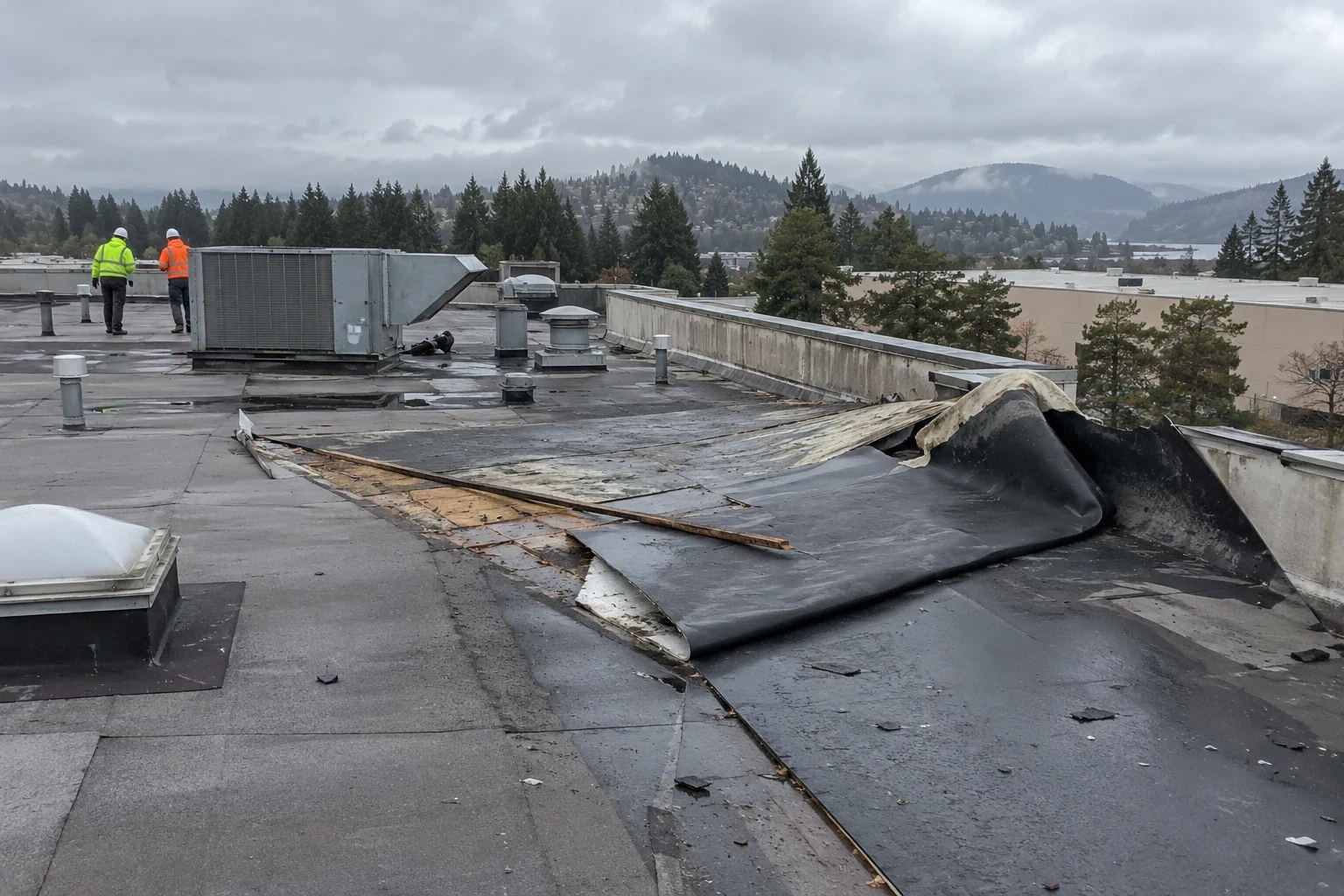
Assess wind-related roof changes in Kent, protect exposed areas, and price repairs from mapped conditions, attachment details, and access needs.
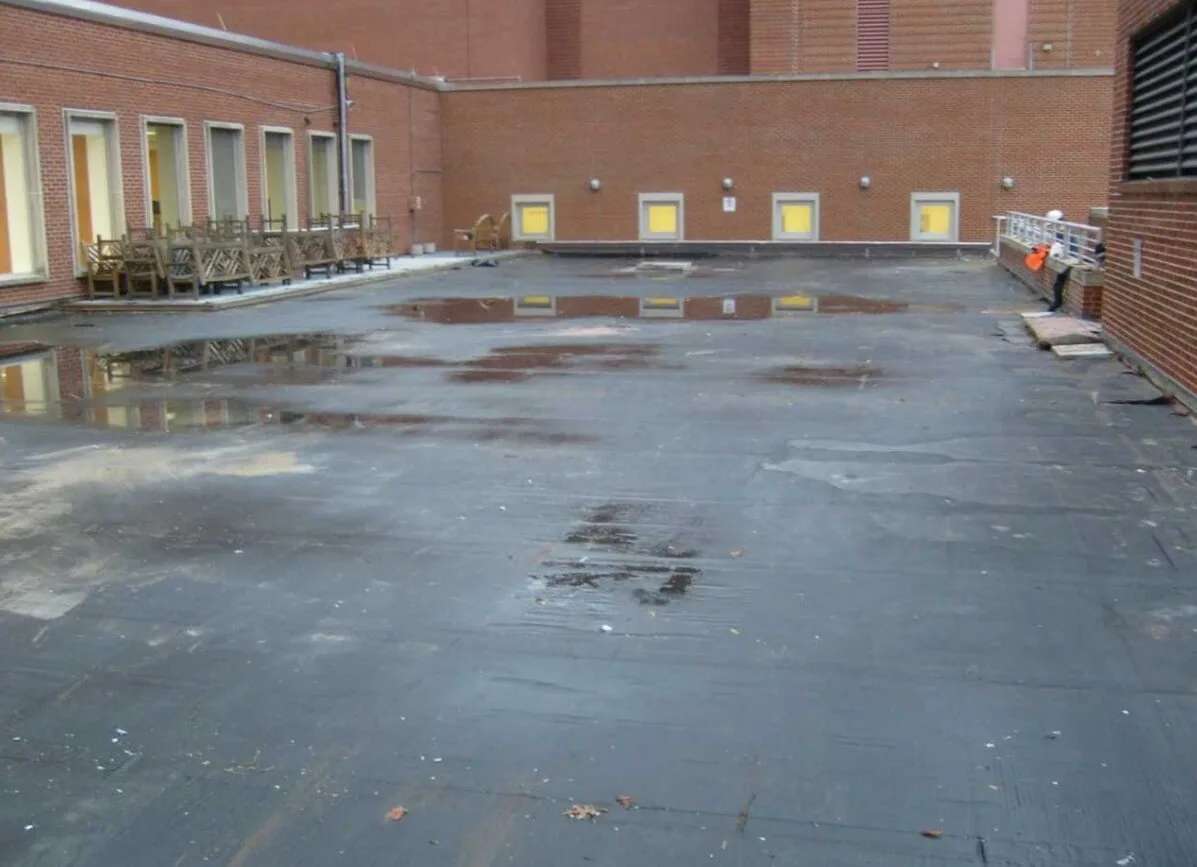
Find why water remains on a Kent commercial roof, restore drainage where possible, and scope repairs from observed slope and membrane conditions.
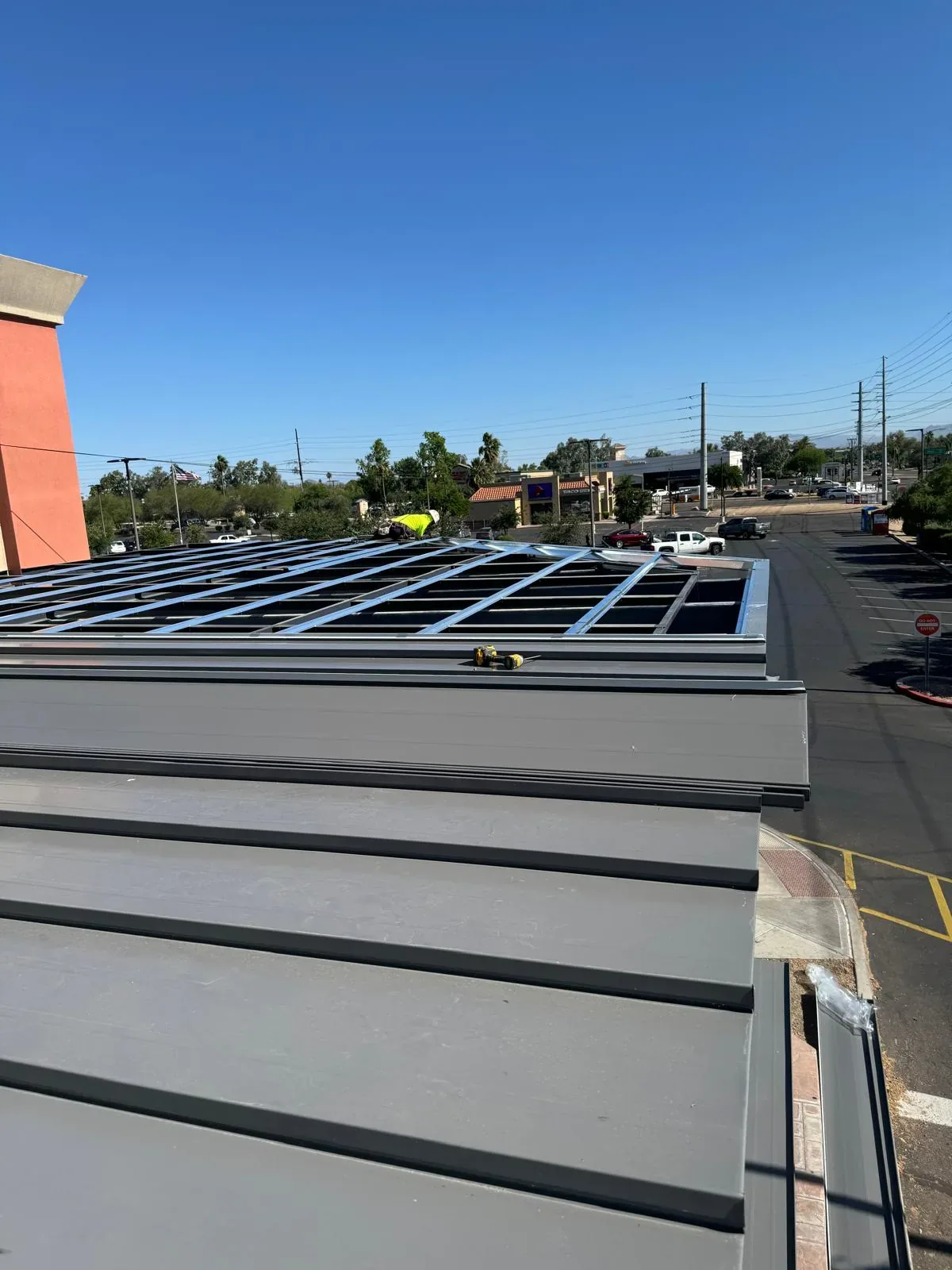
Trace commercial roof flashing failures in Kent, repair failed transitions, and define the work limit from field conditions and access needs.
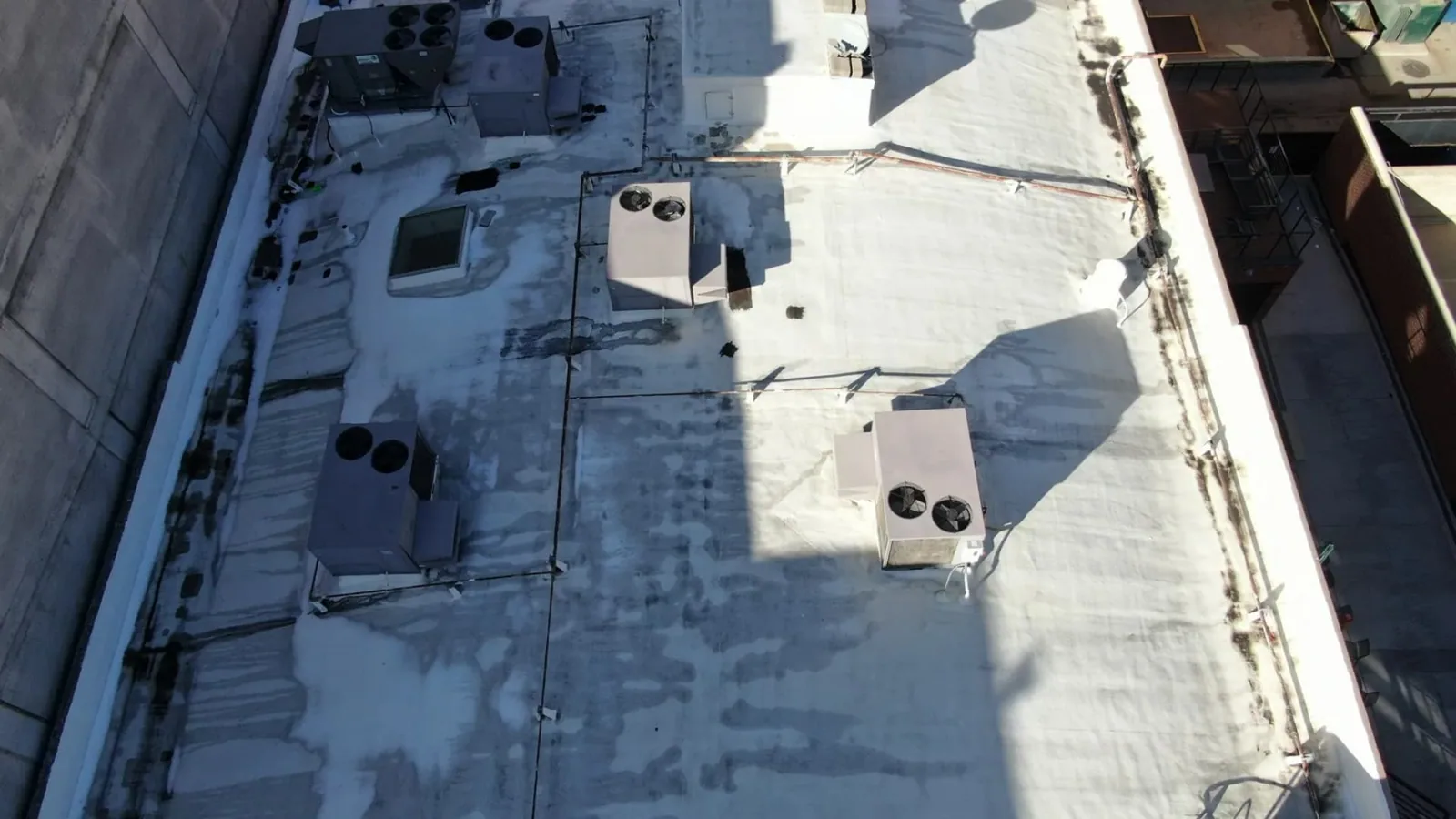
Find open or split commercial roof seams in Kent, test the surrounding membrane, and scope a repair or replacement from observed conditions.
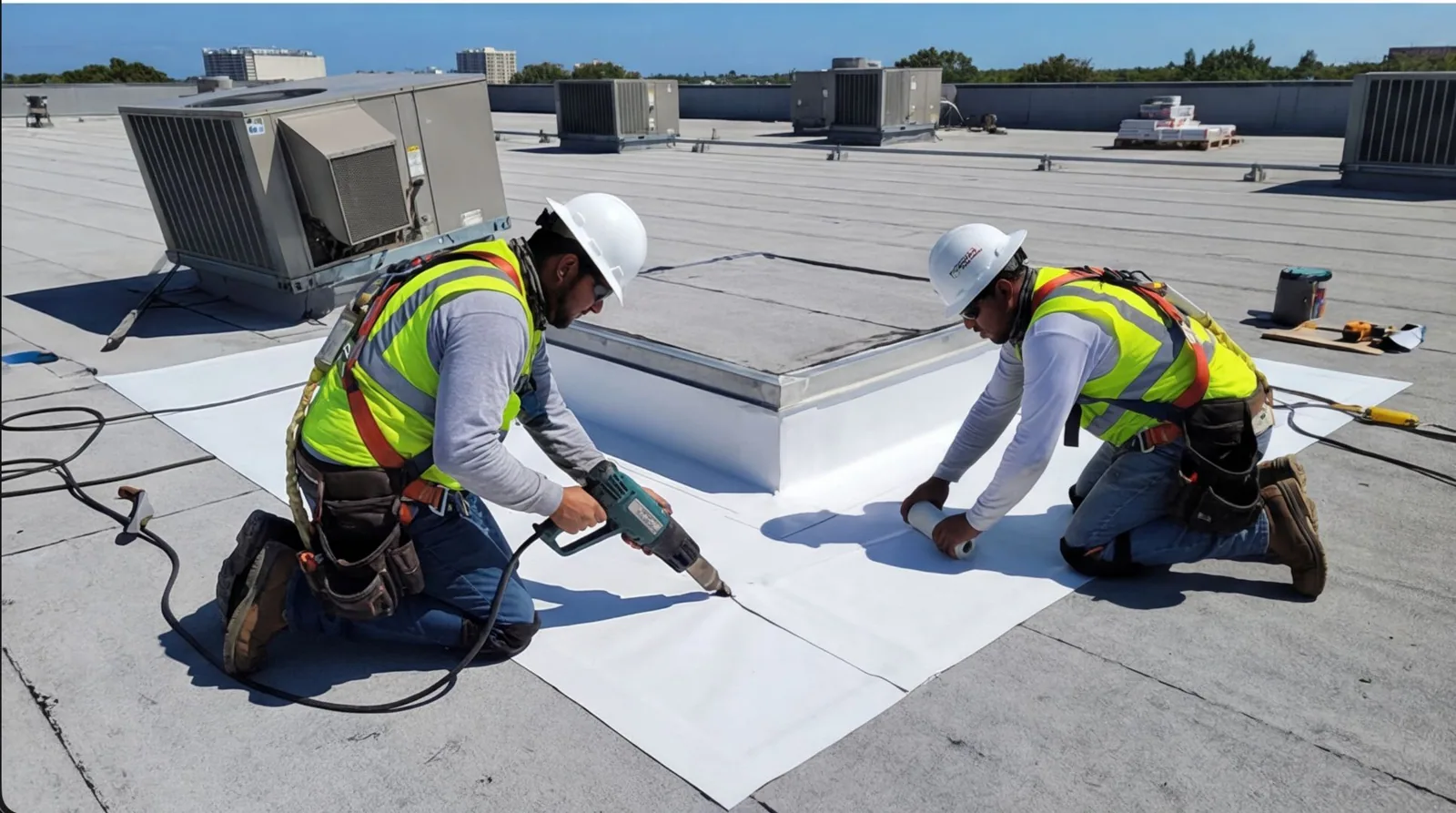
Locate commercial roof punctures in Kent, protect the assembly, and price repairs from verified membrane, insulation, access, and interior conditions.
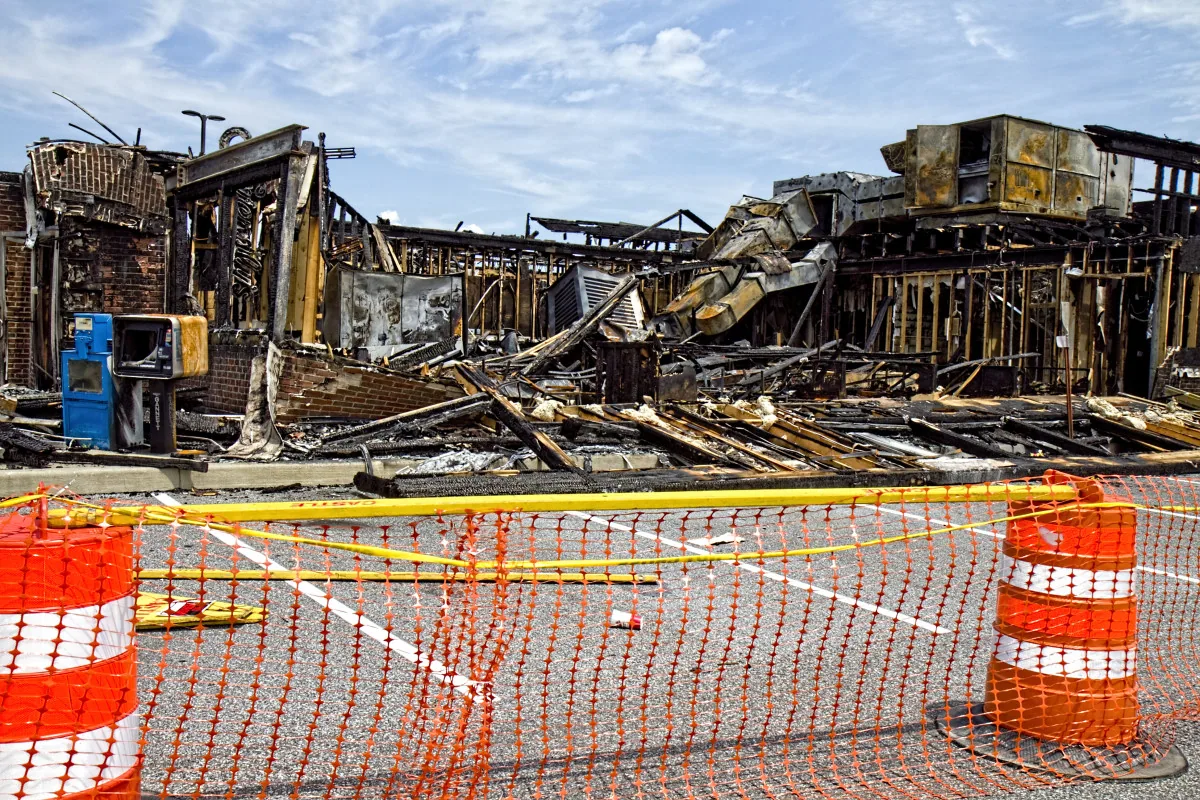
Assess commercial roof fire damage in Kent, stabilize exposed areas, and define repair scope after structural and safety access are released.
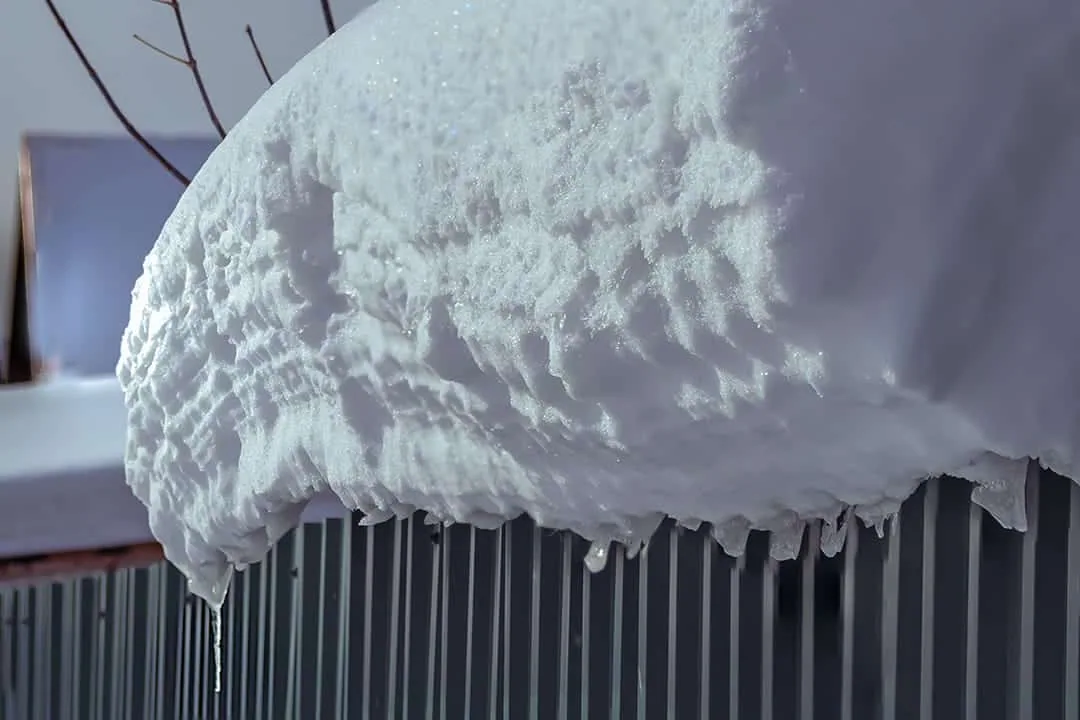
Assess snow and ice effects on Kent commercial roofs, protect blocked drainage paths, and repair verified membrane or flashing damage.
What should be confirmed before repair?
Record the date, interior location, roof section, prior repair and any equipment work. Inspect seams, penetrations, flashing, edges, drains and nearby material. Nearby Sea-Tac normals show heavier precipitation from October through March, but they describe a regional station rather than the condition at a Kent roof on a particular day.
If moisture below the membrane could change the repair size, an infrared survey may help select test areas when suitable for the assembly. Seam failure and flashing failure should be traced to their boundaries rather than priced as a blanket roof defect.
Which damage patterns change the scope?
Wind-related damage can involve lifted edge details, displaced metal or impact from debris. We check the attachment and adjacent assembly before defining repairs. Where water remains after rain, ponding-water evaluation should identify drain restrictions, slope conditions and settled areas instead of treating standing water as a surface-only issue.
A membrane puncture may support a local patch if the surrounding material is sound. A snow or ice review should consider observed loading or water entry without assuming a particular storm occurred at the property. A fire-damage assessment may need coordination around smoke, heat, structural and interior conditions.
How should the owner document the decision?
Keep dated photographs, a roof-zone map, reported leak history, access limits and the approved work boundary together. A commercial roof inspection can record current visible findings. If the defect is narrow, a repair proposal should specify preparation, material, access, protection below and closeout verification.
When failures recur across several areas or concealed conditions remain uncertain, separate testing from repair quantities. Downtown Kent and the Kent Valley are different operating settings, but neither tells us what a specific roof needs. The bid should show confirmed work, allowances and the evidence that would change the recommendation.
What happens when damage is broader?
Wet insulation, widespread deterioration, compromised attachment or repeated failures can justify a replacement comparison. A replacement estimate should define removal limits, assembly, drainage, edge details, equipment coordination and temporary protection. If a claim is involved, we can prepare roof claim documentation with observed conditions and repair scope, while the carrier determines coverage.
Send the incident date, leak locations, prior repairs, roof plan, operating restrictions and decision deadline. We will identify the next inspection or repair step and state what remains unverified before work begins.
Commercial Roofing Questions
Can a roof leak identify the exact damage location?
It narrows the inspection but does not prove where water entered. We compare the reported interior area with accessible roof details and identify testing or access needed to confirm the boundary.
Should emergency work wait for a full estimate?
An active condition may need temporary protection first. We document the immediate action, access and affected zone, then scope permanent repair after the roof can be inspected safely.
Does a damage report decide whether a claim is covered?
No. We can record observed damage and prepare a repair estimate. The insurer and policy determine coverage, and the report should not promise that outcome.
When is repair no longer enough?
Repeated failures, moisture across several zones, unstable attachment or deck concerns can justify testing or replacement analysis. The inspection should show the evidence and limits behind the recommendation.
Tie the repair to the observed damage
Send the incident date, leak map, repair history, access contact, and decision deadline. We will inspect the affected zones and define a documented repair scope.