
TPO Roofing in Kent, WA
Roof Systems
A TPO decision in Kent starts with the condition of the field, seams, and details, then moves to the operating window available for the work. A roof with isolated punctures and sound attachment may support repairs. Open seams across several areas, wet insulation, or a weak base can move the replacement threshold closer. We inspect the membrane, perimeter, drains, curbs, and roof record before pricing a repair or renewal. For a Kent Valley warehouse or manufacturing facility, the production schedule and loading access matter as much as the membrane selection. We establish which conditions are verified and which need testing.
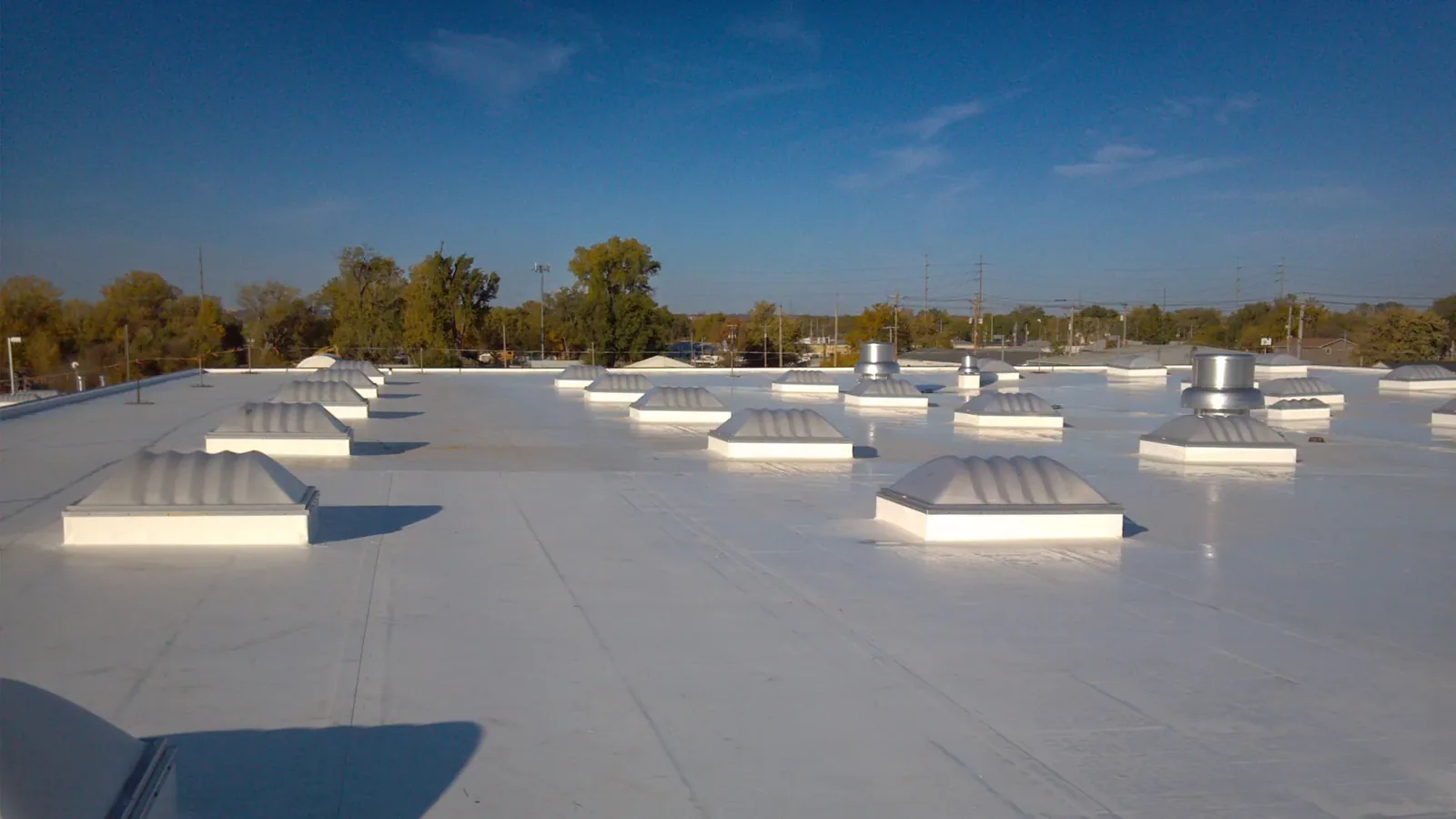
Which seam conditions change the scope?
A TPO seam depends on a continuous heat weld. Dirt, moisture, inconsistent travel speed, or an incorrect setting can leave a weak area that opens under movement. We probe accessible seams and inspect corners, terminations, patches, and transitions where the sheet changes direction. A short separation at one detail has a different scope from recurring openings along long field seams. The report maps the locations, notes the membrane condition around them, and identifies whether a test or broader review is needed.
Surface appearance alone does not establish weld quality. Aged or dirty membrane can hide a narrow opening, while harmless discoloration may draw attention away from a sound seam. We distinguish the observed condition from its likely water path. If moisture is found below the sheet, the affected area needs boundaries before repair limits are set. A seam-failure repair should name the seam or detail, the preparation, and the finished test area rather than promise that a patch will correct unrelated wet insulation.
Edges and penetrations deserve the same attention as the field. A curb corner, drain bowl, pipe boot, or rooftop support can fail independently of the main sheet. We check the transition and nearby attachment so a repair does not stop at the visible split. When damage is widespread, the condition may support a replacement scope or a defined recover evaluation. The recommendation changes when the substrate, attachment, or insulation cannot provide a dependable base.
Can the existing assembly remain?
The membrane is one layer in a roof assembly. Insulation, cover board, vapor control, deck, and attachment all affect whether a new TPO sheet can perform as intended. We review available records, look for ponding and soft areas, and use test cuts when concealed conditions could change the bid. A test cut represents its location, not every roof zone. We map the finding and separate tested facts from areas inferred by surface observation. If wet material is present, removal limits should follow evidence rather than a broad guess. A PVC assembly comparison is useful where grease or chemical exposure changes the selection question.
Recovering can reduce tear-off when the existing roof is stable, dry enough for the selected assembly, and suitable under project requirements. It is not a shortcut around a weak deck, trapped moisture, or incompatible layers. Added thickness may affect edges, drains, curbs, and transitions. The scope should state the preparation, attachment approach, insulation or cover-board work, and details that will be rebuilt. We compare the installed assembly with the roof's remaining service life and the capital year, not just the cost of a new sheet. For a different attachment and seam profile, review an EPDM option against the same roof conditions.
Kent's wet season places more normal rainfall in the cooler months, while summer is generally drier. That pattern can influence exposed-work sequencing, but the actual forecast and site conditions govern a work window. A Kent Valley facility connected to distribution or aerospace production may need work divided by roof zone so loading and operations continue. At a downtown property near Kent Station, pedestrian access and shared areas may set different staging limits. Neither setting changes the technical inspection, but each belongs in the bid scope.
What will the repair window allow?
Temporary protection and permanent work are separate decisions. A temporary measure can limit water entry while the roof is dry enough for preparation, but it does not establish the life of the surrounding membrane. We note the area protected, the material used, and what must be revisited. If the building is active, the contact should identify roof access, equipment restrictions, and any space below that cannot be exposed to noise or debris. This lets us sequence removal, welding, and closeout around the operating day.
For a larger renewal, we divide the roof into practical work zones and identify how each open area will be closed if weather or a production issue interrupts the shift. The plan accounts for material staging, lift access, waste handling, and the route across the facility. Kent Valley businesses connect to SEA Airport and both regional ports, but freight access on an individual property still needs confirmation with its contact. We do not infer a crane location or delivery window from the industrial district alone.
A TPO crew also needs a clean, dry surface for reliable welding. Rain, dew, contamination, and cold conditions can change the day's sequence. The work plan should state the weather hold point and who decides whether a seam is ready to close. If drainage issues are part of the failure, a drainage review should address the path around drains and low points, not simply cover a stain with new membrane.
What belongs in the bid comparison?
Price changes with the roof area, number of zones, tear-off depth, attachment method, insulation work, edge metal, penetrations, access, and disposal. A bid that excludes test cuts or concealed repairs may appear lower while leaving the owner to resolve those conditions after work begins. We identify confirmed quantities separately from allowances, state what happens if deck damage appears, and list the details included at curbs, drains, edges, and transitions. A like-for-like comparison should use the same assembly and removal assumptions.
For portfolio owners with buildings in the Kent Valley and near Southcenter, consistent records help distinguish a one-time repair from a recurring capital need. The valley's industrial property base forms a substantial share of the larger Puget Sound inventory. That regional concentration makes consistent roof-zone labels useful across facilities, while the measured area and condition still come from each site. We record locations, photographs, moisture findings, and completed seam work so the next repair decision begins with a verified condition.
After installation, closeout should identify the membrane system, attachment, insulation changes, seam locations, and any exclusions that remain open. Photos need a roof zone and date. The record should also state the maintenance items that can affect the assembly, such as equipment traffic or debris at drains. If broader facility planning is underway, a capital plan can align roof work with the next operating cycle, and a distribution facility scope can account for loading and phased access.
Commercial Roofing Questions
How do you decide whether a TPO seam can be repaired?
We look at the opening, the condition of the sheet on both sides, nearby welds, and whether moisture has moved below the membrane. A local defect with sound material around it may support a targeted repair. Repeated seam failures or widespread deterioration call for broader evaluation. The written scope identifies each repair area and any condition that still needs a test cut.
Can a TPO roof be recovered instead of torn off?
The existing assembly has to provide a suitable base. We check attachment, moisture, deck condition, drainage, and transitions before recommending another layer. Wet insulation, unstable areas, or incompatible buildup can make removal necessary. The proposal should define what remains, what is removed, and how added thickness affects drains and edges.
What changes the schedule for a Kent TPO project?
Rain and surface moisture can limit welding, especially during the cooler wet season. Access, deliveries, loading activity, and the facility's production schedule can also control sequencing. We confirm the actual work area and forecast with the building contact, then set clear weather and shift hold points.
What should I compare across TPO bids?
Compare the assembly, tear-off depth, attachment, insulation and cover board, flashing details, edge work, access assumptions, and allowances for concealed conditions. Ask each bidder to show what is included at curbs, drains, and terminations. The lowest number is not comparable if it leaves those quantities undefined.
Related Roofing Work
Set the TPO scope against the building's decision date
Send the roof record, the access window, and the date the capital decision is due. We will inspect the TPO field and details, identify verified conditions, and give you a bid scope that separates repair, recover, and replacement options.