Commercial Roof Maintenance in Kent, WA
Commercial Roofing Services
A maintenance visit earns its place when it catches a roof condition before it disrupts the next operating cycle. In Kent, the schedule should reflect the building's drainage, repair history, roof access, and the season when exposed work can be completed. We inspect seams, flashings, edges, drains, penetrations, and accessible equipment, then record what needs repair, what can be monitored, and what deserves a separate investigation. A Kent Valley distribution property may need its work planned around dock activity; a downtown building may have shared access and tenant windows. The program starts with the roof record and the contact who can keep that record current.
What should a maintenance visit cover?
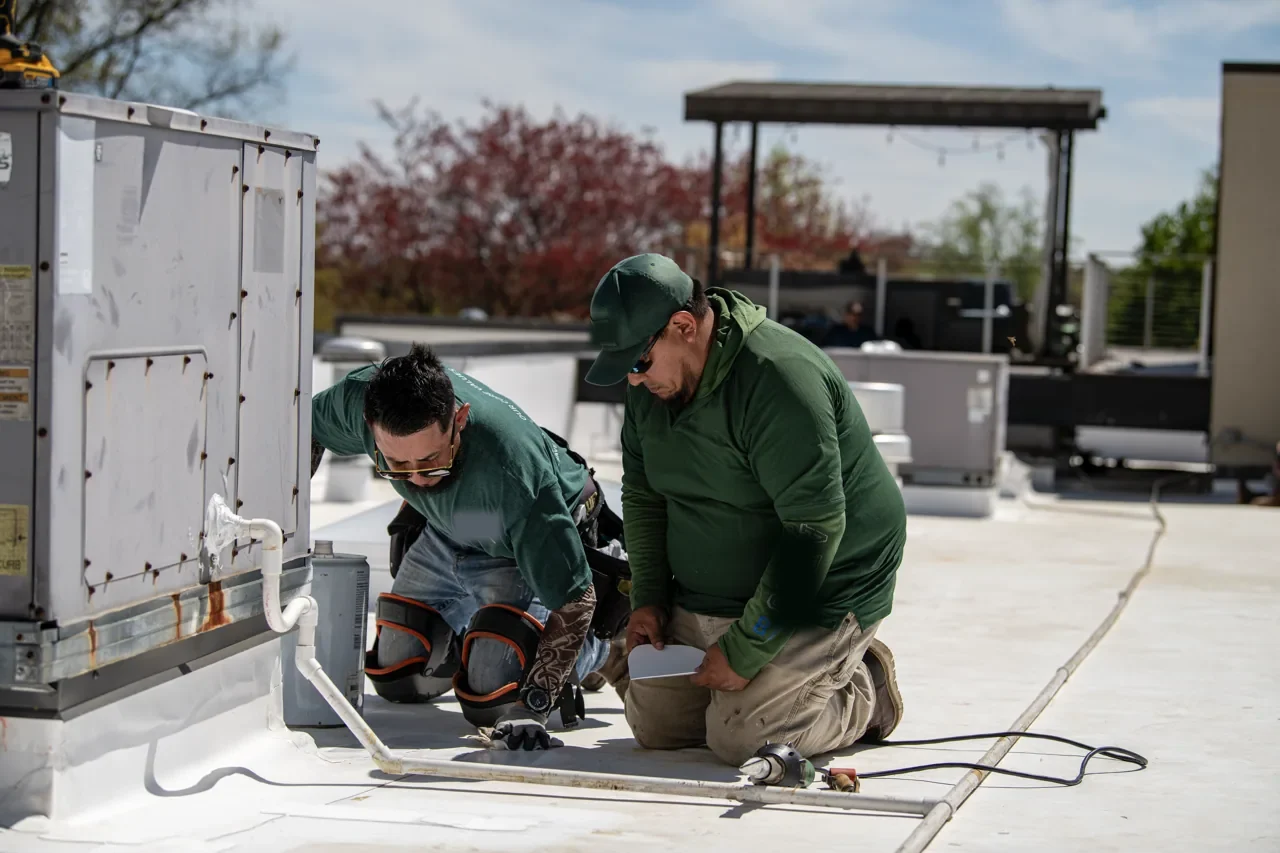
We begin with the roof plan and prior work notes, then compare the recorded defects with current field conditions. The walk includes membrane seams, patches, perimeter details, penetrations, curbs, skylights, drains, scuppers, and visible signs of ponding or debris. We do not treat an inspection checklist as a repair scope. Each finding receives a location, photograph, condition note, and a practical next step so the owner can authorize the right work.
Drain cleaning matters when debris blocks the inlet or slows runoff, but a slow drain can also point to a damaged bowl, a low roof area, or insulation that has settled. We clear accessible debris, look for signs that water remains after flow is restored, and document whether a separate correction is needed. The same distinction applies to sealant: a small, sound detail may need observation; a failed termination may need rebuilding rather than another bead over old material. A drain and scupper review can be included when the water path needs a closer look.
We also check areas that become vulnerable after other work. HVAC servicing, conduit changes, solar installation, and tenant improvements can disturb membrane around a curb or support. The maintenance report notes visible damage and identifies details for the building contact to compare with recent roof access. If there is an active leak, we coordinate a focused leak investigation instead of leaving the issue on a routine list.
How should the schedule fit Kent weather?
Nearby Sea-Tac normals show more precipitation during October through March than during July and August. That regional pattern helps frame a maintenance window, while the live forecast and roof condition set the work date. A visit before the wetter period can identify open details and drainage problems while there is time to schedule a permanent correction. During wet months, we work from the actual forecast and roof condition rather than assuming a dry day from the calendar.
Sea-Tac averages 6.3 inches of snowfall annually, concentrated in winter. That station figure does not set an individual building's roof-load capacity. If an owner reports unusual deflection, blocked drains, or damage following snow, we document the field condition and identify whether a structural review is appropriate. Routine maintenance should not turn a regional climate figure into a conclusion about the roof's capacity.
The right interval depends on the observed condition and how quickly defects can affect operations. A roof with active repair items may need a return visit after work. A stable assembly can follow a planned seasonal schedule, with additional checks after rooftop equipment work or a significant weather event reported at the property. We set the next date against the condition record and the owner's decision calendar. For a facility near Kent Valley industrial activity, that plan should also respect production and loading hours.
What belongs in the roof record?
A maintenance record should identify the date, areas reached, access limits, observed conditions, completed work, and items left open. Photos need zone labels and captions, not only a time stamp. We note whether a finding is confirmed, suspected, or simply being monitored. That gives the next visit a baseline and makes it easier to determine whether a seam, drain, or patch changed since the prior inspection.
For an asset manager, the record should also distinguish small repair costs from capital questions. A few isolated seam repairs do not automatically call for replacement. Several recurring leaks, broad wet insulation, or failing edge details may move a roof toward a larger review. We can group issues by urgency and show which finding changes the recommendation. The owner can use a photo-based condition report to support a work order and a capital plan to sequence non-urgent corrections.
Kent Valley's industrial base includes manufacturing, aerospace, logistics, and distribution. These uses make communication with the operator part of maintenance, because a roof visit can affect docks, equipment routes, or production schedules. Downtown Kent has a different mix of business, civic, cultural, housing, and transit activity. Near Kent Station, the building contact may need to coordinate tenant or shared-access windows. We confirm the actual site's constraints rather than assign one schedule to every property.
When does maintenance become repair work?
Maintenance identifies and limits deterioration; it does not replace a permanent repair when a detail has failed. If a seam is open, a flashing has separated, or water remains around a drain, we define the corrective work and price it separately. The owner can see which items are included in the visit and which need approval. That prevents a routine service report from implying that a documented defect has already been fixed.
Repeated work at the same location deserves a cause review. A patch may fail because the surface was not compatible, moisture remains below the membrane, or movement is recurring. We compare prior photographs with the current detail and decide whether the next step is another repair, testing, or replacement analysis. Where the assembly appears broadly deteriorated, a hands-on inspection can map the condition, and a replacement comparison can show the alternative to continuing repairs.
The maintenance plan should name a contact, access method, work-hour limits, and the date when the next roof decision is due. If the building changes operators or roof equipment is added, those details belong in the record. With each visit tied to the same locations and assumptions, the owner can see whether the repair window is holding or whether the capital year should move forward.
Commercial Roofing Questions
What is included in a commercial roof maintenance visit?
We review accessible seams, flashings, edges, penetrations, drains, scuppers, and rooftop details, then document observations and completed work. The report separates repair items from monitoring and further investigation. If the owner has a current leak or recurring defect, we focus the visit on that condition rather than treating the checklist as a substitute for diagnosis.
Can a maintenance program prevent every roof leak?
No program can remove every risk from an existing assembly. Regular checks can find visible defects, blocked drainage, and disturbed details sooner, while the record helps prioritize repairs. Concealed moisture or damage may still require testing. We state what the visit confirmed and what remains outside the inspection limits.
When should the next Kent roof visit be scheduled?
We set the interval from current condition, open repair items, roof access, and the building's operating cycle. A pre-wet-season visit can leave time to correct issues before frequent rain, while a stable roof may follow a different plan. The record should name the next target date and what change would bring the visit forward.
Can we add repairs to the maintenance appointment?
Yes, when the defect is defined, access is available, and the approved scope fits the visit. We separate routine cleaning or review from repairs that need materials, drying time, or a larger work zone. If the field condition differs from the report, we document the change and confirm the next action before expanding the work.
Related Roofing Work
Set maintenance against the roof record
Send the last inspection, repair history, access rules, and decision date. We will check the roof, record completed maintenance, and separate immediate repairs from items that belong in the capital plan.