
Modified Bitumen Roofing in Kent, WA
Roof Systems
A modified-bitumen decision in Kent depends on the condition of the plies and what the next roof layer would cover. Open laps, blisters, worn surfacing, or repeated patches may be limited to one zone, or they may signal a broader assembly problem. We inspect seams, flashings, drains, edges, and the material beneath before setting repair limits. The building's access window also matters. In the Kent Valley, distribution and manufacturing schedules can constrain how much roof area is opened and how deliveries reach the work zone.
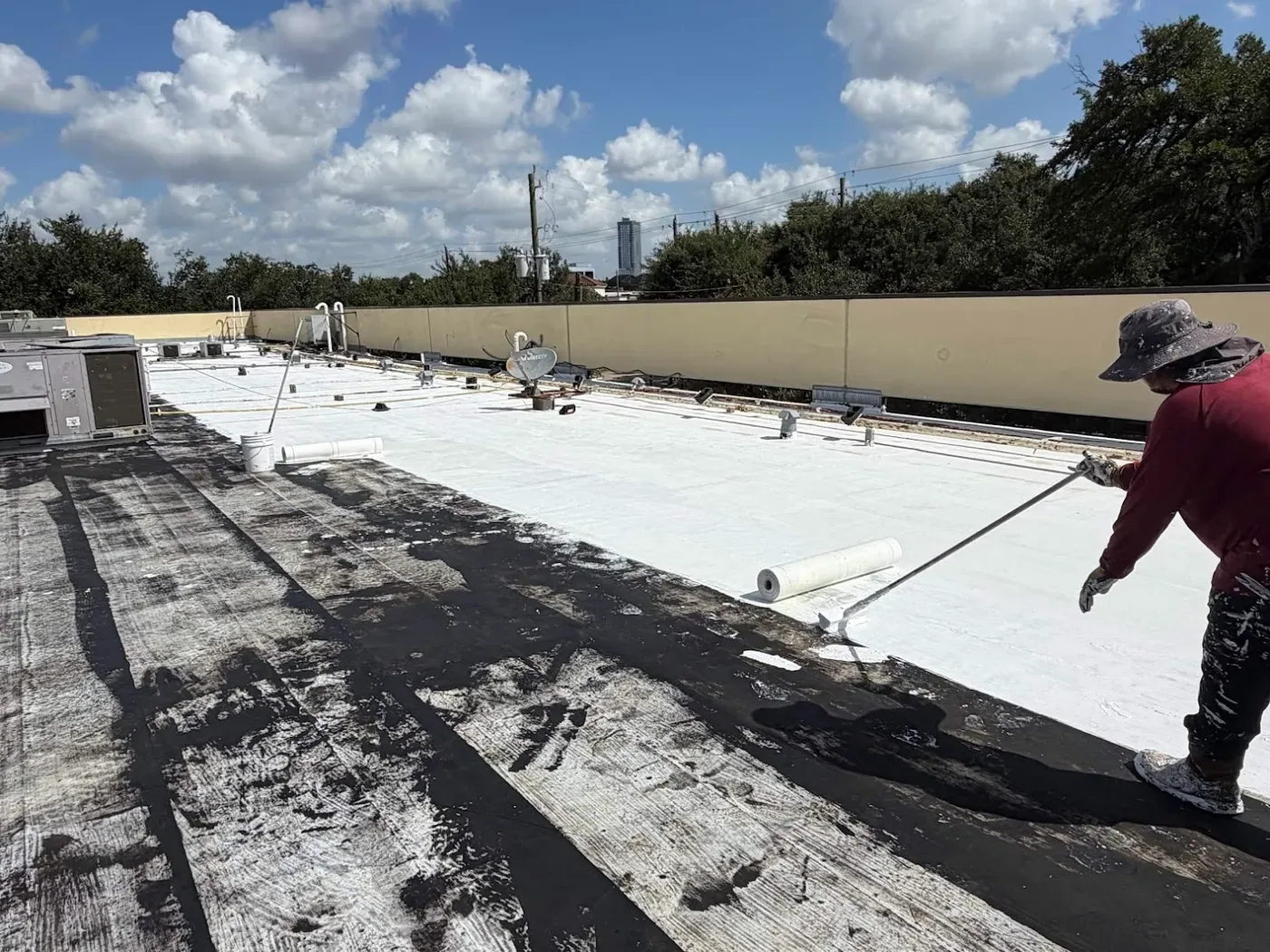
Which modified-bitumen assembly is on the roof?
Modified bitumen systems use reinforced asphalt sheets modified with SBS or APP polymers. Assemblies may be installed in multiple plies and may use different attachment and surfacing methods. We review the existing roof records and inspect exposed edges or test cuts to identify the layers. If the assembly is unknown, the bid should keep that uncertainty visible. A surface that looks similar to another roof does not prove its ply count or attachment.
SBS and APP describe different modifiers and product characteristics, so the specified system and installation method matter. We do not assume that a repair material or torch method fits every existing roof. The field condition, fire controls, substrate, and project documents guide the method. If the roof includes a coating, the surface may hide wear or repairs that need closer review. A roof inspection should document accessible laps, penetrations, drains, edges, and any area requiring a test cut.
Blisters, splits, open laps, and granule loss can have different causes. We check whether water is trapped between plies, whether movement opened a transition, or whether traffic has damaged surfacing. A small defect may support a repair if the surrounding material is stable. Where multiple laps have separated, a flashing and transition review can show whether the detail or the field assembly is driving the water path.
Can another layer stay on the roof?
Recovering is considered only after the existing assembly is checked for moisture, attachment, deck condition, drainage, and compatibility. A stable dry roof may provide a suitable base when the project requirements allow another layer. Wet insulation or a weak substrate can trap a problem beneath the new sheet. Test cuts help establish the layer condition at specific locations. We map those results and do not treat one cut as proof across a broad roof.
Added height can change the relationship at drains, parapets, curbs, skylights, and edge metal. A recover bid should identify new flashing heights, roof transitions, and how low points will drain. If extensive removal is needed, a tear-off replacement may provide a more reliable way to correct the assembly. The owner can compare that with a recover alternative when both options meet the design requirements.
Water standing in low areas is not solved by adding surfacing alone. We look at drain placement, slope, scuppers, and any obstruction caused by rooftop equipment. A drainage assessment can clarify whether the roof needs a local correction or a broader slope design. The recommendation should identify the measured condition and leave structural or design questions with the appropriate professional.
When can the roof be opened and closed?
Modified-bitumen work requires a planned sequence for surface preparation, sheet placement, seams, and daily protection. The chosen installation method sets its own temperature, ventilation, and fire-control requirements. We identify the work area, adjacent operations, and how the roof will be secured if weather or access stops a shift. Nearby Sea-Tac normal precipitation is higher in the cool months than in midsummer, but that regional pattern is not a job forecast. We plan the workday against current conditions.
Kent Valley is a regional center for aerospace, advanced manufacturing, logistics, and distribution. On an active site, lift access, truck movement, production shifts, or rooftop equipment can determine which roof zone goes first. We confirm those limits with the facility contact and add them to the bid scope. The same assembly on a downtown building may require different staging because of public circulation and shared parking.
Downtown Kent includes retail, transit, government, and cultural uses, with Kent Station among its mixed-use destinations. A property near that center may need pedestrian controls and delivery timing coordinated in advance. Along SR 167, a Kent Valley facility may focus on freight access and dock availability. We do not infer a specific building's route or hours from the corridor; the contact confirms the constraints before mobilization.
What should the bid make explicit?
Compare ply count, removal depth, surfacing, attachment, insulation, flashing, edge metal, and access assumptions. Each proposal should state the material and installation method, include the same roof zones, and distinguish known quantities from allowances. If a test cut or deck repair is excluded, list it. If a work method needs special fire controls or ventilation, include the measures and site coordination required. Those details explain schedule and cost better than a single system label.
Cost also changes with disposal, roof height, occupied space below, penetrations, and phasing. A plant or distribution building may require multiple mobilizations so operations continue. We plan the sequence and state how temporary protection is handled. If moisture or deck issues are discovered after tear-off, the contract should identify how those extra conditions are documented and authorized rather than folding them into an undefined contingency.
Closeout should include photographs, repaired zones, layer information, drainage observations, and any condition left unresolved. A condition report carries those findings into future capital planning. For a Kent Valley facility, recording roof zones and access restrictions can help coordinate later work across operating areas. A different assembly such as built-up roofing or EPDM should be compared only against the same performance needs and roof conditions.
Commercial Roofing Questions
How do SBS and APP modified bitumen differ?
They use different modifiers and can have different product properties and installation requirements. We identify the existing system where possible and follow the project specification for the proposed assembly. The roof condition, surfacing, attachment, and repair method matter alongside the modifier name.
Can a blister in a modified-bitumen roof be patched?
It may be repairable if the surrounding plies are stable and the cause is understood. We inspect whether moisture is trapped, whether the lap is open, and whether the area has been patched before. The repair scope should include the preparation and finished limits, not just a surface cover.
What does a test cut tell us?
It shows the roof layers and their condition at the test location, including surfacing, plies, insulation, and deck. Additional cuts may be needed if the assembly varies by zone. We mark each tested point and avoid extending its result to areas that were not opened.
What changes the schedule for a Kent modified-bitumen project?
The installation method, weather, roof access, occupied areas, deliveries, and building operations all affect sequence. We confirm the method's safety controls and establish protected stop points for each shift. The current forecast and site constraints set the work window.
Related Roofing Work
Compare modified-bitumen scope on equal terms
Send the roof record, the access window, and the capital decision date. We will inspect the plies, details, and assembly and provide a bid scope that separates verified repair work from recover or replacement assumptions.