
Commercial Roof Drains and Scuppers in Kent, WA
Commercial Roofing Services
A ponding report in Kent needs more than a drain clearing if water remains after debris is removed. We check the inlet, drain body, clamping area, scuppers, overflow path, low points, and surrounding roof slope. The inspection distinguishes a blocked opening from settlement, a damaged drain, or a drainage layout that needs correction. That distinction matters because standing water can stress seams and flashing and can keep a repair area wet. The work order should name the defect and show whether the next step is maintenance, detail repair, or a change to slope.
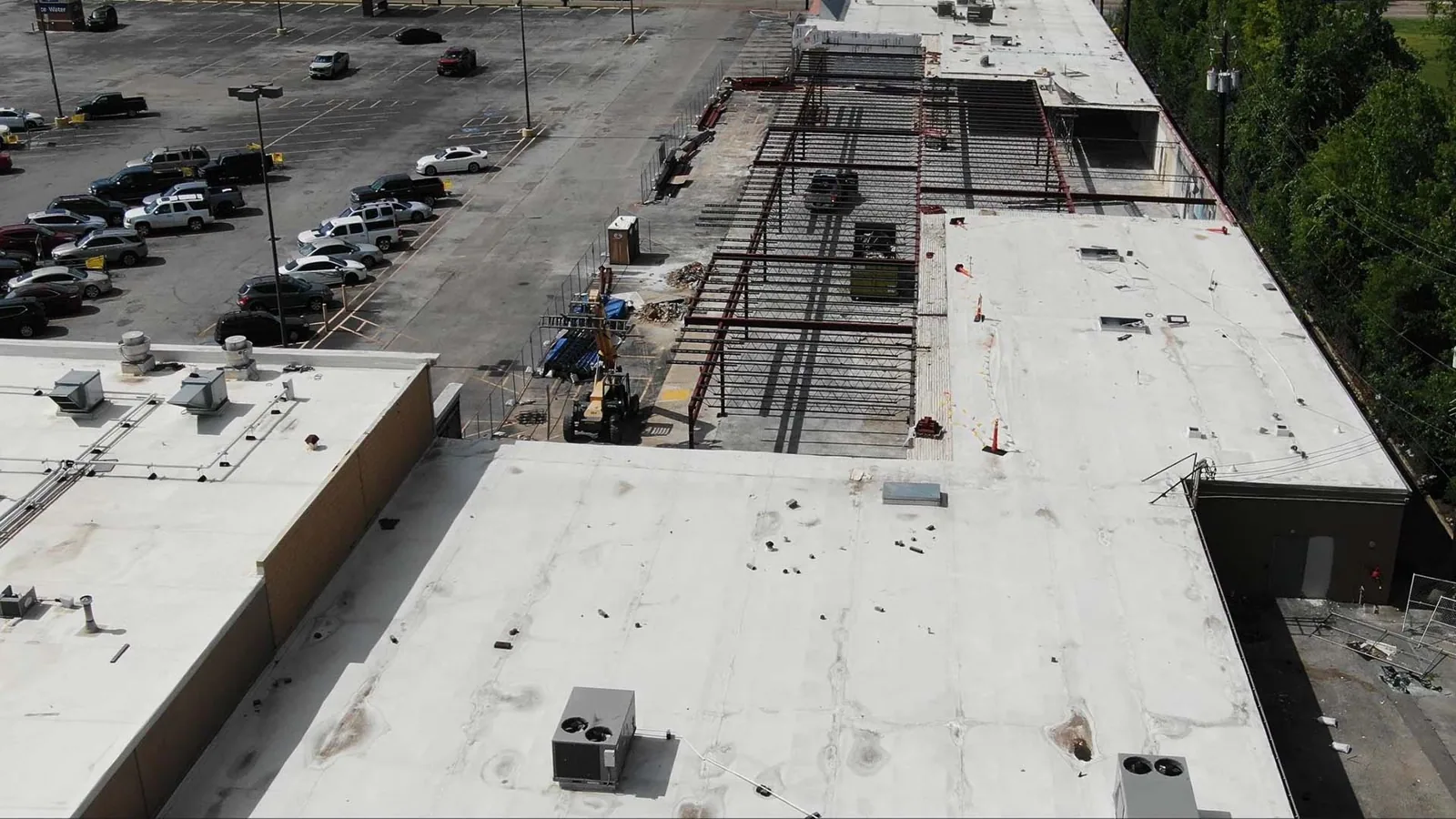
Where is runoff losing its path?
We begin by observing where water collects and how it moves toward the drains or scuppers. A blocked strainer may be simple to clear, but water can remain because the roof has a depression or because the drain sits above the surrounding surface. We note the inlet condition and the field condition around it. If the drain is open but the low area persists, cleaning alone will not restore the full drainage path.
At the drain, we inspect the membrane termination, clamping ring, fasteners, and surrounding flashing. Cracks, separation, corrosion, or loose components may allow water to pass below the surface. A repair should identify which part is failing and whether adjacent insulation is wet. The same review applies at scuppers, where debris, a damaged opening, or poor membrane tie-in can interrupt discharge. A planned repair can address a local detail; a broader slope issue needs a separate scope.
Crickets and saddles direct water around raised curbs or toward a drain. We check whether they are present where needed, whether their shape drains cleanly, and whether their edges remain integrated with the membrane. A cricket that holds water at its back side may need correction rather than a surface patch. Rooftop equipment and access paths can alter how water reaches the low points, so we record the layout and any obstruction that changes runoff.
What changes can improve drainage?
Some issues are maintenance tasks: remove accessible debris, confirm that the outlet is open, and document the change. Others involve replacing a damaged drain bowl, rebuilding the membrane termination, or correcting a scupper. When the roof surface has settled or slope is insufficient, tapered insulation or another designed correction may be needed. We distinguish these scopes so the owner is not given a drain-cleaning proposal for a geometry problem.
Before proposing a slope correction, we confirm the deck and insulation condition and identify how the new slope will meet existing drains, curbs, and roof edges. The work can change membrane elevations and require new flashing details. If the assembly has wet material, the affected area may need removal before new insulation is installed. A test cut can confirm conditions that cannot be seen from the surface. Where replacement is already under consideration, drainage redesign can be included in a replacement scope rather than handled as a separate short-term repair.
Kent has a pronounced wet-season pattern at nearby Sea-Tac, with greater normal precipitation from October through March than in July and August. Those are regional measurements, not a Kent property record. For the roof, the practical concern is that drainage must work during repeated rain, not merely during a hose test on a dry day. We check the observed path and test the repaired detail as suitable. If recent conditions leave the roof too wet for permanent materials, the sequence may require temporary protection and a return window.
How should the water-control work be bid?
A decision-ready scope lists each drain or scupper, the condition found, preparation, replacement parts or membrane work, and the method for confirming the outlet is clear. For crickets or tapered insulation, it identifies the intended direction of flow and the connection to existing drains. It should state whether removal is included and how concealed wet material or deck damage will be documented. The owner can then compare proposals that correct the same condition.
Access and operations affect timing. Kent Valley supports a substantial manufacturing, aerospace, logistics, and distribution base. A repair near a loading court may require staging clear of trailers, while a plant can have an access route that must remain open. We confirm the facility's actual schedule and where debris or removed material may be placed. The scope can include a work zone, roof entry, and temporary control if a drain must be isolated during replacement.
Downtown Kent is a regional center with business, civic, cultural, housing, and transit uses. A building close to Kent Station may have shared parking or public access to coordinate. A roof near Kent Valley industrial operations may have freight or production restrictions. We verify each location before setting the work plan; the drain detail is technical, but access is specific to the property.
What should be recorded after the repair?
Record the drain or scupper location, the work performed, photographs before and after, and whether water moved through the outlet after the repair. Note any remaining low area, debris source, or additional work that was not included. If water still ponds, do not close the item as resolved. The next step may be slope measurement, test cuts, or a review of the roof assembly around the low point.
For an owner with several sites, consistent drainage records help compare repeat calls and maintenance needs. A condition report can preserve photos and map locations, while the roof's asset record can track visits and recurring repairs. If the same drain detail fails after each wet season, the history may show that maintenance is not correcting the cause.
Drainage work can also connect to edge and perimeter conditions. Water that bypasses an outlet or overflows a scupper may reach a wall, coping, or gutter transition. We inspect those paths and link related repairs rather than closing only the drain component. A perimeter drainage review can be added where the discharge path extends past the roof opening. The final record should identify what now carries the water and what remains to be corrected.
Commercial Roofing Questions
Why does water remain after the drain has been cleared?
The drain may be open while a low area, settled insulation, or a raised drain bowl still holds water. We check the surrounding slope and membrane termination after clearing debris. If runoff does not reach the inlet, the next scope may need a drain adjustment, cricket, or tapered-insulation correction rather than repeat cleaning.
Can a new cricket solve ponding beside a curb?
A properly designed cricket can redirect runoff, but the roof geometry, curb, drains, and assembly beneath it all affect the correction. We measure the water path and confirm where the cricket should discharge. If insulation is wet or the deck has settled, that condition needs to be addressed before the new shape is installed.
Should scuppers and drains be checked in the same visit?
They work as parts of one drainage path, so we review the related openings and overflow route where access allows. The report notes which outlets were reached, whether each was clear, and any membrane or metal defect at the transition. Separate defects can be priced individually while the owner sees how they affect runoff as a system.
What if the roof keeps ponding after correction?
We document the remaining water pattern and compare it with the intended slope and outlet position. Further testing or measurement may be needed to distinguish a low deck from insulation settlement or a drain elevation issue. The repair record should stay open until the next action is defined and the observed condition is resolved or accepted by the owner.
Related Roofing Work
Trace runoff before choosing the correction
Share roof plans, photographs of standing water, drain locations, and access limits. We will map the drainage path, separate clearing from construction work, and document the condition after correction.