
Built-Up Roofing in Kent, WA
Roof Systems
A built-up roof can hide both a durable assembly and a costly moisture problem beneath its surfacing. In Kent, we begin by identifying the layers, checking drainage and edges, and reviewing the repair record. A localized split or flashing defect may stay within a repair scope. Repeated wet areas, unstable surfacing, or deteriorated plies may push the decision toward removal. For an industrial property in the Kent Valley, the work also needs to preserve loading and production routes. The bid should connect each action to a verified roof condition.
What does the existing built-up assembly contain?
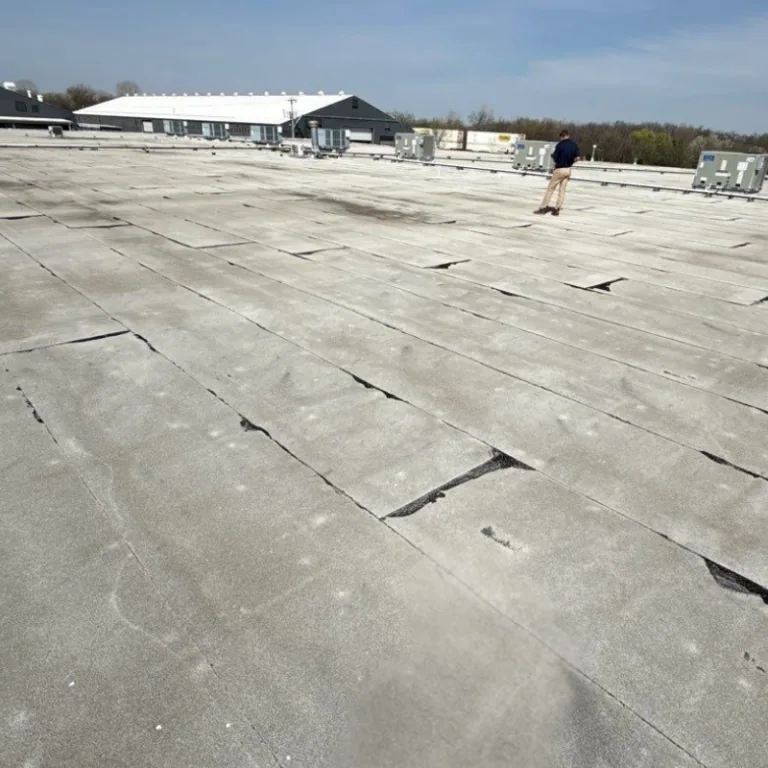
Built-up roofing combines multiple bitumen and reinforcing-fabric layers, often with a surface treatment such as aggregate or a coating. The number and condition of those layers are not reliably read from the top surface alone. We review records, inspect accessible edges, and use test cuts where the assembly could change the scope. Each opening shows conditions at its location. If the roof varies by phase or addition, we keep those zones separate in the report.
Aggregate can protect a surface, but loose stone can move into drains and conceal membrane damage. Smooth or coated areas have their own wear patterns. We look for exposed reinforcement, cracks, blisters, displaced surfacing, and evidence of water trapped between plies. Repairs depend on a clean, stable substrate and compatible materials. A ponding-water investigation should distinguish surface irregularity from a broader slope or drainage issue.
At parapets, drains, curbs, and penetrations, the built-up field meets a separate detail. We examine flashing terminations and transitions for splits, open edges, and movement. Water may travel along the assembly before appearing inside. When the source is uncertain, a leak investigation can map the likely path and identify testing needs. The repair record should name the location and affected layer instead of describing the roof as a single undifferentiated surface.
Can the plies be restored without removal?
Restoration is reasonable only when the existing roof has a stable base and the required preparation can be completed. We check moisture, adhesion, surfacing, attachment, and deck condition. A coating may extend the service of a suitable assembly, but it cannot dry trapped insulation or rebuild failed plies. Test cuts and moisture review can show whether the visible area represents the larger roof. The recommendation identifies what is confirmed and which zones need additional testing.
A recover adds another layer and can alter drain height, edge metal, curb clearances, and wall transitions. We measure those details before comparing options. Where the lower assembly is wet or the deck is deteriorated, replacement with removal may address the cause more directly. If the system remains sound but the surface needs protection, a restoration evaluation can determine whether preparation and coating are appropriate.
Modified bitumen also uses reinforced asphalt sheets, but its system design and seam details differ from a traditional multi-ply built-up roof. A modified-bitumen assembly may be compared where project requirements permit. The decision should use the actual deck, insulation, attachment, and work constraints. Changing the roof label alone will not resolve drainage or moisture conditions beneath the surface.
What happens to water across the roof?
Drainage planning matters through Kent's wetter season. Nearby Sea-Tac normals show a drier midsummer period. We inspect low points, drain bowls, scuppers, and the route water takes around equipment before scheduling exposed work. A shallow pond may reflect a blocked drain, settlement, or a slope issue. The scope should name the cause that can be verified and avoid promising a result from a surface treatment alone.
Built-up roofing's surfacing can complicate maintenance because debris or displaced aggregate may cover the drain opening. We note drain condition, overflow paths, and any loose material that should be removed. If a repair interrupts the existing slope, the detail needs to restore a clear drainage path. A drain and scupper scope can be included when the outlet or bowl needs work. The owner should know whether the proposed repair changes flow or only corrects a membrane detail.
Kent Valley's industrial facilities include manufacturing and global distribution operations. A maintenance window may be limited by shift changes or deliveries, so we confirm access and roof routes with each contact. The nearby Sumner Manufacturing Industrial Center also supports a major regional job base, but a property's own truck and equipment rules still govern the work. The Kent-Kangley corridor is a planned East Hill activity area, so the contact should confirm the actual delivery and roof-access route. We record those constraints in the bid instead of assuming a standard mobilization.
What should be resolved before the capital year?
Cost depends on roof area, number of layers, surfacing removal, tear-off depth, insulation and deck repairs, flashing detail, access, and disposal. A built-up roof may require more preparation than its exposed condition suggests. We state whether aggregate is removed, how the surface is prepared, and what conditions are included in the base scope. Concealed moisture or deck damage should be treated as a defined allowance with a review and approval step.
For a Kent Valley owner overseeing multiple industrial properties, consistent roof-zone names make repair records comparable. The district represents over one-third of Puget Sound's industrial property inventory, a scale that makes repeatable roof-zone records useful without telling us anything about a particular building's condition. A condition report should keep tested findings, repairs, and remaining service life estimates tied to each building. That gives the capital plan a clearer basis than a membrane age alone.
Closeout should include dated photos, tested locations, the work performed, and conditions that remain unresolved. If an owner compares a new BUR assembly with a single-ply alternative, the bid should use matching assumptions for removal, insulation, flashing, and phasing. Send the roof record, access window, and decision date so the inspection can answer whether repair, restoration, recover, or replacement best fits the evidence.
Commercial Roofing Questions
Can a built-up roof be repaired if it has several layers?
Yes, where the defect is limited and the surrounding assembly remains suitable. We identify the affected layer, check for trapped moisture, and verify that the repair can bond to a stable surface. If the damage repeats across roof zones, the recommendation may need to address the assembly rather than a single opening.
Does gravel on a BUR roof protect it from every leak source?
Aggregate protects some roof surfaces but does not eliminate seam, flashing, drain, or penetration failures. It can also hide damage or migrate toward outlets. We inspect the surfacing and the details underneath, then record any debris or exposed areas that affect the drainage path.
When is a coating appropriate over built-up roofing?
The assembly needs to be stable, dry enough, and suitable for the selected coating after preparation. A coating cannot correct wet insulation, loose plies, or a failing deck. We verify those conditions and set the preparation and repair limits before including restoration in the bid.
What causes the timing of a Kent BUR project to change?
Surfacing removal, test cuts, weather, drain work, building access, and concealed deck conditions can all affect sequence. We define the daily closeout and work zones before tear-off. If the roof serves active production or distribution, the contact's schedule is part of the plan.
Related Roofing Work
Set the built-up roof scope from tested conditions
Provide the roof record, recent leak locations, access window, and capital decision date. We will inspect the surfacing and assembly, identify what is verified, and compare a repair or restoration with recover and replacement options.