
Commercial Roof Insurance Claim Assistance in Kent, WA
Commercial Roofing Services
A claim file should show what changed at the Kent property, what the roof inspection confirmed, and which repair work is proposed. We document the reported date, affected interior areas, roof zones, visible conditions, temporary protection, and any uncertainty that needs more testing. This creates a usable record for the owner and insurer without turning a roofing assessment into a coverage decision. The policy and carrier determine whether a loss is covered. Our role is to give the building contact a clear account of the roof condition and the work needed to protect or repair it.
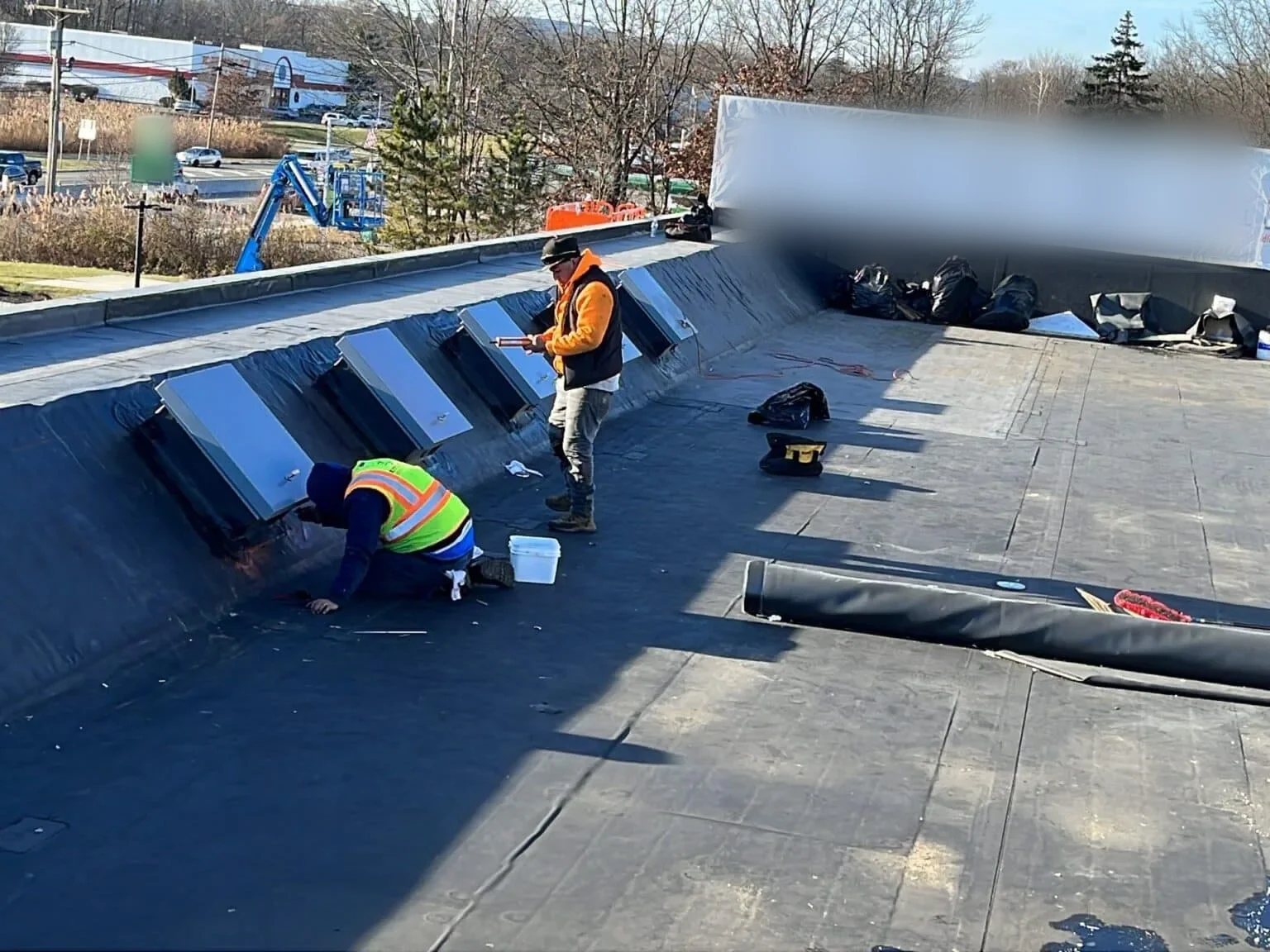
What should the first inspection record?
Start with the event description and the property contact's observations. We note when water or damage was first reported, what areas were affected, and whether the building had earlier leaks or scheduled repairs. The roof review records the location and type of visible condition, such as an open seam, puncture, displaced flashing, or damaged edge. Photographs show both the detail and its place on the roof so a later reviewer can orient the finding.
Cause should be stated only as far as the evidence supports it. A condition discovered after a storm is not automatically caused by that event. Previous repairs, age-related wear, construction changes, and recent rooftop work can affect the interpretation. We compare available roof records and images, note what differs, and identify additional testing if the relationship remains unclear. A storm damage inspection can document immediate conditions, while a separate moisture test may help establish how far water has traveled.
In the Kent Valley, many properties serve manufacturing, aerospace, distribution, and logistics operations. That regional mix does not identify the use of a particular building, but it makes interior impact documentation important. We ask whether water reached equipment, stored goods, production space, or a loading area, and whether temporary protection is still in place. An operating contact can help mark affected areas and preserve the sequence of events for the roof record.
How should the documentation be organized?
A concise package can include the inspection date, access limits, roof map, labeled photographs, observed conditions, emergency measures, repair scope, and any test results. Each image should carry a location and short description. The owner should be able to tell which photo shows the reported damage, which detail was repaired, and what item remains unresolved. A condition report with photographs can organize these observations in a sequence the property team can update.
Separate emergency work from permanent restoration. The first record may show a temporary cover or patch, the area it protects, and the follow-up required. The repair proposal then defines preparation, materials, tie-in limits, access, and closeout. If concealed insulation or deck damage is found after tear-off, the change should be photographed and measured before authorization. That record helps the owner and insurer compare the additional work with the original assumptions.
Nearby Sea-Tac climate normals report a wetter part of the year from October through March. That is a regional climate reference, not proof of the weather at a particular Kent property on a reported loss date. We use the event date and appropriate property-specific records for that question. The climate fact may inform roof maintenance and scheduling, but it should not be presented as evidence that damage occurred at the site.
How should a repair estimate support the file?
The estimate should connect each proposed line to an observed condition. It should identify the roof location, repair method, material, labor access, and how the finished detail will be checked. Where the cause or extent is uncertain, the estimate can separate confirmed work from an allowance or further test. That is clearer than combining a range of possibilities into one total. It also gives the owner a way to update the file if additional evidence appears during the work.
Cost drivers may include removal depth, material compatibility, wet insulation, deck repairs, edge details, equipment protection, and the need to phase work around operations. A Kent Valley facility may require a work window that keeps dock lanes or a process area available. Downtown Kent has a planned mix of businesses, public uses, housing, cultural facilities, and transit, which can create different access and staging needs. We confirm the property's requirements before pricing labor and protection measures.
If the roof has broad deterioration beyond the reported area, the file should distinguish a storm-related repair from an owner-funded capital improvement. We can provide a defined repair scope and a separate replacement alternative where the findings support both. The owner can then decide how to proceed while the carrier reviews the policy. An upgrade outside the storm repair stays separate from event-related work in the scope.
Who coordinates the next step?
Choose one building contact to provide access instructions, share the roof record, and approve the next inspection or repair step. That person can keep operations staff informed about temporary protection and work zones. If an adjuster or other representative visits, the same roof map and photo labels help each party discuss the same detail. We can explain the observed roofing conditions and repair method, while the owner handles policy notices and coverage questions with the carrier.
Downtown Kent's activity around Kent Station, the accesso ShoWare Center, and other civic and commercial destinations can affect parking and pedestrian access. We coordinate the roof visit with the property contact rather than assume a staging area is open. The Kent Valley's freight-oriented facilities may have different check-in and loading restrictions. A Downtown Kent property and a Kent Valley site need separate access notes even when the repair method is similar.
After work, close the record with completed areas, materials used, photos, remaining observations, and the date of any follow-up. Add the event to the building's roof history so a later leak can be compared with this repair. A complete record does not decide coverage, but it keeps the roof facts available when the owner needs to choose maintenance, further testing, or capital work.
Commercial Roofing Questions
Can a roofer determine whether my policy covers the damage?
No. Coverage depends on the policy and the insurer's review. We can document visible roof conditions, emergency protection, and a proposed repair scope. The record should separate what we observed from the carrier's coverage decision.
What information should I gather before the inspection?
Share the reported event date, affected rooms, any prior leak or repair notes, recent roof access, and photographs taken from safe locations. Tell us whether water reached equipment, inventory, or production. Those details help prioritize the inspection and keep the report tied to the property's timeline.
Can the estimate include work beyond the reported damage?
It can identify separate conditions and price them as distinct options, but the report should not mix them with event-related repairs. We label the observed defect, the proposed correction, and the reason for any broader work. That lets the owner and insurer review each item on its own evidence.
What if the repair reveals more damage after work begins?
We stop at the agreed decision point, photograph and measure the concealed condition, and provide the change for review before expanding the scope. The closeout record should show the original assumption, the new finding, and the work authorized. That keeps the final file connected to what was actually uncovered.
Related Roofing Work
Build the claim record from roof evidence
Share the event date, prior roof work, affected interior areas, and access contact. We will document visible conditions, separate temporary protection from permanent work, and provide a scoped repair record for your review.