
Commercial Roof Membrane Puncture Repair in Kent, WA
Roof Damage Repair
A puncture is small at the surface but can affect more than the spot where a tool, fastener, or dropped object contacted the membrane. Before patching, we identify the roof system, measure the opening, inspect nearby material, and check whether water or foot traffic has spread the damage. The owner needs a repair boundary that follows the verified condition, not a patch size chosen by appearance alone.
Kent Valley supports manufacturing, aerospace, logistics, and distribution operations. A roof above an active facility may have maintenance routes, equipment access, or stored inventory below, but the property's contact must confirm those conditions. Kent Station is a separate mixed-use center with retail, services, and visitor activity. The location helps frame staging and roof access, not the assembly or condition of an individual building. State Route 167 crosses Downtown Kent and connects toward the Kent Valley through the Green River Valley.
Our service can respond around the clock, including holidays, when a puncture is admitting water. We can protect the affected area first, then return to complete a compatible permanent repair. Share the address, roof plan, leak report, and last known work on the area.
What made the opening?
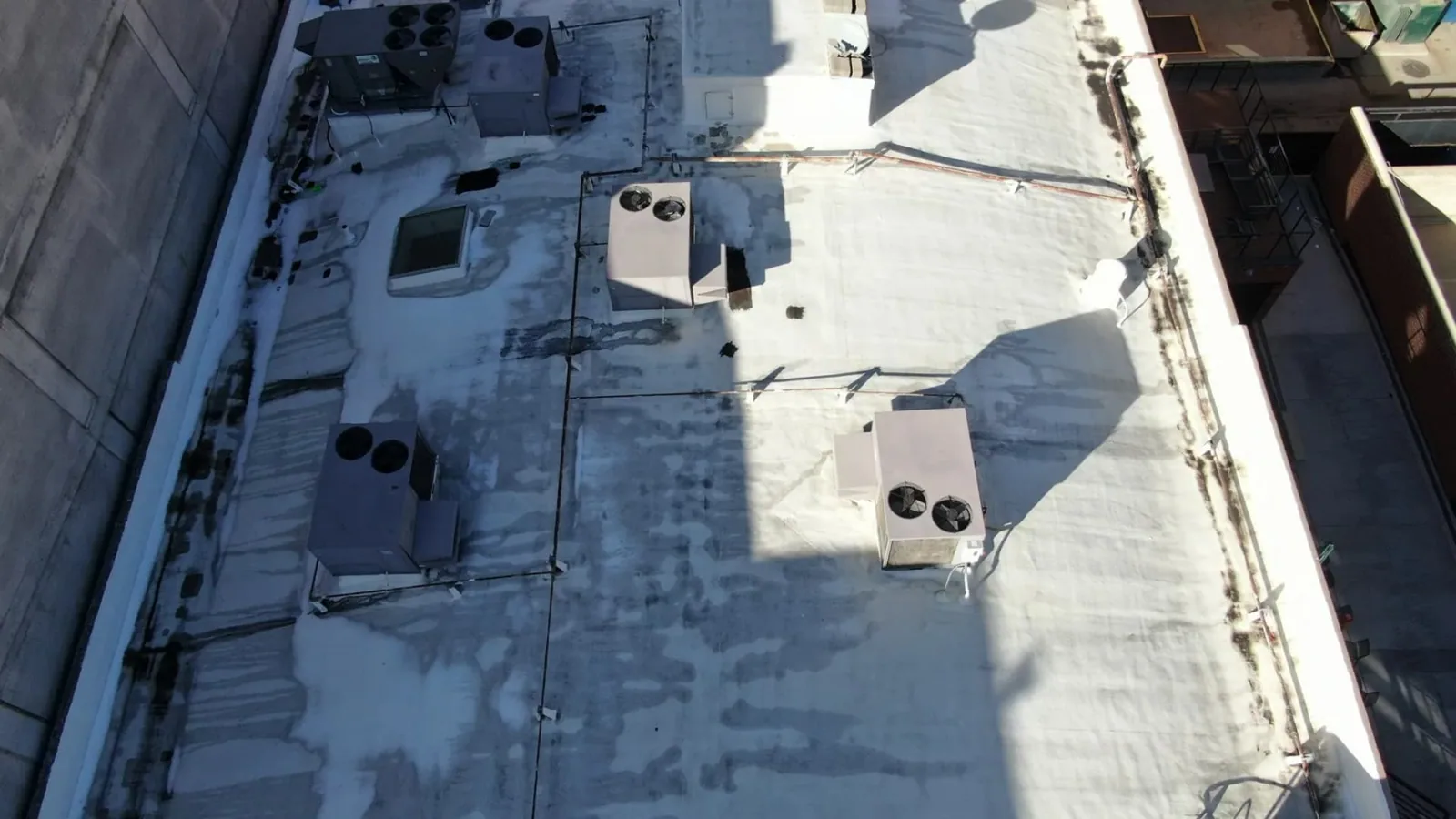
Look for a sharp cut, round puncture, crushed surface, scuff, exposed reinforcement, or damage near a walkway, ladder, equipment service point, or recently completed trade work. Record the length and width, roof zone, surrounding membrane condition, and any nearby fastener, seam, curb, or prior patch. If the source is not known, describe what is visible without assigning blame to a tenant or trade.
Check the interior report and any equipment or inventory exposure below the opening. Water can spread within the assembly, so a ceiling mark may not align with the puncture. Compare the reported time and location with roof access logs or recent rooftop work when available. A hands-on roof inspection can map the opening and nearby details; testing is useful only if concealed wet material could change the scope.
Do not assume every surface mark penetrates the full membrane. A shallow scrape may have removed coating or granules without opening the waterproof layer, while a narrow cut can pass through several components. We identify the affected layer and note whether the substrate is firm, wet, or inaccessible. If a test cut is authorized, mark its location and restore the test opening with a compatible detail.
Restore the membrane without trapping damage
Repair method depends on the system and the condition of the area around the opening. For a thermoplastic sheet, the surface must be prepared and a compatible patch welded to sound membrane. An adhered membrane needs the appropriate bonding surfaces and lap. A coated roof may need reinforcement fabric and the specified coating system. The scope should identify materials and preparation rather than prescribe a generic sealant dab for every roof.
Extend the repair beyond damaged or contaminated material to a sound tie-in. If the puncture reaches cover board or insulation, determine whether wet or crushed material must be removed. Replacing the top sheet over damaged insulation can leave the underlying problem in place. Record any removal boundary and request owner approval if concealed conditions expand the work. A commercial roof repair should state its footprint and finished check.
Repeated punctures along one route may point to missing walk pads, an unprotected service path, or a change in rooftop access. We can identify that pattern and price protection separately from the membrane repair. If the damage is near an open joint or transition, a seam repair review or flashing scope may be needed. For broader storm impact, a wind damage inspection can map affected details beyond the puncture.
Control the roof route and the work area
Before mobilization, identify who uses the roof and which equipment needs routine service. Place walk pads or another approved path where maintenance traffic is expected, but do not cover drains, access hatches, or inspection points. The property contact should confirm any roof route and tell occupants or service trades when it is closed. A repair proposal can include a defined access path if the owner requests one.
Kent Valley sites may have production, freight, or inventory activity that shapes staging; Kent Station properties may have shared visitors, parking, or tenant contacts. Confirm the actual address, roof entry, lift position, loading restrictions, and interior protection before work. The district context does not substitute for site authorization. Keep the repair area small enough to close during the available weather window and define how it will be protected at each work stop.
When water is active, emergency protection can limit exposure before permanent work. For repeat visits, a maintenance program can record punctures, debris, and access-route changes. Any new trade opening should have a named party responsible for closing the membrane after the equipment or service work is complete.
Document the repair and prevent a repeat opening
Take dated photos before preparation, after the damaged layer is exposed if removal is authorized, and after the patch is complete. Label the roof zone and detail, note the repair material, and identify any wet or damaged layer removed. If the cause remains unknown, say so. The record can then help the next technician distinguish a new opening from a prior repair.
Price factors include access, membrane type, repair size, number of openings, substrate removal, disposal, interior protection, and whether a walkway needs improvement. A small puncture can require additional work if water migrated or the base material is compromised. The estimate should separate that possible added scope from the known patch so the owner can approve an evidence-based change.
For a property near Kent Valley or Kent Station, include the exact access contact and operating window with the request. Send the roof plan, photos, interior report, and recent rooftop work history. We will identify the membrane repair, any needed test, and the record that should remain with the building.
Commercial Roofing Questions
Can a small puncture cause a larger roof problem?
It can allow water to enter the assembly, and that water may move before appearing inside. We inspect the membrane and surrounding materials, then test a specific area if the result could change the repair limit. A surface measurement alone does not establish how far moisture traveled.
Can foot traffic be the source of a roof puncture?
It is one possible cause, especially near service routes or equipment, but the opening should be described before assigning responsibility. We note its location, shape, nearby access features, and recent work history, then recommend a walkway or other protection if the route needs correction.
Does every puncture need insulation replacement?
No. The extent depends on which layers were affected and whether concealed material is wet or damaged. We identify what is visible and recommend testing or removal only when it can change the repair decision.
What should be included in a puncture repair quote?
Name the roof zone, membrane type if known, repair dimensions, preparation, compatible patch, access and protection assumptions, and how the finished work will be checked. State how concealed damage or additional openings will be priced and approved.
Related Roofing Work
Send a marked photo and the roof plan
Share the address, opening location, photos, leak history, recent rooftop work, and the person who can release access. We will identify the affected layer, set a repair limit, and price any testing or route protection that the evidence supports.