
Commercial Ponding Water Roof Repair in Kent, WA
Roof Damage Repair
A water mark that remains after a rain event can mean a clogged outlet, a low roof area, or a change in the drainage path. The remedy depends on which condition is present. We inspect the drain or scupper, membrane termination, nearby low points, and the route water takes across the roof before recommending cleaning, detail repair, slope correction, or replacement. A drain that is clear at the time of inspection does not explain why water stays elsewhere.
Kent's nearby Sea-Tac climate normals record more precipitation in the cool months than midsummer. Those numbers describe an airport station, not a Kent roof or a specific storm. Repeated rain makes drainage observation useful, while current roof conditions determine whether a test or repair can proceed. Kent Valley industrial properties and Southcenter Regional Center each have different roof access and operating constraints, so we confirm the address and service window.
Our response is available around the clock, including holidays. If ponding accompanies active leakage, we can first limit water entry and then define the permanent work. Water depth and duration, drain condition, and the assembly beneath the surface all affect the repair decision.
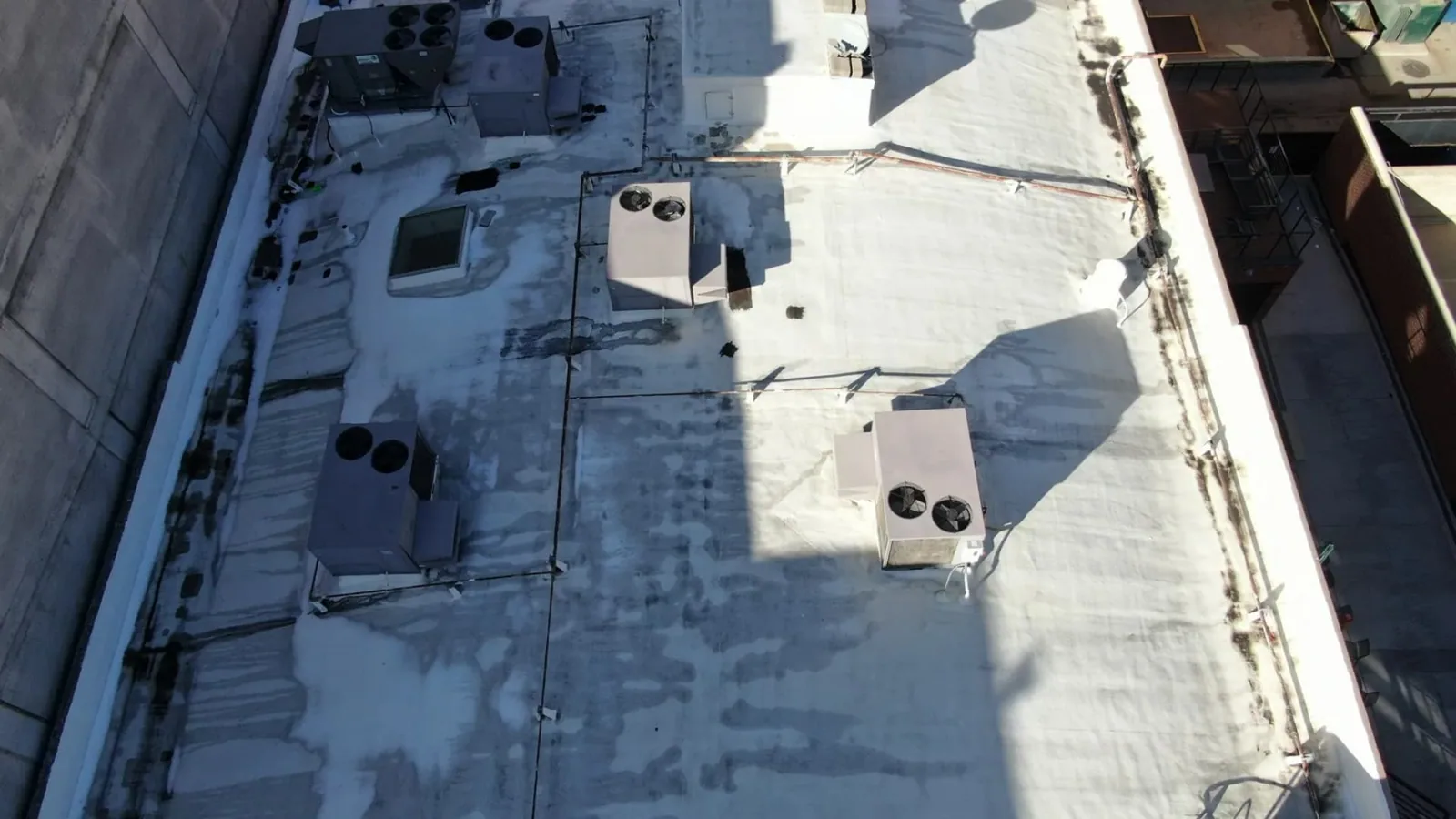
Where does runoff stop moving?
Map the water boundary after rain, note how long it remains, and compare it with roof drains, scuppers, overflow openings, curbs, and surface depressions. Check strainers for debris, then look at the drain bowl, clamping area, membrane termination, and visible piping conditions. At a scupper, inspect the opening and its membrane connection. A blocked inlet can be cleared, but cleaning will not correct a settled low area or a drain set above the roof surface.
Look for water held behind a curb, cricket, equipment support, or repair patch. The detail may redirect flow away from an outlet or create a small dam. We record the location and compare it with roof plans where available. If slope or deck movement is suspected, the inspection should say what is visible and what needs a qualified structural review. Do not infer the roof's design or deck condition from the property's use.
A drain and scupper inspection can identify components that need service. If ponding appears around a damaged curb or transition, a flashing repair review may address that specific detail. Where the water path is not clear, a hands-on roof inspection can compare surface evidence with the building's leak record.
What does standing water change?
Persistent water can keep a seam, patch, or flashing wet and can expose weak details to longer contact with moisture. It may carry debris toward a drain and conceal small openings or surface changes. The first question is duration and location: a shallow area after a storm differs from a low point that remains wet through ordinary dry intervals. Record the observation rather than calling every puddle a roof failure.
Interior leakage, soft spots, ceiling stains, and wet insulation require separate verification. Water may travel beneath a membrane before it appears indoors. If a test opening is needed to learn whether the assembly is wet, define its location and decision purpose. A single test result represents that location only. Any approved cut must be repaired with compatible materials and marked on the roof plan.
For a Kent Valley facility, a low point over inventory or production may also affect operations and the inspection window. Near Southcenter Regional Center, tenant and shared-property rules can govern roof entry and staging. Those local settings do not prove a condition; they determine how the investigation can be carried out. The report should state what was reached and which areas remain uncertain.
Which drainage correction fits the evidence?
Start with simple maintenance when debris obstructs an otherwise sound outlet. Replace or rebuild a damaged drain termination when the bowl, clamping components, or membrane connection has failed. A scupper repair should restore the opening and its flashing detail. If roof geometry holds water, a designed slope correction may require tapered insulation, new transitions, and changes around drains, curbs, and edges. We do not price a geometry problem as drain cleaning.
Before adding slope, check the assembly, roof elevations, available discharge points, and the condition of insulation and deck. Added height can affect coping, door thresholds, equipment curbs, and tie-ins. If wet material is present, removal boundaries should follow test results and visible evidence. A limited correction may fit one roof zone; broad drainage or deck issues can shift the decision to a replacement scope with drainage redesign.
The estimate should identify each outlet or low area, preparation, material, temporary protection, test method, and handling of concealed conditions. It should also state whether the crew will remove debris, replace hardware, rebuild flashing, or install tapered material. A seam repair should remain distinct when water enters at an open membrane joint instead of collecting because of slope.
Set the work window around rain and access
Permanent membrane work requires suitable substrate and weather conditions. Nearby Sea-Tac normals show January precipitation averages above July levels, but those regional measurements do not predict a project day. We check the actual surface, forecast, and facility access before exposing an area. If rain is expected before a detail can be closed, the scope needs a staged sequence and an explicit dry-in plan.
Confirm roof entry, lift placement, disposal route, and whether drains may be temporarily isolated. An operating property may need an interior contact if testing or removal occurs above occupied space. The owner should know which area is open, how it will be protected at the end of each shift, and who checks that protection. Schedule the permanent correction only when the next step can be completed without leaving an unprotected roof section.
For drainage near Kent Valley, account for freight access and the facility's work calendar. State Route 167 crosses the Downtown Kent study area and connects toward Kent Valley, but a route corridor does not establish truck access at an individual site. A roof serving Southcenter may have different shared access controls. A documented repair scope can separate an immediate outlet fix from a larger slope project, and a maintenance visit can track whether the corrected drainage path remains clear.
Commercial Roofing Questions
How long can water remain before ponding becomes a concern?
Duration matters, but the roof's design, depth, location, drainage, and membrane condition also matter. We document when water is observed and whether it remains after ordinary drainage time, then identify the outlet or low area that needs attention.
Will clearing the drain stop water from collecting?
It can help when debris is the obstruction. If water remains after the outlet is clear, inspect the roof's slope, drain elevation, and nearby details. The repair should address the observed cause rather than repeat cleaning without checking the low area.
Can tapered insulation fix a ponding area?
It may be part of a correction when roof elevations, deck condition, drains, edges, and transitions allow the new slope to work. We verify those interfaces and identify any wet material before pricing the change. A drainage design may be needed for a broader correction.
Does ponding prove that the roof is leaking?
No. Standing water and an interior leak can be related, but the water path needs inspection. We map the surface condition, check details and drains, and recommend a test only when it could change the repair limit.
Related Roofing Work
Show us where water remains and when you observed it
Send the address, roof plan, photos after rain, drain locations, leak history, and access window. We will identify the drainage condition, document the affected zones, and scope a repair or slope review from the evidence.