
Commercial Wind Damage Roof Repair in Kent, WA
Roof Damage Repair
A wind-related roof report in Kent needs a building-level inspection before the owner decides what to repair. A lifted edge, shifted coping, open seam, or displaced metal can create a water path, but the appearance alone does not show how far the assembly changed. We record the reported location, what can be reached safely, and any immediate opening that needs protection. The roof record should separate observed damage from earlier wear and from conditions that still need testing.
Kent Valley's industrial base includes manufacturing, aerospace, logistics, and distribution facilities, while Downtown Kent combines civic, business, housing, and transit uses. Those settings call for different staging and interior coordination, not an assumption that a particular property has a certain roof type. Share the address, incident timing, building contact, roof plan, and the access window before we set the inspection.
Our response runs any time of day, including weekends and holidays. We can stabilize an active opening, then return for a permanent scope once conditions allow preparation and repair. Emergency protection and full roof renewal remain separate decisions.
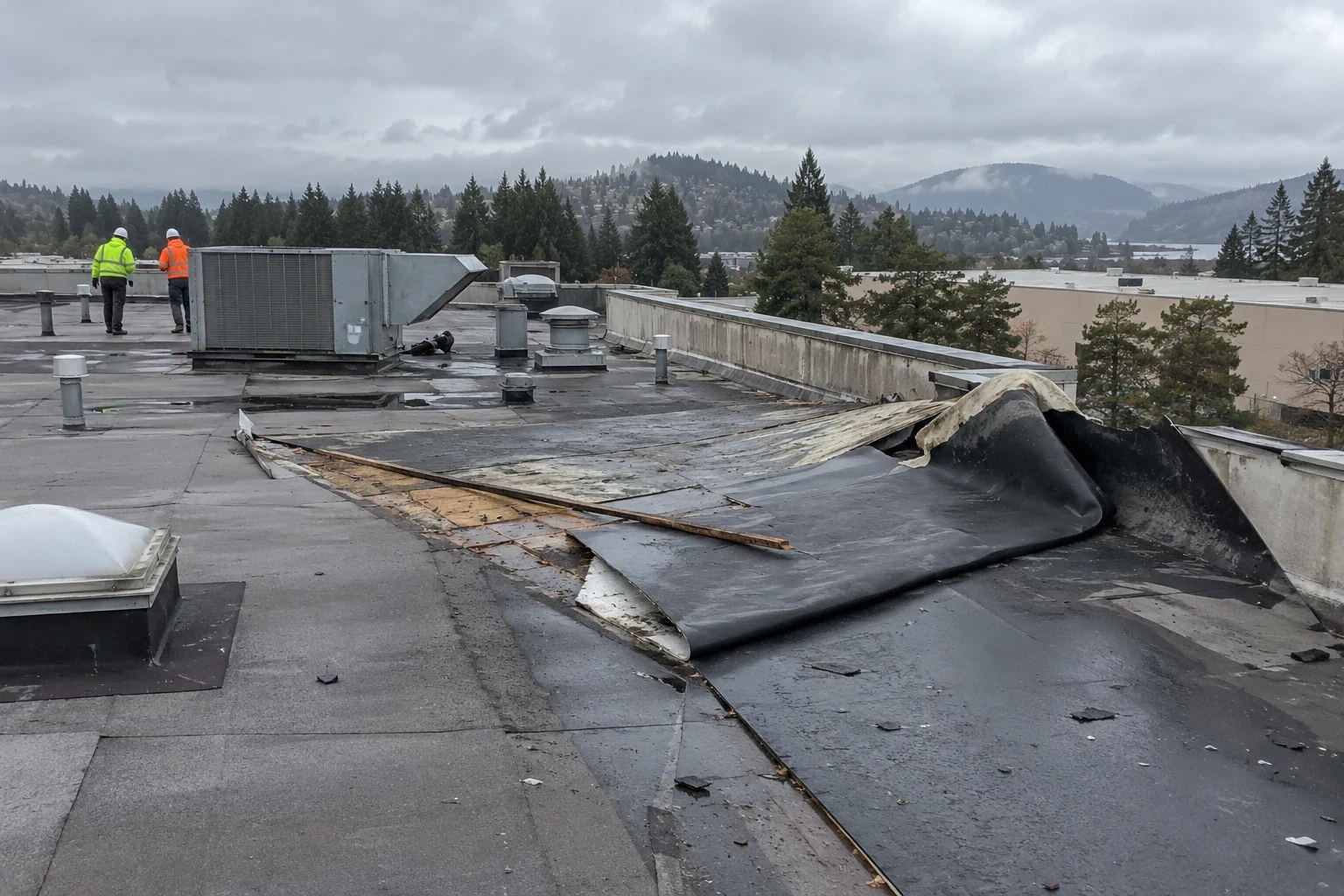
Which roof details moved or opened?
Wind can act differently at corners, perimeters, parapets, field seams, and rooftop penetrations. We check edge metal, coping joints, membrane terminations, fasteners where visible, equipment supports, and transitions to walls or adjacent construction. A lifted piece may reveal a loose attachment, failed seal, or movement beneath the covering. The inspection notes the detail and extent rather than describing the entire roof from one damaged point.
Inside, record where water appeared, the date, and whether the leak is still active. The water path may travel from the roof opening before it reaches a ceiling or wall. Compare the interior report with the roof observations, but do not call the first matching location the confirmed entry without evidence. A hands-on commercial roof inspection can map accessible conditions; if storm documentation is part of the request, the event-related repair review can keep the findings and work scope together.
We also note what the visit could not establish. A visual check may not show whether insulation is wet or whether attachment below the membrane remains sound. If that answer could change the repair limit, identify a specific test or opening and the question it would resolve. Testing should not be extended from one location to another roof zone without evidence.
What must be protected before permanent work?
An exposed edge or displaced detail may need temporary cover before the next rain. The service note should show the roof zone protected, the material used, and any condition that limits the temporary measure. We identify whether the opening remains active and when a return visit is needed. A temporary dry-in can reduce exposure at that spot, but it does not establish that surrounding areas are dry or that a permanent repair is complete.
At an operating Kent Valley site, the facility contact should identify loading lanes, stored goods, production equipment, and roof access rules. For a Downtown Kent property, confirm pedestrian routes, shared parking, and any public entrance near the work area. Those conditions affect staging and work timing. The property contact approves any change to an operating route before staging shifts.
When a temporary response is required, our emergency roof service can address the immediate opening. The permanent detail may call for new flashing, membrane repair, edge-metal replacement, or broader attachment work. If multiple sections changed, a flashing assessment or seam repair scope can separate those details for pricing.
How far should the repair extend?
A bounded defect may be repaired when the surrounding substrate and membrane can accept a compatible tie-in. Loose or displaced edge pieces may need reattachment and new termination details. A split seam requires clean, dry, compatible material and a verified weld or patch. If the membrane is brittle, the base is compromised, or similar movement appears across several roof zones, compare a wider repair with replacement rather than enlarging a patch by habit.
The estimate should list roof section, preparation, materials, fastening or attachment work, flashing, temporary protection, access equipment, and limits around concealed damage. If removal reveals wet insulation or a damaged deck, document the location and quantity, then obtain approval before changing the scope. A commercial roof repair can address a defined area; wider conditions may justify a replacement evaluation with measured areas and assembly assumptions.
At Sea-Tac, the 1991 to 2020 monthly normal is 5.78 inches of precipitation in January and 0.60 inch in July. That nearby station record can inform seasonal planning, but the current weather window at the building decides whether materials can be installed. A repair near Kent Valley may need different staging from one near Kent Station, where shared visitor access can change how materials and equipment are staged.
Keep the event file tied to the roof condition
Preserve dated photographs, the reported incident time, the inspection map, temporary work ticket, repair estimate, and approval for added work in one property file. Mark each image with a roof section or recognizable detail. If the owner has pre-event photographs or previous service notes, compare them with the current condition and state what changed. That record supports a later maintenance decision without assigning a cause that the roof evidence does not establish.
When a claim review is underway, we can provide observations and a construction estimate for the work proposed. The owner and insurer determine coverage and claim decisions. Keep the contractor's visible findings separate from reported damage, adjuster conclusions, and policy terms. If the repair exposes a condition outside the original scope, photograph it, describe the area, and pause for the authorized contact's direction.
Share the incident date, roof record, access rules, and decision deadline. We will identify the repair window, what is verified, and which test or broader inspection would change the recommendation.
Commercial Roofing Questions
Can wind damage be repaired without replacing the whole roof?
A localized repair may fit when the damaged area is bounded and surrounding material can support a compatible tie-in. We inspect nearby attachment, seams, edges, and substrate, then state what evidence supports the repair limit. Wider deterioration or hidden damage can change that recommendation.
What should be documented after wind affects a commercial roof?
Record the building and roof zone, incident timing, interior reports, dated photographs, temporary protection, and any area not reached. Compare prior records when available, but keep observed conditions separate from assumptions about cause or insurance coverage.
Can temporary cover remain until a permanent repair is scheduled?
That depends on the location, materials, weather, and the condition beneath it. We describe the covered area and limitations, then identify when it needs review. A temporary measure is not a permanent repair and should not be treated as proof that nearby sections are sound.
How does a Kent facility schedule roof repair around operations?
The property contact identifies loading, production, public access, roof entry, and hours the work zone can be released. We state staging and work assumptions in the scope. Kent Valley and Downtown Kent sites can have different access patterns, so we confirm each address rather than reuse a prior schedule.
Related Roofing Work
Send the roof record and the event location
Share the address, incident timing, leak locations, prior repair notes, roof plan, access window, and the decision date. We will document what moved, protect any active opening, and price the repair or testing supported by the findings.