
Commercial Fire Damage Roof Repair in Kent, WA
Roof Damage Repair
After a commercial fire, the roof decision starts only when the building authority and owner release access. Heat, smoke, suppression water, and fire department openings can affect separate parts of the roof assembly. We document visible membrane, flashing, insulation, deck, and rooftop-equipment conditions, then distinguish immediate weather protection from permanent restoration. A surface that looks intact may still need evaluation where heat or water reached concealed layers.
Kent Valley's manufacturing, aerospace, logistics, and distribution base includes varied facility types, while Downtown Kent has civic, commercial, housing, and transit uses. Neither area name establishes the construction or fire damage at a particular building. Share the incident location, fire department access restrictions, structural assessment, and the contact authorized to release roof access.
We can respond at any hour, all week, including holidays, once it is safe to work. If the roof has an opening, temporary dry-in can limit further exposure while the owner and restoration team decide the permanent scope. We do not treat a fire report alone as proof that the full roof requires replacement.
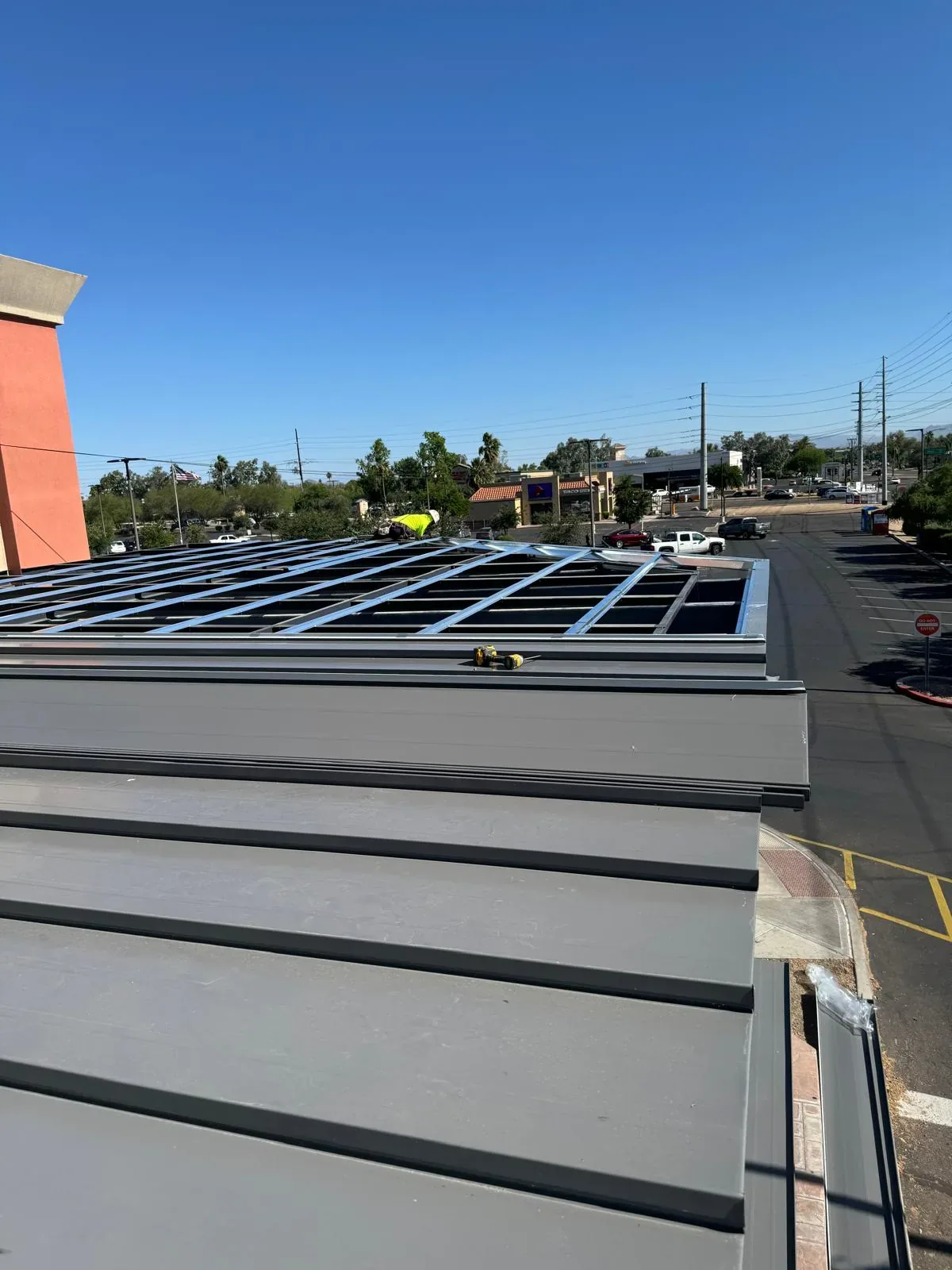
Confirm the building is safe to inspect
Before a roof visit, confirm that the fire department has cleared the area and the building official or structural professional has identified safe access. A fire-damaged deck, unstable parapet, overhead debris, hot surfaces, or compromised access ladder can make a normal inspection unsafe. The property contact should state which route is approved, whether an escort is required, and which zones remain off limits. Record the limits rather than entering an area without release.
Separate fire response from roofing scope. Fire crews may open or remove material to control the incident; restoration contractors may handle interior drying, electrical checks, or contents. Identify who documents each action and who authorizes temporary roof cover. Before covering a damaged area, photograph the visible condition when permitted and note what the temporary work will conceal. The record should preserve the incident timeline and any change between inspection visits.
For a facility near Kent Valley, coordinate access with production, freight, and security contacts only after safety clearance. Near Kent Station, confirm shared-property access and visitor routes with the building manager. The project location affects staging, but the fire authority and owner control release and entry.
Map heat, smoke, water, and mechanical damage
Inspect the roof surface for burned or blistered membrane, open seams, damaged flashing, melted components, smoke residue, debris impact, and areas disturbed during firefighting. Check the underside and deck only where access is approved. Suppression water can reach insulation or interior cavities beyond the visible burn area. We map observations by roof section and distinguish direct fire effects from water exposure, debris, and pre-existing conditions documented in the roof record.
Rooftop units, wiring, penetrations, and supports may have been exposed to heat or water. The mechanical or electrical contractor should evaluate equipment and connections under its scope. We identify the roof interface, including any curb, penetration, or membrane tie-in that needs restoration. A commercial roof inspection can document the accessible assembly; a moisture survey or test opening may be considered if concealed wet material changes removal limits.
Do not infer how far heat traveled from a discolored top layer alone. A selected test point shows what was found there, not the full roof. If the owner authorizes removal, mark the location, record each layer exposed, and stop at the agreed decision point if the assembly differs from the bid assumptions. Any removed material may need to be retained or photographed under the owner's incident documentation rules. A fire-damaged puncture can need a membrane repair; wind-driven debris or lifted edges can require a separate wind damage inspection.
Separate emergency dry-in from permanent restoration
A temporary cover should be limited to the area that can be reached safely and secured under the current conditions. State what material was installed, how edges were held, what areas remain open, and when the protection should be checked. Temporary work can keep new rain out of a particular opening; it does not restore damaged insulation, deck, or membrane and does not establish that adjacent roof sections are unaffected.
The permanent repair may require membrane replacement, new flashing, deck work, insulation replacement, equipment coordination, or a larger roof section. The estimate should identify measured areas, assembly assumptions, disposal, temporary protection, and any allowance for concealed damage. If the assembly has changed under heat or water, obtain the owner’s approval before extending removal. A defined roof repair can address a bounded area; broader damage may support a replacement comparison.
Washington's 2021 International Building Code with state amendments took effect statewide on March 15, 2024. Whether fire restoration triggers permit or code requirements depends on the actual scope and applicable authority review. The proposal should identify design or permit assumptions and leave required determinations to the appropriate official and project design professional.
Keep restoration evidence and roof costs distinct
Preserve dated photos, inspection maps, roof plans, fire department or consultant documents shared by the owner, temporary work tickets, estimates, approvals, and closeout records. Label each item with the building and roof zone. If a later inspection occurs after debris removal or temporary cover, record what changed between visits. This gives the owner a traceable record for restoration planning and maintenance.
We can provide observations and a proposal for the roofing work. The policyholder and insurer make coverage decisions, and the adjuster may document the event separately. Keep the contractor's field findings distinct from the cause determination, claim estimate, and policy interpretation. If an additional condition appears during removal, document its location and cost effect before seeking approval for added work.
Share the incident date, released access route, structural clearance, roof record, and decision deadline. We will map the roof scope and identify what is visible, what remains concealed, and what must be resolved before permanent restoration begins.
Commercial Roofing Questions
Can a roofer inspect the roof while fire officials are still on site?
Only if the responsible authority has released that area and the owner has approved access. Fire-damaged structures can contain hazards that are not visible from the roof surface. We follow the stated access limits and document any area that cannot yet be inspected.
Does smoke damage mean the roof membrane must be replaced?
Not by itself. The inspection needs to identify which materials were exposed and whether heat, residue, or suppression water changed their condition. We describe observed damage and test only where the result could affect the repair boundary.
Can temporary cover be installed before the full estimate is ready?
It can be a separate emergency scope after access is released. The work record should show the protected area, method, limitations, and follow-up needs. Permanent restoration is priced after the affected assembly and removal boundary are understood.
Who decides whether the repair must meet current code?
The applicable code and permit requirements depend on the project scope and authority having jurisdiction. We identify roofing assumptions and coordinate required documentation, while the design professional and building official make their respective determinations.
Related Roofing Work
Start with safety clearance and the incident record
Send the address, incident timeline, approved roof-access route, structural release, roof plans, and restoration contact. We will document accessible damage, provide temporary protection if authorized, and define the permanent roofing scope.