
Commercial Snow and Ice Roof Damage Repair in Kent, WA
Roof Damage Repair
A snow or ice report needs a site-specific check before anyone decides that the roof is overloaded or damaged. The issue may be a blocked drain, ice at an edge, a leak during thaw, or movement in a detail. We document what is visible, note safe access limits, and separate roof repair from any structural assessment. Removing snow or ice from a roof is hazardous work and should not begin without an approved plan.
Nearby Sea-Tac climate normals report about 6.3 inches of average annual snowfall, concentrated in winter. That is a lowland regional station record, not a Kent roof measurement or a design load. A roof's framing, geometry, drift exposure, insulation, and drainage layout need building-specific review. Kent Valley industrial facilities and properties near Kent Station have different roof access, operating contacts, and interior uses. We confirm the address and site conditions instead of treating regional snowfall as proof of a particular roof event.
Our response is available around the clock, including weekends and holidays, when an active leak needs protection. A temporary measure can limit exposure after safe access is released; the permanent repair follows once the roof and affected assembly can be evaluated.
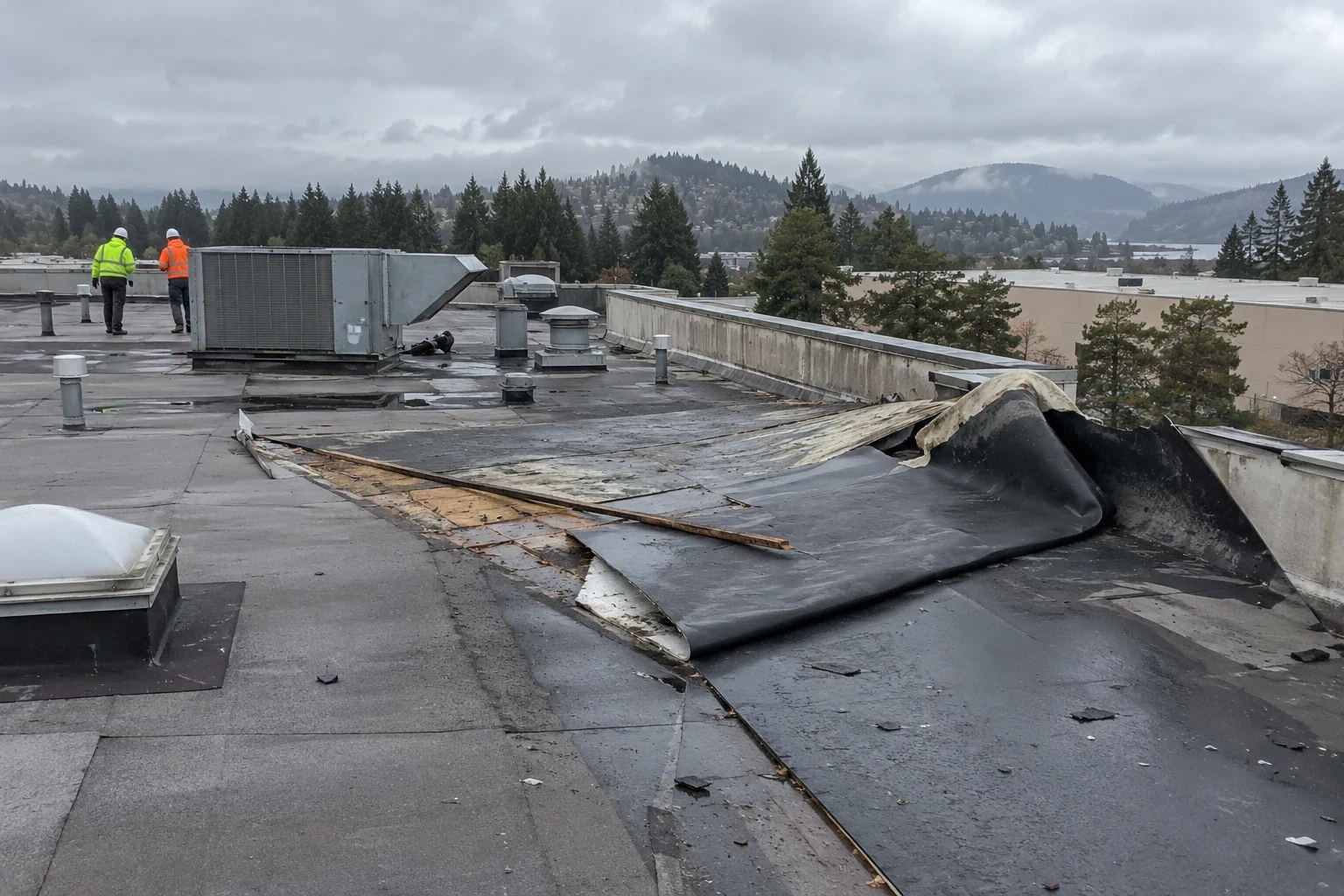
Release access before any roof work
Snow, ice, wet membranes, and concealed openings can make ladders, roof hatches, and walking surfaces unsafe. The property contact should identify approved entry, fall-protection requirements, restricted zones, and the person coordinating building safety. We do not assume a roof is safe because the snow layer appears shallow or because an adjacent area has cleared.
If the building shows unusual deflection, new cracking, unusual sounds, or a change in doors or walls, stop roof access and contact the owner's structural professional or emergency authority. Roofing repair does not replace a structural evaluation. Any snow removal plan needs to address worker safety, load distribution, drainage outlets, and where removed snow may be placed without blocking exits or damaging equipment.
In Kent Valley, a facility may also need to preserve loading and production routes. At Kent Station, visitor paths and shared property access may affect staging. Those are site-planning considerations, not evidence about snow depth or roof condition. A commercial roof inspection can document accessible areas after the owner releases access; a temporary emergency response can be scoped separately if water is entering.
Trace thaw water to the roof detail
When snow melts or refreezes, water can collect at drains, scuppers, eaves, curbs, and membrane transitions. Inspect the outlet for debris or ice only when safe, then check whether the membrane termination or flashing has separated. A blockage may explain a drainage issue, but it does not prove where an interior leak began. Record the room, date, whether water is active, and the roof section that could be reached.
Ice at an edge may relate to drainage, heat loss, or other building conditions, and the cause should not be assumed from appearance alone. Check the roof assembly, insulation information, air-control details if available, and reported interior conditions. A roof contractor can document roof-level findings and repair the membrane detail; building-envelope or mechanical questions may require another professional. The report should state those boundaries clearly.
If water remains after the outlet clears, a ponding-water assessment can check slope and low areas. For a failed drain connection, the drain and scupper scope should identify the exact outlet. A broken wall or curb connection may need flashing repair rather than a general sealant application.
Repair what the inspection confirms
Once surfaces are clear and dry enough for compatible materials, a repair may include membrane patching, seam restoration, flashing replacement, drain termination work, or correction of damage caused by roof access. The scope should identify preparation, repair area, materials, access method, temporary protection, and finished check. If the assembly is wet or the deck condition is uncertain, define a test point and its purpose before setting removal limits.
Do not treat one wet ceiling or one test cut as a conclusion for the whole building. Water can move under the roof, and a selected opening represents only that location. If several details or broad areas are affected, compare local repair with a replacement evaluation based on measurements and verified assembly conditions. A separate review is needed if inspection also finds displaced edge metal or open seams.
Snow and ice projects can involve roofing, insulation, drainage, framing, and interior water control. The proposal should identify the roofer's repair boundary and any consultant review the owner needs before approving structural work or changes to the assembly.
Use regional climate data carefully
Sea-Tac's normals show that winter snowfall occurs in a wet-season climate, with much drier typical conditions in July and August. The station is nearby, but its average does not establish the amount of snow, ice, or load on a specific Kent roof. For a roof decision, prioritize dated site photographs, observed conditions, leak timing, maintenance records, and any structural review provided by the owner.
Keep inspection notes, temporary work tickets, test results, repair approvals, and closeout photographs with the roof plan. Mark repaired areas and any zone not reached. If snow removal or another trade changes the roof before follow-up, record that change so a later reviewer can interpret the surface correctly. A claim documentation scope can provide dated observations and repair details, while the owner and insurer make coverage decisions.
For a property near Downtown Kent or Kent Station, confirm the facility contact, entry path, staging, and operating schedule. Send the incident date, roof map, interior report, and any safety release. We will state what can be repaired now and what needs a separate structural or building assessment.
Commercial Roofing Questions
Does Kent's average snowfall show that my roof is overloaded?
No. Sea-Tac's climate normal is a regional snowfall average, not a measurement of snow on your roof or its structural capacity. A site-specific structural assessment is needed if the building shows warning signs or load concerns.
Can a roofer remove ice from a commercial roof?
Only under an approved access and safety plan. Ice removal can damage membrane, edges, and drains, and workers face slip and fall hazards. We first confirm who controls the plan and whether the roof has been released for access.
Why does a leak appear during thaw rather than during snowfall?
Meltwater can reach an opening or blocked drain after the surface changes. We compare the reported time and interior location with roof drainage, seams, flashing, and prior repairs. The inspection records what is confirmed and what remains uncertain.
What should be included in a snow or ice damage repair scope?
Identify the roof area, visible condition, safe access method, preparation, repair materials, drainage details, temporary protection, and any test or structural review outside the roofing scope. List who approves added work if concealed damage appears.
Related Roofing Work
Share the safety release and the leak timeline
Provide the site address, roof plan, dated photos, interior report, access release, and decision contact. We will document the accessible roof conditions and separate repair from structural or claim decisions.