
Spray Polyurethane Foam Roofing in Kent, WA
Roof Systems
An SPF roof can look intact while its protective coating has worn thin at walk paths, drains, or equipment bases. In Kent, we inspect the coating and foam together before deciding whether local restoration will hold. Exposed, cracked, wet, or poorly bonded foam may need removal or a different repair limit. We also check drainage, penetrations, and the roof record because new foam cannot correct a water path that remains open. For an active Kent Valley facility, staging and access must be coordinated before any area is opened or recoated.
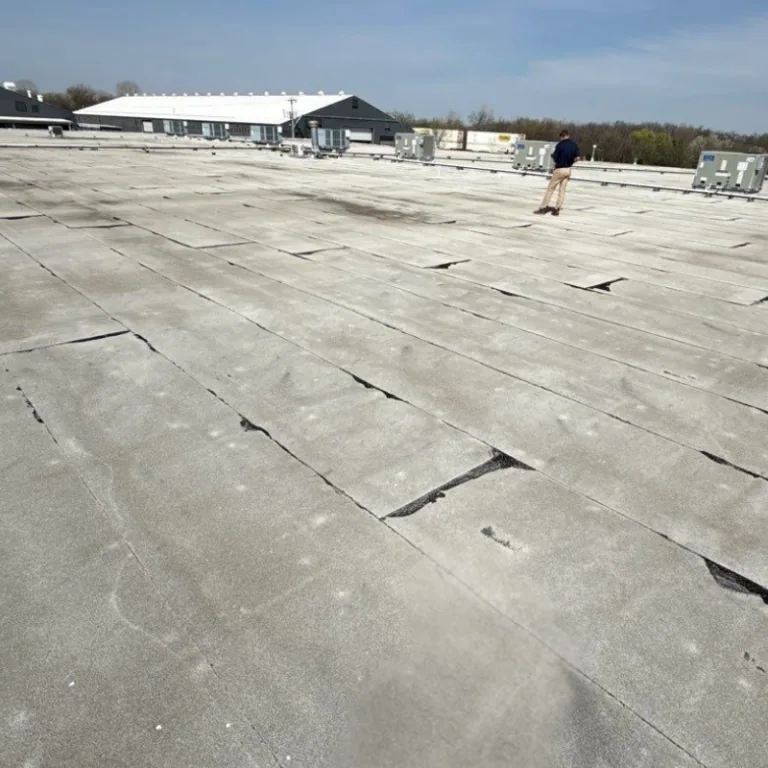
Is the foam bonded to a sound substrate?
Spray polyurethane foam is applied in place and forms a continuous insulated surface when it bonds to a properly prepared substrate. The foam profile, adhesion, thickness, and condition of the layer below it affect the repair. We look for blisters, cracks, soft areas, exposed foam, and transitions that have separated. A probe or test opening may be needed where the surface does not show whether moisture or delamination is present beneath the coating.
Repair limits should follow the verified condition. A small damaged patch can sometimes be cut back to sound foam and rebuilt before coating. If moisture extends below the visible area or the substrate is unstable, coating over it only conceals the issue. We mark the area, check nearby drains and penetrations, and compare the finding with prior repairs. A moisture survey can help identify test locations, but results need confirmation where the assembly is uncertain.
SPF is not a substitute for structural evaluation. If foam thickness, added loads, or substrate capacity are in question, the appropriate design professional should review the assembly. We identify what the roof inspection confirms and which design questions remain outside the repair scope. Where repeated damage follows equipment service routes, a curb and support review can address the mechanical detail as well as the foam surface.
Has the protective coating reached its renewal point?
The coating shields SPF from weather and ultraviolet exposure, so wear changes the maintenance decision. We inspect for erosion, cracking, open seams, ponding, and exposed foam. The selected coating must be compatible with the existing surface and receive the specified preparation. A fresh layer over dirt, moisture, or loose material may not bond. The bid should state cleaning, repairs, primer if required by the system, coating type, and the areas included.
At drains and scuppers, coating thickness and termination need to preserve a clear outlet. Ponding can accelerate coating wear and hide surface changes. We distinguish a local drainage blockage from a low-slope condition that needs design or slope work. A drainage review can determine whether an outlet or surrounding area belongs in the same project. The repair should leave water with a defined route rather than simply renew the top color.
When the SPF assembly remains suitable, renewing the protective layer may defer a full replacement. If foam or substrate is compromised across several zones, restoration may not provide the needed correction. We compare coating renewal with removal and replacement based on adhesion, moisture, thickness variation, and repair history. A restoration scope should list the test areas and identify the point at which added removal work requires approval.
What conditions control a Kent coating window?
Foam and coatings need suitable substrate and weather conditions during application and cure. Rain, dew, surface moisture, and temperature can change whether the work should proceed. Nearby Sea-Tac normals show a wetter cool season and drier July and August. We set the day's work limit from the live forecast and define how the surface will be protected if an application cannot be completed.
Kent Valley's industry mix includes aerospace, advanced manufacturing, food processing, logistics, and distribution. Each facility has its own roof access, delivery route, equipment restrictions, and work hours. We confirm these with the building contact and mark them in the bid. A crew should know where materials may be staged, which areas below need protection, and which equipment can remain online before starting a coating phase.
The Port of Tacoma Tideflats supports freight, manufacturing, warehousing, and distribution uses, while Kent Station is a downtown retail and services setting. Those places show the range of regional operating environments, not the access plan for a particular job. We use the property's own contact and site conditions to establish staging, pedestrian controls, and end-of-day protection.
What does an SPF proposal need to spell out?
The scope should identify the roof zones, coating condition, foam repairs, preparation, specified coating system, and any test openings. It should say whether the price includes drainage work, flashing, curbs, and protection of rooftop equipment. Cost depends on the accessible area, preparation, amount of foam replacement, surface contamination, access, and the number of mobilizations. We separate verified quantities from allowances for concealed moisture or substrate repairs.
Closeout needs dated photos and a record of the surface preparation, repaired foam, coating areas, drainage observations, and remaining open items. Marking roof zones helps a future inspection compare wear in the same locations. A condition report can connect coating work to remaining service life and the next capital year. If an owner manages several facilities, use the same location labels while keeping each roof's test results separate.
When an SPF roof is nearing replacement, compare it with another assembly using consistent assumptions. A silicone coating system may be considered when the existing surface and project requirements support it; a TPO replacement represents a different assembly and removal decision. We explain what each option preserves, what it removes, and what needs confirmation before the owner commits.
Commercial Roofing Questions
Can exposed SPF foam be coated without repairs?
The exposed area should be checked first. If the foam is sound and dry, preparation and a compatible protective coating may be sufficient. Cracked, wet, loose, or deteriorated foam needs repair before coating. We define those limits from inspection and testing rather than covering a condition that has not been verified.
How do you find moisture below a foam roof?
We review leak history and surface changes, use survey methods to identify areas for confirmation, and open test locations where needed. A survey signal is not itself proof of the exact wet boundary. The report distinguishes instrument indications, tested findings, and areas that remain unverified.
Can a coating correct ponding on SPF?
Coating renews the surface but does not automatically change roof slope. We check drain flow, low spots, foam profile, and whether water has a clear path to the outlet. If drainage geometry is the issue, that needs a defined correction or design review in addition to coating work.
What affects SPF application timing in Kent?
Surface moisture, rain, temperature, cure requirements, access, and facility operations control the work window. Nearby climate normals offer regional context, while the forecast at the building determines the day's sequence. We set a stop point that leaves each completed area protected.
Related Roofing Work
Set a restoration limit for the SPF assembly
Send the roof record, coating history, leak locations, access window, and decision date. We will inspect the foam and protective layer and state what can be restored, what needs testing, and where replacement deserves comparison.