Johns Manville Commercial Roofing in Kent, WA
Roofing Manufacturers
A Johns Manville name in the closeout file does not tell the owner what every roof zone contains now. Additions, later repairs, and undocumented changes can make the current assembly differ from the original record. We compare the documents with accessible field conditions, then prepare a repair or renewal scope that states what is known and what remains open. Commercial Roofing Contractors Kent ties the recommendation to the building's use, access window, and capital decision.
Kent Valley's manufacturing, aerospace, logistics, and distribution activity creates varied operating limits for roof work. A facility near the valley's freight routes may need staging coordinated with deliveries. Downtown Kent includes business, government, cultural, transit, and housing uses, so a property there may have shared access or tenant schedules to manage. Those facts inform coordination, not the roof's condition.
Send the roof plan, prior reports, repair log, available warranty documents, and the contact who can release access. We will compare the record with what can be reached and identify the next decision the inspection needs to support.
Which Johns Manville information belongs in the roof record?
Keep the project date, system description, covered roof areas, submitted drawings, repair history, and warranty document together. Do not assume the manufacturer's name describes insulation, cover board, attachment, flashing, or a later addition unless the record says so. If several project phases appear in the file, mark their limits and retain each source date. The owner needs to know whether a conclusion applies to one section or the whole property.
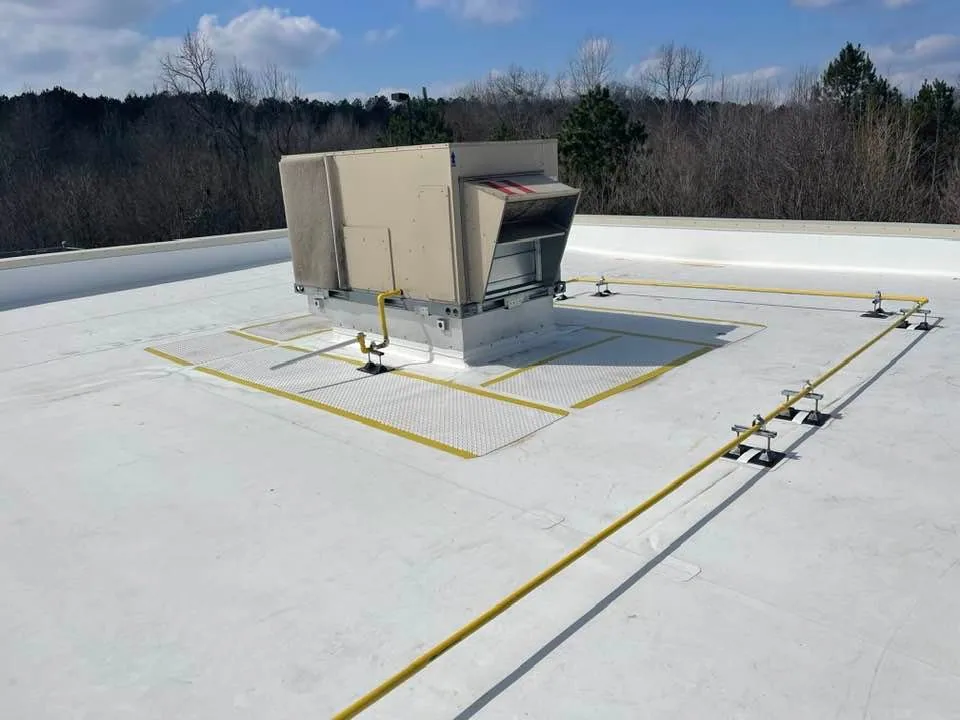
On site, label roof zones and note the visible surface, seams or laps, edge conditions, penetrations, curbs, drains, and prior patches. Photograph each finding with its location and date. A written condition report can separate observed facts from reported leak history. A commercial inspection can document the areas accessed and identify where a test or additional release is needed.
Records often conflict because a repair invoice uses a broad property name while a drawing covers only a certain wing. Compare the address, structure, and roof boundary before combining them. If the product identification remains uncertain, note it and keep material compatibility as an open question. That may require an exposed edge, an approved test opening, or the original submittal. For another building, compare a GAF-labeled record or a Carlisle SynTec file by its date and roof boundary.
For an active leak, map the interior report separately from the roof observation. Water can travel before it appears indoors, so a stain alone does not establish where the assembly failed. Record the likely path, nearby details, and evidence that supports the next step.
What should the field review establish?
Look at the field surface and the details that keep water out: seams, penetrations, wall transitions, edges, drains, and connections between roof sections. Note open seams, loose flashing, punctures, ponding indicators, surface loss, and repairs that have separated. The description should distinguish a visible defect from an inference about concealed moisture. If uncertainty changes the repair boundary, show what test could resolve it.
Drainage deserves a separate check. Debris, damaged strainers, low areas, or blocked outlets can leave standing water and make an otherwise local leak more consequential. A drain and scupper review can document the path to the outlet and any visible restriction. If the roof system or repair material is unclear, preserve a sample or record for compatibility review before committing to a patch.
For some buildings, infrared scanning can help identify areas for follow-up, but its findings should be correlated with roof construction and test locations. A moisture survey does not identify product age or substitute for a test opening where confirmation is needed. Report the method, conditions, and limits so an owner understands which areas were measured and which were not.
In Kent Valley, loading and production schedules may restrict access routes or work hours. Near Kent Station, pedestrian movement and shared parking can affect equipment staging. Confirm those constraints with the property contact; do not infer a crane location or roof-access path from the district. Put the release contact and operational window in the inspection record.
How does the evidence change the repair or replacement choice?
One isolated detail with stable surrounding material may support repair. Repeated failures, widespread surface deterioration, wet insulation, or a deck concern can move the decision toward testing or replacement. We describe the repair boundary, preparation, flashing work, access, protection below, and closeout test. If removal reveals a different condition, the proposal should require owner approval before added work proceeds.
A recovery layer is only appropriate when the existing assembly, moisture condition, attachment, deck, drainage, and project rules support it. Added thickness can change drains, edges, curbs, and transitions. A recover evaluation should state what remains, what is removed, and how the new layer will terminate. Where existing conditions do not support that approach, compare a defined replacement scope rather than assuming the label dictates the method.
Compare repair and replacement by roof zone. Define the repair area and details; for renewal, list tear-off depth, proposed assembly, insulation, perimeters, drains, penetrations, equipment work, and occupant protection. A capital review can place that scope against the funding year and access calendar.
A future service-life estimate is not a product fact unless a specific record supports it. State which conditions drive timing, what has not been tested, and when the owner should review the assumption. A decision date can guide the next inspection or budget request without implying the roof will perform to that date.
When can the roof work proceed?
Nearby Sea-Tac normals show that the cool months are wetter than July and August. That climate pattern is useful regional context, but it is not a forecast for a Kent property. Check current conditions, surface moisture, and the building's limits before scheduling preparation or opening the roof. The work plan should identify when crews stop, how exposed material will be protected, and who can release the next phase.
For Kent Valley operations, coordinate loading access, production hours, escorts, and any equipment movement with the facility contact. A downtown property may need tenant notice, visitor routing, or a restricted staging area. Where the roof is divided into phases, define the closeout condition for each shift and the protection needed below. One schedule should not assume the same release path across multiple buildings.
Price drivers include roof area measured, number of zones, removal depth, material handling, height, access equipment, details, insulation, deck repairs, and occupied-space protection. Identify confirmed quantities separately from allowances. When test results or records could change the method, show that work as a separate decision rather than burying it in a broad contingency.
After completion, preserve photos, repaired locations, materials identified, unresolved items, and maintenance needs in the roof record. A building asset record can keep those dates attached to the right address. For properties near Kent Station, confirm the site contact for follow-up visits rather than assuming access carries over from the original project.
Commercial Roofing Questions
Does a Johns Manville record establish what is on the roof today?
It lists only the areas and components included in its terms. We compare its boundaries with repair history and accessible conditions. Later additions may differ, so we keep those zones separate until the records or inspection resolve them.
Can you price a small repair before testing for moisture?
We can price a visible, bounded repair when the surrounding material supports it. If concealed moisture could change removal limits or repair viability, list testing as a separate step and explain how the result affects the bid. The owner can then decide whether to authorize that investigation first.
What local scheduling issues affect work in Kent?
Kent Valley sites may need coordination with loading or production; Downtown Kent properties can involve tenant, visitor, or shared-area access. Nearby Sea-Tac readings show a wetter cool season, while the actual weather and roof surface control each workday. We confirm the site's release process before sequencing crews.
What should be in the closeout record?
Include the roof zones worked, photos, materials and details installed, test or inspection results, remaining limitations, and the next maintenance item. Keep the authorization and final scope with the record. That lets the next manager tell what was completed and what still needs a decision.
Related Roofing Work
Tie the Johns Manville roof review to a defined decision
Share the roof documents, inspection history, leak locations, access contact, and capital deadline. We will check the records against accessible conditions and provide a scope that separates confirmed work from testing and assumptions.