GAF Commercial Roofing in Kent, WA
Roofing Manufacturers
A GAF label on a roof record is a starting point, not a complete scope. Before repair, recover, or replacement, we confirm what material is present, which areas are included, and what condition changes the next decision. Commercial Roofing Contractors Kent inspects commercial assemblies, documents accessible findings, and prices work against the building's use and access window. A repair recommendation should follow a verified condition, not an old invoice label.
Kent Valley's aerospace, advanced manufacturing, logistics, and distribution operations make roof access part of a working schedule. A GAF-labeled roof near an active production area may need a different staging and shutdown plan from a property in Downtown Kent, where tenants, visitors, and shared access can shape the workday. Those local settings affect coordination; the roof record and field inspection determine the technical scope.
Send the roof plan, product or warranty documents, prior repair records, leak locations, and the contact who can release access. We will identify what is documented, what the inspection can confirm, and which decision remains open.
What does the GAF record actually identify?
Commercial roof paperwork can use a manufacturer name for a membrane, an insulation component, a coating, or an earlier project. Those labels do not establish that every roof area has the same assembly. We compare available submittals, invoices, warranty records, and visible markings with the conditions found at the building. If the product designation is missing or conflicts with field evidence, the report states that limit rather than filling it with an assumption.
Map the inspected sections by roof zone and building. Note the material visible at the field, seams, edges, penetrations, drains, and transitions. A hands-on roof inspection can document conditions within the authorized access area; a photo condition report can preserve the location and date of each finding. If concealed layers could change the scope, identify a test location and ask for approval before making an opening.
Additions and past repairs may use different assemblies. Keep those zones distinct until records or field evidence establish how they connect. A plan marked “GAF” may omit a canopy or later extension, so record where the label applies before pricing broader work.
Which roof conditions change the repair decision?
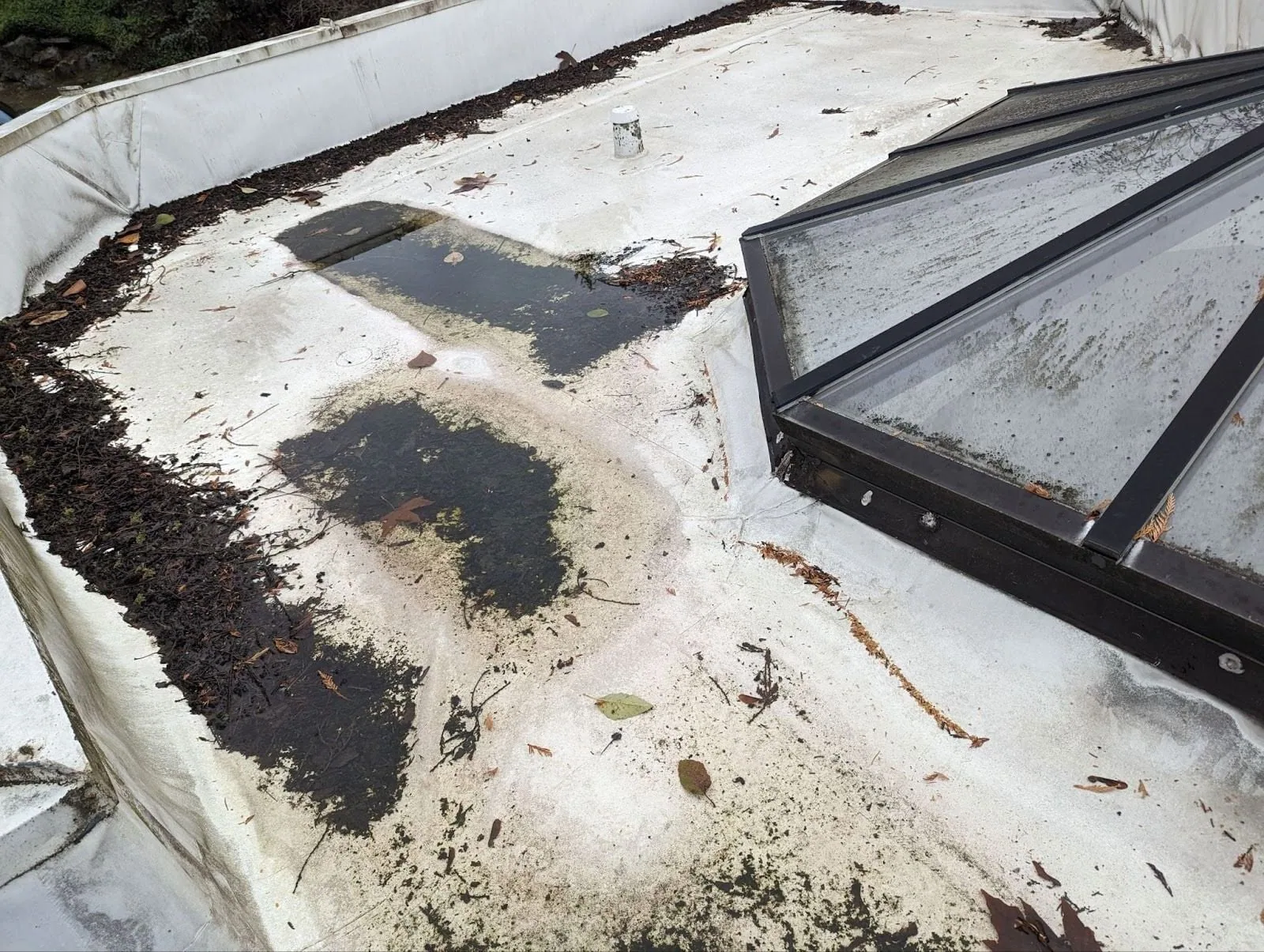
A repair begins with the water path and the material around it. We inspect seams or laps, flashing, curbs, drains, penetrations, edges, and prior patches near the reported leak. A local opening with sound surrounding material can support a defined repair. Repeated failures, widespread deterioration, wet insulation, or an unstable deck may require testing or a broader replacement review. Surface appearance alone does not establish what is concealed below.
Document each defect with a roof-zone label, photograph, dimensions where measured, and the observation that supports the proposed action. If a leak was reported inside, compare that location with accessible roof details without treating the ceiling mark as proof of the entry point. A flashing repair scope should state which transition is being corrected and what adjacent material remains. If water may have reached insulation, a moisture survey can be considered when its result would change the repair boundary.
Kent's nearby Sea-Tac climate record has a wetter cool season than midsummer, a regional reference rather than a measurement from a Kent roof. Drainage and temporary protection matter whenever work exposes an assembly during wet months. We check the actual forecast and site conditions before setting an opening limit. The proposal should explain how the work will close each day and what happens if conditions interrupt the sequence.
Near Kent Station, pedestrian routes, shared parking, and tenant access may constrain staging. In Kent Valley, loading or production schedules can affect access. Those limits change sequencing and protection, not the roof finding.
When is repair enough, and when should the scope widen?
A targeted repair is reasonable when the defect has a defined boundary and nearby materials can accept the work. The scope should name preparation, compatible materials, flashing or seam details, access, protection below, and the closeout evidence. It should also state what concealed condition would require a change order. That gives the owner a decision point if removal uncovers wet insulation or damaged decking.
When failures recur across several zones, compare repair with recover or replacement using the same known conditions. A repair proposal can address a bounded defect; a replacement estimate should state tear-off depth, new assembly assumptions, edge and drain work, equipment coordination, and disposal. A TPO system comparison can help frame a membrane choice when the existing roof record and project requirements support that discussion. We do not select by label alone. For an owner comparing records, a Carlisle SynTec file review or Johns Manville document check can use the same roof-zone evidence.
Recover work depends on the existing roof's attachment, moisture, deck condition, drainage, and compatibility with the proposed assembly. Added layers can affect edges, drains, curbs, and door or equipment transitions. If those conditions are not verified, price the investigation separately and keep its result as a scope gate. A low initial number is not useful if it omits the preparation that will make the installed work fit the building.
Replacement timing is a capital decision as well as a technical one. Show present defects, repair history, likely limits, and evidence that would move the replacement threshold earlier. Record a planned capital year as an assumption, not a remaining-life estimate. Owners can then compare immediate work with a defined review date and the cost of waiting.
How do access and operations affect the work window?
Before scheduling, confirm who can authorize roof access, whether an escort or key is required, where equipment can stage, and which parts of the site must stay clear. In Kent Valley, the operating contact may need to protect truck routes, production periods, or equipment movement. Near Downtown Kent, the building representative may need to coordinate tenant notice and visitor circulation. We put those constraints beside each work phase rather than relying on a general site note.
Rain, dew, surface contamination, and temperature can affect preparation and membrane work. The schedule should identify weather hold points and a daily dry-in boundary. If work is phased, each shift needs a closeout plan for exposed areas, materials, temporary protection, and inspection. A wet-season window may call for smaller openings or additional protection, subject to the actual forecast and building condition.
Keep the roof record current after work. Closeout should identify the zones repaired, materials installed, photographs, unresolved conditions, and any maintenance actions that remain. Preserve the estimate and authorization with the field record so another manager can tell what changed. A roof asset record can retain inspection dates and next review items; a Kent Valley service visit still needs property-specific access confirmation.
For several buildings, schedule each roof by its condition and release path. A shared manufacturer label does not make assemblies or work windows identical. Separate work orders keep completed scope tied to the approved bid.
Commercial Roofing Questions
Does a GAF label tell you which membrane is on the building?
It can point to a product record, but the label alone may not identify every roof area or layer. We compare project documents with visible conditions and note any unconfirmed section. If the designation affects repair materials or warranty handling, we ask for the supporting document before setting that part of the scope.
Can you repair a GAF-labeled roof without replacing it?
A bounded defect with sound surrounding material may support repair. We inspect the water path, adjacent seams or flashing, drainage, and any evidence of moisture below the surface. Repeated failures or widespread deterioration may justify testing or a replacement comparison instead of another isolated patch.
What changes a Kent roof repair schedule?
Access release, production or tenant hours, material staging, and the weather window can all affect sequencing. Nearby Sea-Tac normals show a wetter cool season, but current site conditions and forecast govern. The work plan should state when a roof opening will be closed and who can pause or release the next phase.
What should the bid say about hidden conditions?
It should identify the visible scope, the areas not opened, any testing proposed, and the process if removal finds wet insulation or damaged decking. Separate allowances from confirmed quantities and require approval before added work. That keeps the initial authorization tied to what the inspection actually established.
Related Roofing Work
Set the inspection against the roof record and repair window
Send the GAF-related roof documents, leak history, access contact, and decision date. We will confirm what the records identify, inspect accessible conditions, and price the next scope against the building's operating needs.