Commercial Roof Asset Management in Kent, WA
Roofing Capabilities
A roof portfolio needs a reliable answer to three questions: which building is this record about, what condition was actually observed, and what decision is due next? Asset management brings inspection findings, repair history, warranties, and capital dates into a usable record without pretending every roof is the same. Commercial Roofing Contractors Kent can inspect the listed properties, document verified conditions, and help the owner keep each next step tied to a roof zone and responsible contact.
Kent Valley contains a large industrial and distribution base, while Downtown Kent is planned for business, government, cultural, housing, and transit uses. A portfolio may span both settings and other nearby areas such as Kent Station. Those local patterns make consistent records valuable, but they do not prove a building's assembly, age, or remaining life. We start from the property address and roof information the owner can confirm.
Send the building roster, available plans, repair invoices, inspection reports, warranty documents, and the next budget date. The first deliverable is a roof record that distinguishes confirmed information from fields that still need field verification.
What belongs in a building-level roof record?
Give each property and structure its own identifier. Record roof zones, approximate area if measured, system if known, installation or repair dates only when documented, access limits, equipment locations, leak reports, and warranty information. Keep the source of each item with the record so an inherited spreadsheet does not turn an old assumption into a current fact. A roof plan should identify what was inspected, not imply that unvisited sections share the same condition.
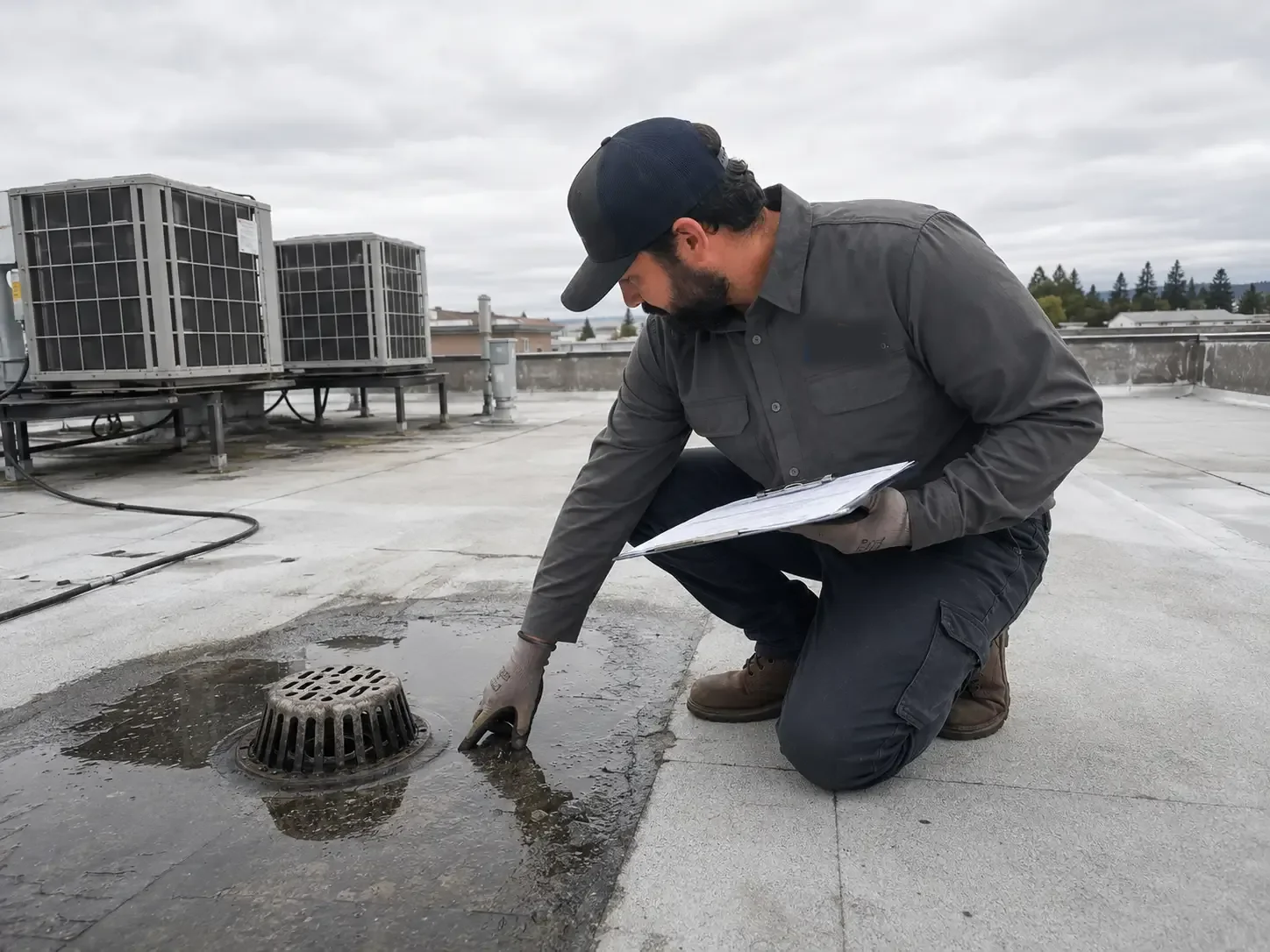
For each visit, note the inspection date, areas reached, visible defects, photographs, testing, completed work, and unresolved questions. If a tenant reports a leak, preserve the date and interior location, then compare it with the roof observation. A ceiling stain does not establish a roof entry point by itself. A photo-based condition report can support that record, while a hands-on inspection can verify accessible details.
Keep additions and separate structures distinct. A main building, canopy, office wing, and detached support structure can have different systems and access procedures. Record whether the roof boundary came from a plan, owner information, or field measurement. The next manager should be able to find the same area without interpreting an unlabeled photo or a broad property name.
How should management rank the next action?
A useful asset list distinguishes active leaks, defects that need repair, conditions being monitored, and questions that need testing. It should also identify the person who can release access or approve a change. Do not use an arbitrary score to hide uncertainty. State what observation supports the priority, what consequence it creates, and what evidence could change the recommendation.
In Kent Valley, manufacturing, aerospace, logistics, and distribution operations may make roof access and work windows part of the asset decision. A downtown property near Kent Station can have shared parking, visitors, or tenant schedules to coordinate. These uses affect timing and communication, not roof condition. Keep the operational contact and access requirement with the specific property so a portfolio-wide work order does not assume the same staging plan at every address.
When an issue needs correction, link the finding to a defined repair scope or maintenance visit. If concealed moisture may shift the repair limit, record the test location and the capital question it answers. A moisture survey can be considered when it will change a decision, not simply because it is available.
Connect condition to budget and remaining service life
Asset management supports budgeting when each recommendation is tied to evidence and timing. A recurring leak or broad deterioration may move a roof into a capital review; one local defect may remain a repair. The model should separate inspection observation, estimated remaining service life, and planned replacement year. Those are related, but a target year is not a verified condition. Update the record when new testing or removal changes what is known.
A capital view can group near-term repair work, planned testing, and larger replacements, while preserving cost assumptions by building. Access equipment, removal depth, wet insulation, drainage, equipment coordination, and occupied-area protection can change the scope. A roof capital plan can link these items to the funding cycle. For a portfolio acquisition or refinance, a due-diligence survey can answer a separate transaction question.
Nearby Sea-Tac normals show a wetter cool season than midsummer, but that is regional climate context rather than a Kent property forecast. Use current site conditions and the operator's schedule to set work windows. Keep planned exposure and access assumptions in the record so a future budget review can see whether timing still fits.
Keep the record useful as people and properties change
Assign one owner-side contact to maintain the property list and note who may approve inspections, repairs, tests, or added work. If a building changes manager or tenant, retain the prior record and identify the new operational contact. Keep proposals, approvals, work orders, photographs, warranty documents, and closeout records with the same identifier. That makes it easier to trace what was authorized and which roof area was completed.
Do not carry a finding from Kent Valley to Downtown Kent because both buildings belong to the same owner. A portfolio summary can compare timing and outstanding work; the source observation stays attached to its location. With documented site-by-site data, an owner can see missing plans, expired access contacts, open repairs, and decisions due before the next capital year.
Send the current roster, known roof history, access window, and decision date. We will identify what can be recorded now, what needs inspection, and which work order or capital question the findings support.
Commercial Roofing Questions
Can one inspection establish the condition of every building in a portfolio?
No. Findings apply to the structures and areas reached during that visit. We can use one report format across properties, but each address needs its own observations, access limits, and next action.
What if the existing roof records conflict?
Keep both entries and identify their dates and origins. We compare plans, invoices, prior reports, and accessible field conditions, then mark what remains unconfirmed. A current inspection or test may resolve a material discrepancy before the owner relies on it for a capital decision.
How does asset management help set replacement timing?
It connects current condition, repair history, testing needs, access limits, and budget deadlines. The planned year should remain distinct from the inspected condition. When new evidence changes the scope or remaining service-life estimate, update the planning assumption rather than carrying forward an outdated target.
Can the same reporting process work for Kent Valley and Downtown Kent properties?
The record structure can stay consistent while access and operating fields vary by building. Kent Valley facilities may have production or loading contacts; Downtown Kent properties can involve tenants, visitors, and shared access. We confirm each property's constraints and keep its roof findings separate.
Related Roofing Work
Start with the property roster and the next decision date
Share the building list, available roof plans, prior reports, repair history, access contacts, and budget timing. We will help establish which conditions are verified, which need inspection, and what each record supports next.