Commercial Roofing at Puyallup South Hill Commercial Core, Puyallup, WA
Service Areas
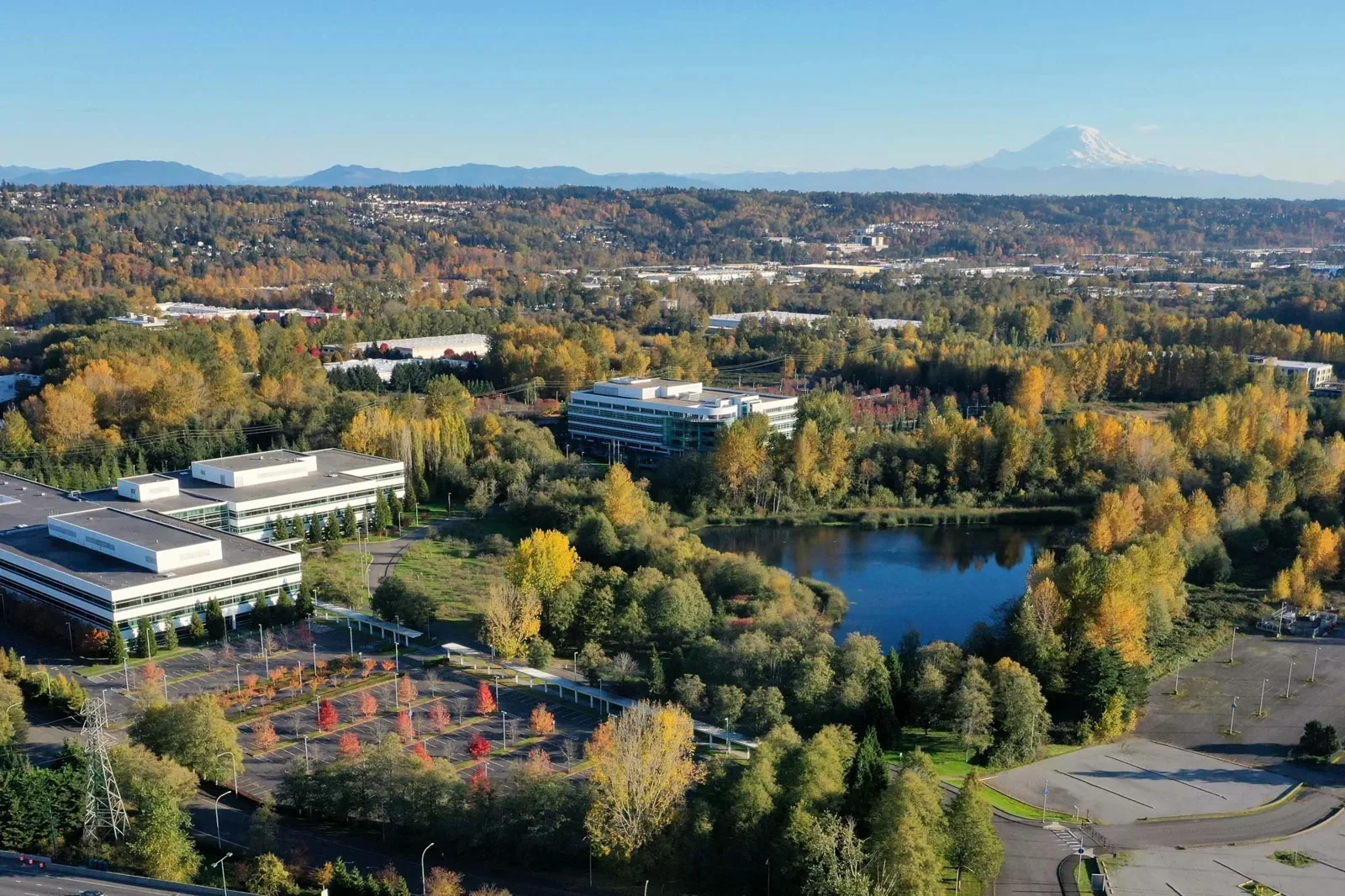
South Hill is a designated regional growth center and a major activity and employment center in Puyallup. Its commercial core includes South Hill Mall and South Meridian Street, with large-format retail alongside medical, financial, restaurant, and auto-service clusters. The wider neighborhood also includes the 92-acre South Hill Business and Technology Center, an Air Products site, and a Pierce College campus of more than 83 acres. These uses make roof access and operating coordination important questions, but they do not identify any one building's roof system.
We inspect the roof sections that can be reached, connect reported leaks with visible details, and prepare a repair, test, or renewal recommendation based on that evidence. Send the property address, roof records, repair history, access contact, and the date an estimate or condition report is needed.
Retail, healthcare, financial, restaurant, auto-service, and campus operations may have different work restrictions. Confirm tenant hours, loading routes, equipment access, and protected areas with the building manager. The mall or campus name does not establish permission to stage materials on another property's land.
What should the first South Hill inspection document?
Request roof plans, leak reports, prior repair invoices, warranty files, and records of equipment work. Map the accessible roof into separate zones. Inspect the membrane or panels, seams, perimeter details, walls, curbs, penetrations, drains, and earlier patches. Record loose edges, punctures, open joints, separated repairs, failed sealant, debris, or water indicators with dates and location references.
Ask where the water appeared indoors and whether it followed an earlier repair or equipment change. Interior staining helps direct the walk but may not align with the roof defect. Compare the report with the details above and note what remains unverified. A commercial roof inspection records visible conditions; a condition report retains findings, exclusions, and recommended follow-up for ownership.
South Hill Mall and South Meridian Street are useful orientation points for the commercial core. They do not establish a particular property's loading route or hours. Confirm access with the manager for the actual building, especially where public, clinical, classroom, or customer activity could affect the walk.
For the Business and Technology Center, the Air Products site, or Pierce College, verify the specific facility and its access authority before assuming the roof is available. If an area is locked, obstructed, or unsafe, mark it as excluded and state what access would permit another visit. Testing should be tied to a decision such as setting a repair boundary or checking suspected moisture.
How can repair work fit a mixed commercial district?
A focused repair may be suitable when inspection narrows the issue to one roof detail and surrounding material remains serviceable. Map the defect and the repair boundary, identify the approved patch system and tie-in detail, set the lift and material route, and record how the repaired section will be checked. If removal exposes a separate failure, document it and pause for approval rather than expanding the scope by assumption.
A commercial roof repair proposal should show the authorized work period, material route, debris path, and how crews will protect occupied areas. A medical office, restaurant, auto-service property, retail store, and campus building can have different requirements; the site manager should identify which entrances or activities must remain available.
Check outlets and scuppers if the reported leak is near a low point or follows ponding. A drain assessment can record visible restrictions. If moisture could extend below the roof covering, an infrared survey may help identify test points when the assembly and conditions allow it. Verify results before deciding how much material to remove.
Separate the repair quantity from an allowance for hidden damage. Identify who can approve a change and how the crew will secure the area if the shift stops. Closeout should include the building, zone, date, materials, photographs, remaining conditions, and any follow-up assigned to the owner.
When should a South Hill owner price renewal?
Recurring leaks at several details, widespread surface wear, wet insulation, or deck concerns may call for testing or a replacement estimate. Determine whether conditions repeat on one roof or across separate structures. A single penetration may need a local correction, while repeated failures can justify broader evaluation. State the evidence behind each path and the limits of the inspection.
A replacement estimate should define measurements, removal depth, assembly, insulation, attachment, edge details, drainage, penetrations, rooftop equipment, disposal, access, and interior protection. A recover requires checking the existing base, moisture, attachment, drainage, and added height at transitions. Keep pricing separated for buildings with different uses or access rules.
Project cost and schedule depend on area, removal, roof height, staging, equipment, concealed repairs, tenant protection, and available work windows. South Meridian Street and I-5 access may inform deliveries, but the property contact has to confirm the specific route and staging permission. Separate measured quantities from allowances and identify assumptions that still need owner approval.
A roof capital planning review can compare repair, testing, and replacement against a budget cycle. Keep campus, medical, retail, and service properties on their own condition records. The regional growth designation gives planning context, not a roof-life conclusion for a specific structure.
How should the work window be managed?
Choose a start after checking current conditions, roof readiness, material requirements, and the owner's access schedule. Set a daily boundary that can be closed or protected before the shift ends. Identify who will inspect the temporary cover and how an interruption will be communicated.
For phased work, specify the area opened each day, dry-in method, runoff direction, and stop point. Protect occupied space below and keep drains functioning. If rain or a tenant schedule changes the plan, pause and agree on a new sequence before expanding the exposed section.
South Hill's mix of retail, healthcare, dining, service, and campus uses means each facility sets its own operating rules. Confirm loading windows, lift clearance, parking, notices, and pedestrian protection directly with the property manager. Do not assume one property's hours apply to the next.
At closeout, list completed zones, materials, dates, photographs, authorized changes, and open items. Assign a follow-up owner for temporary protection. Schedule future inspection based on recorded conditions and the maintenance calendar.
What should the property manager provide?
Send the roof layout, warranty documents, prior findings, repair invoices, leak chronology, and rooftop-equipment changes. Name the person arranging entry and the person empowered to approve scope changes. Include tenant notice periods, operating hours, delivery rules, lift locations, and paths that must stay open.
For a leak, provide the interior location, when it began, and whether prior work changed the pattern. For a capital decision, state the deadline and whether the owner wants a repair, test, recover, or replacement price. Note whether the request concerns retail, medical, financial, dining, auto-service, campus, or other use.
Puyallup South Hill differs from nearby Sumner Town Center and the Port of Tacoma Tideflats. A Sumner Town Center inspection or Tideflats facility review must rely on that property's own records. Keep roof maps, approvals, and photos with the correct address.
Before authorizing work, check the defined zones, excluded areas, allowances, protection, and approval steps. Each recommendation should connect to a visible condition or a clearly scoped test. That allows the owner to choose a practical next step without generalizing from South Hill Mall or the campus to a separate property.
Commercial Roofing Questions
Does South Hill Mall represent every commercial building in the core?
No. The district also includes medical, financial, restaurant, auto-service, campus, and business uses. Each property needs its own roof and access review.
Does the 83-acre-plus Pierce College campus define the roof size?
Pierce College's campus acreage describes the property, not its roof surface. We measure the specific structure and identify which sections are in scope.
Can repair crews stage near South Meridian Street?
Only if the property contact approves the location and route. Street access does not grant permission to use a tenant's or neighboring property's space.
What makes a replacement estimate reliable?
Measured sections, removal limits, system details, access conditions, and clearly separated allowances provide a usable basis. Unknown conditions should remain identified as such.
Related Roofing Work
Request a South Hill commercial roof assessment
Send the building address, leak history, roof records, access requirements, and decision deadline. We will document accessible conditions and prepare a scoped next step.