
Commercial Roofing at Des Moines Marina District, Des Moines, WA
Service Areas
Commercial roof work in the Des Moines Marina District calls for attention to the building and the waterfront activity around it. The city marina has 840 wet and dry moorage slips and a public fishing pier. Nearby, the Marina District includes restaurants and boutique retail. These details help frame access and tenant coordination, but do not identify the roof construction or condition of a particular business.
Our first step is to understand the property owner's decision: address a leak, check a recurring problem, plan maintenance, or compare replacement options. We inspect accessible roof areas, document the details that matter, and define a next action tied to observed conditions. Send the property address, roof records, repair history, and the manager who can arrange access.
Des Moines also operates Redondo Boat Launch several miles south of the main marina basin. That is a separate site, with separate property rules and roof facts. Confirm whether the building is in the Marina District, near the boat launch, or elsewhere in Des Moines before setting a crew route or moving materials.
What does a Marina District roof inspection include?
Review any roof plan, leak log, repair invoices, and warranty file before walking the surface. Divide the accessible area into zones and check the membrane or metal panels, seams, edges, parapets, penetrations, curbs, drains, and prior repairs. Photograph punctures, loose terminations, open joints, failed sealant, displaced flashing, ponding indicators, and debris with dates and location references.
A report from a restaurant or retailer can point to an interior area, but water may travel before appearing below. Compare the location with accessible roof details and note any concealed area or equipment blocking the view. A commercial roof inspection records visible conditions; a roof condition report can keep photos, limitations, and next steps with the owner's maintenance records.
Public uses nearby do not establish a building's hours or access route. Ask the property manager about business schedules, delivery timing, pedestrian protection, parking, and where a lift or material may be staged. The marina's slip count and pier explain the setting, not permission to use waterfront property for roofing operations.
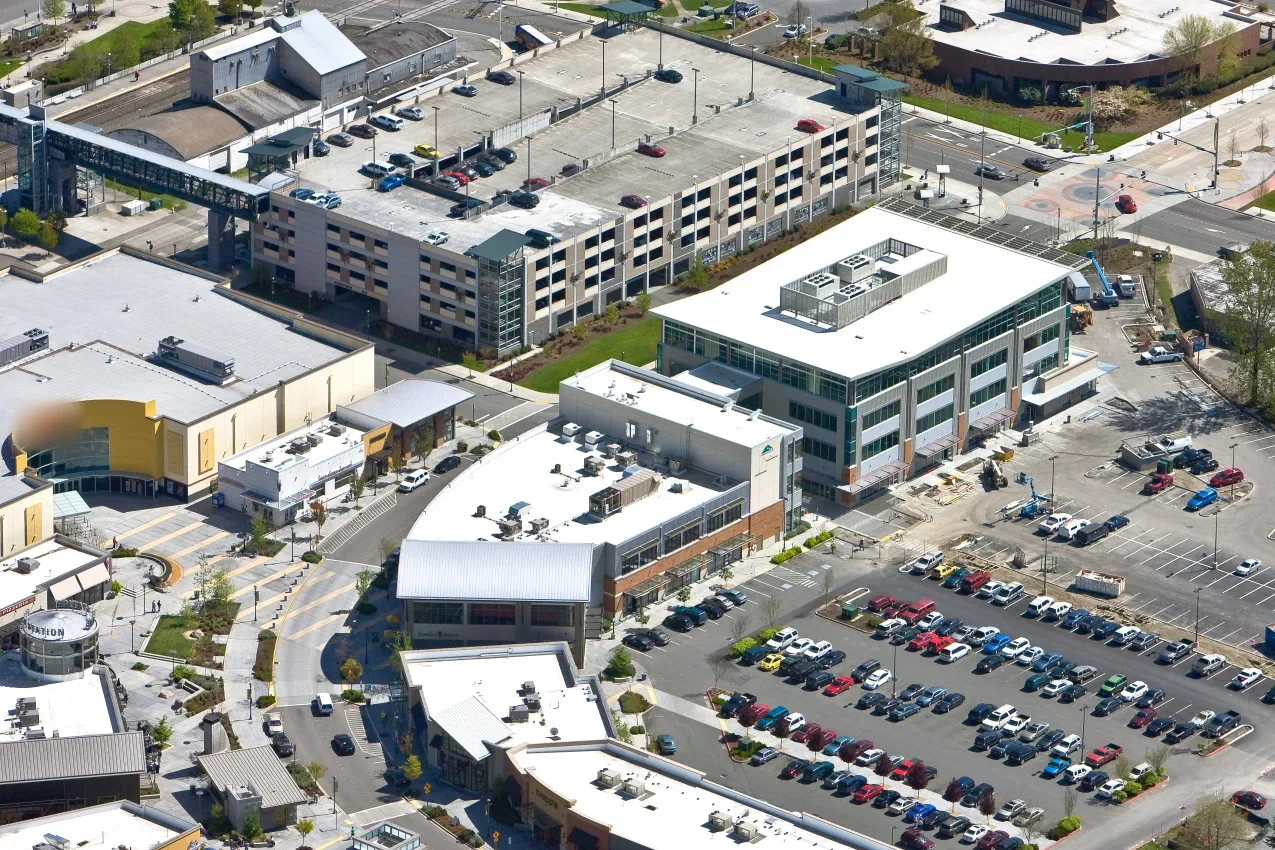
If a roof zone cannot be reached, list it as excluded and explain what release would permit another inspection. A broad image can help identify the building's outline, but hands-on review may be needed for seams, flashing, and concealed moisture. Define a test before proceeding if its result could change the repair boundary.
How can a repair fit restaurant and retail hours?
When a leak traces to a limited detail and nearby material remains serviceable, a targeted repair may be suitable. Identify the roof zone, preparation, material, flashing or seam correction, access method, protection below, and closeout check. If removal exposes a separate condition, stop at the approved boundary and document the additional finding before asking for authorization.
Plan work around the business contact's hours and route requirements. A repair proposal should state when crews arrive, where materials go, how debris leaves, and how the opening will be secured before a shift ends. Keep public approaches and any route required by the property manager clear.
Check drains and scuppers where water reports involve a low point or overflow. A drainage review describes visible obstructions. When moisture questions extend beyond the visible defect, an infrared scan can help select a confirmatory opening if the assembly supports it. Treat unverified indications as investigative leads.
Separate the defined repair from allowances for concealed damage. Show what the owner has authorized and what would require a written change. Closeout records should name the completed location, date, materials, photographs, and any area that still needs attention or a follow-up visit.
When is it time to price roof renewal?
A repeat leak, failures at several details, broad surface deterioration, wet insulation, or deck concerns can justify a wider evaluation. Check whether reports are related before assigning one cause. A repair may remain reasonable for one failed penetration, while a pattern across zones may support testing or replacement. The recommendation should explain what is known and what evidence would change the choice.
A replacement estimate should include measured area, removal, assembly, insulation, attachment, edge details, drains, penetrations, equipment, disposal, access, and interior protection. A recover depends on the existing roof's condition, moisture, attachment, drainage, and transition heights. Separate areas when they differ in construction or access.
Restaurants, retail, and waterfront access can create scheduling questions, but actual delivery and work-hour rules come from the property contact. Cost and duration also depend on roof height, staging, removal depth, hidden repairs, and the number of shifts available. Confirm whether a tenant must remain open and what entrance or service route must be maintained.
A capital planning review can put repair work and renewal options against a budget calendar. Keep the inspection date and assumptions attached to each recommendation. Do not use the marina's capacity or the separate Redondo launch as a proxy for the size, use, or condition of a nearby roof.
How should exposed roof work be sequenced?
Waterfront setting alone does not determine how long a roof can stay open. Check current conditions, product requirements, drainage, and the condition of the surface before installation. Set an opening size that can be closed or protected before crews leave, with a named person responsible for the end-of-day review.
For a multi-shift job, specify the temporary cover, runoff path, material storage, and pause point. If access or weather changes, the contractor and property contact should know which roof zones are complete and what protection is still active. Do not let temporary work block a drain or a route the owner needs.
Restaurant deliveries and retail visitors may affect timing, but the site's manager confirms actual rules. Coordinate equipment travel, material drop, debris removal, and any public-area protection before reserving a crew. The city marina's public pier is a place fact, not a staging area for a roofing project.
At turnover, log completed zones, photographs, materials, approved changes, and remaining concerns. Assign any temporary measure to a contact and a follow-up date. Set the next inspection based on observed condition, not on a general description of the district.
What should the business owner send?
Share the address, roof plan if available, previous inspections, repair invoices, warranty information, equipment records, and leak history. Note the manager who can arrange roof access and the person who can approve extra work. Include service hours, delivery periods, pedestrian paths, parking limits, and lift restrictions.
For a leak, describe where it appeared indoors, when it was first reported, and what response has already occurred. For a capital decision, provide the budget deadline and whether you need a repair, test, recover, or replacement price. The proposal should list assumptions about access or hidden conditions separately.
The Marina District and Redondo Boat Launch are distinct Des Moines locations. A Downtown Burien roof review and a SeaTac Central inspection also rely on their own building records. Keep the roof map, photos, authorizations, and maintenance history attached to the correct address.
Review the findings with the property contact before work is scheduled. Confirm that each proposed repair corresponds to a documented observation, that any excluded area is named, and that a test has a clear purpose. That gives the owner a scope suitable for an operating business without making assumptions from the waterfront setting.
Commercial Roofing Questions
Does the Marina District's slip count indicate the roof size?
No. The 840 wet and dry slips describe moorage capacity, not the dimensions or construction of a business roof. We measure the building and confirm its assembly during inspection.
Is Redondo Boat Launch part of the Marina District?
It is a separate city-operated launch several miles south of the main marina basin. Confirm the property address before applying any access or roof information.
Can roof repairs happen during restaurant hours?
That depends on the building's approved work hours, noise limits, deliveries, and route protections. We confirm those rules with the property contact and include them in the sequence.
What should I send for a replacement budget?
Roof plans, leak history, past repairs, access rules, and the decision deadline help define a measured scope. We list missing records and concealed-condition allowances separately.
Related Roofing Work
Arrange a Marina District roof inspection
Send the property address, repair history, leak locations, roof records, and business access rules. We will document visible conditions and outline the next step supported by the inspection.