Auto Dealership Roofing in Kent, WA
Property Types We Roof
A dealership can have a showroom, service bays, parts storage, offices, and outdoor vehicle display under different roof conditions. A leak above the sales floor raises one set of concerns; water near lifts, electrical equipment, or service operations creates another. Commercial Roofing Contractors Kent can inspect the reported areas and tie each recommendation to visible conditions, access needs, and the dealership's operating schedule.
For a site review, provide the address, roof plans, prior repairs, leak locations, and a contact who can coordinate with sales and service leadership. Mark showroom hours, customer routes, vehicle staging, service-bay access, parts deliveries, rooftop exhaust, and any equipment another contractor operates. Kent Station is a mixed-use retail and services center at Ramsay Way, served by Sound Transit's Sounder S Line. The Kent Valley Manufacturing and Industrial Center links the area to aerospace and distribution businesses. Those local transportation and business patterns can inform site questions, but dealership access and delivery practices must be confirmed at the property.
We inspect what is accessible and distinguish roof findings from mechanical or interior conditions. The bid should state which sections are covered, what protection is included, and what additional investigation would change the recommendation.
Keep customer routes and vehicle movement in the sequence
Vehicle display and service operations can make staging more constrained than the roof footprint suggests. Identify where a lift can set up, which parking stalls or drive lanes must remain open, and how customers reach the showroom and service counter. Confirm delivery times for new vehicles and parts, plus any space reserved for test drives or service pickup. These details help locate material drops without creating an avoidable conflict with dealership circulation.
Before crews arrive, the site contact should confirm roof access, escort needs, keys, security procedures, and any restrictions above the service floor. If a phase sits over an active customer area, management can choose whether to adjust hours or move activity. We describe the work zone and roofing controls in the bid; the dealership remains responsible for its own customer notices and business decisions unless a communication task is explicitly assigned.
Some roof work can proceed by section, but each phase needs a safe stopping point and a weather-protection plan. If vehicle operations occupy a portion of the building overnight, identify the expected condition of the roof at the end of each shift. The schedule should also name who can approve a change if a hidden condition or delivery conflict alters the sequence.
Inspect around exhaust, signage, and service equipment
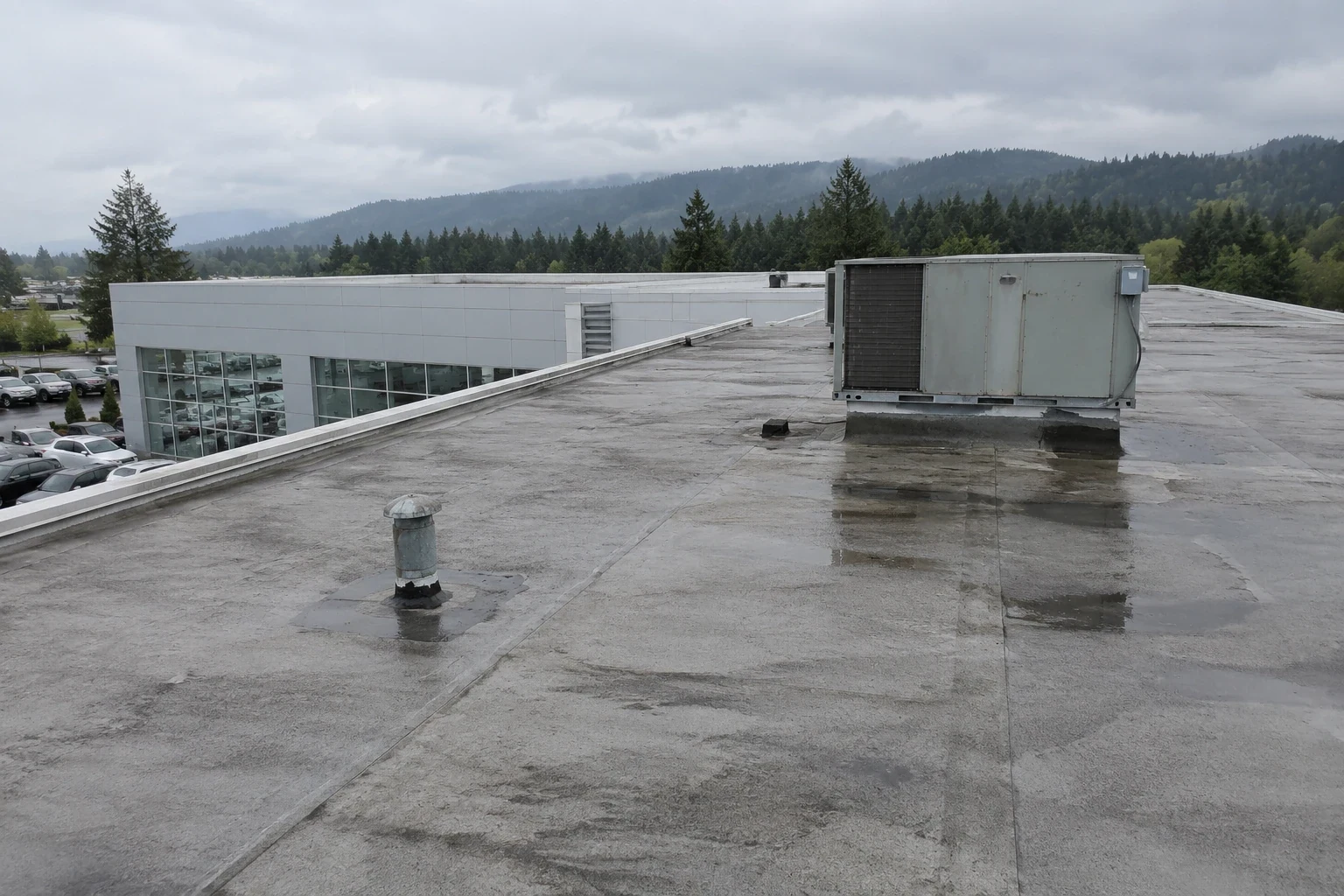
Service departments may have exhaust fans, ventilation equipment, rooftop units, piping, and electrical routes that interrupt the roof surface. Showroom buildings may also carry signs or architectural features at edges and parapets. We inspect visible flashing, curb corners, seams, fasteners, penetrations, and drainage near the reported issue. An equipment unit beside a stain is not proof that it caused the leak; the water path and roof detail need to be compared.
If an HVAC or exhaust unit must be moved or shut down, the dealership should identify the qualified trade that controls it. The roofing scope can state when access is needed, whether a curb or support detail is part of the work, and how the opening will be protected during coordination. Do not leave the responsibility for equipment startup, electrical isolation, or exhaust balancing implicit in a roof proposal.
A roof map can separate showroom, service, parts, and office areas where plans or construction records show different assemblies. If there is no plan, the inspection can document visible transitions and any uncertainty. The report should also distinguish observable water entry from possible condensation or plumbing conditions inside the building. That prevents a roof repair from being used to address a symptom whose cause has not been established.
Price the repair footprint and any replacement phases
A localized defect can support a repair when the surrounding assembly remains suitable. If water calls recur across multiple bays, the roof shows widespread wear, or earlier patches have not held, compare a broader project. The recommendation should identify the evidence and roof boundaries. Separate service-bay and showroom sections when they have distinct conditions or access assumptions; that lets ownership compare a focused repair with phased replacement without mixing different work areas.
For repair, state the location, preparation, repair method, access, and limitation on concealed conditions. For replacement, define roof area, removal depth, insulation and deck assumptions, edge and penetration details, equipment coordination, drainage, vehicle protection, and traffic controls. The cost drivers should be visible in the scope, including number of mobilizations, lift access, work hours, and temporary protection. If an allowance is used for deck repair, describe how quantities will be confirmed and approved.
Kent's nearby Sea-Tac normals indicate a wet season from fall through winter and a drier July and August. Those are regional climate normals, not the forecast over a dealership roof. Schedule open-roof work using current conditions and the facility's operating calendar. After checking the assembly and drainage, ownership can review a recover option alongside a full replacement scope.
Keep repair records connected to the building plan
Set a project contact who can approve access, receive progress notes, and authorize scope changes. During work, log each zone completed, temporary protection, equipment handoffs, weather interruptions, and newly exposed conditions. If the field condition differs from the bid, pause at the stated decision point and present the finding before performing added work. That gives the owner a record tied to the approved scope.
At closeout, identify completed sections, provide the agreed photos, note open maintenance items, and state which areas were excluded. Retain the information with leak calls, equipment service records, and roof plans. A later inspection can then distinguish a repaired service-bay detail from a showroom section that was never part of the project. If a roof condition is still uncertain, keep that question visible in the property file.
Related scopes include big-box retail roofing, flex-industrial roofing, and office building roofing. Roof work may involve equipment curbs and supports, commercial roof inspection, or edge-metal and gutter details. Near Kent Station, confirm roof access and staging with the property contact before work begins. Share the building plan, service schedule, repair history, and access window to define a useful first inspection.
Commercial Roofing Questions
Can roof work happen over an active service department?
The work area, vehicle routes, equipment, and safety controls determine whether that sequence is workable. We can define roof zones and access needs for dealership review. Service leadership should confirm which bays can be released and whether exhaust or mechanical equipment needs a separate contractor present.
Do leaks near a rooftop exhaust fan come from the fan curb?
The curb is one possible entry point, but nearby seams, flashing, penetrations, or a displaced water path may also matter. We inspect the roof details and compare them with the interior report. If equipment service is indicated, the proposal should separate that trade's scope from roofing work.
How can a dealership keep customers away from a work zone?
Management can identify display areas, customer paths, parking, and service pickup lanes that cannot be blocked. We can show staging and roof access needs on the work sequence so the site contact can arrange temporary routes and notices. The actual controls depend on the property's layout.
What records support a decision between repair and replacement?
Use a roof plan, dated leak calls, invoices, inspection photos, and equipment service history. We compare those records with the condition found at each roof zone. A proposal should name the defects, repair boundaries, and any testing that would change the replacement threshold.
Related Roofing Work
Set the roof review against sales and service hours
Send the roof plan, leak record, service-bay schedule, delivery windows, equipment list, and access instructions. We will inspect the reported areas and define repair or replacement options by roof zone.