Commercial Roofing for Public Agencies in Kent, WA
Industries We Serve
A public roof project needs a record that supports both a building decision and a procurement file. The facilities team may need to respond to a leak, compare repair with replacement, or create a defensible capital request. Commercial Roofing Contractors Kent can inspect authorized areas, describe visible conditions, and separate verified findings from assumptions that need testing or owner direction.
Kent City Hall and the Kent Public Works Operations Campus serve different public functions and have distinct facility contacts. Kent Valley also includes industrial employment areas, while the city's downtown and Kent Station combine civic, retail, and service uses. These named places help orient a service request, but they do not establish roof age, construction, condition, or access permissions. The agency should provide the property address, building identifier, owner contact, and work authorization before the visit is scheduled.
Start with the asset list, roof plans, prior bids, maintenance logs, leak records, warranty information, and the anticipated funding or procurement date. We can define a limited diagnostic scope separately from bid documents or construction, so an inspection does not imply a project award or substitute for the agency's procurement process.
Make the scope measurable before it is priced
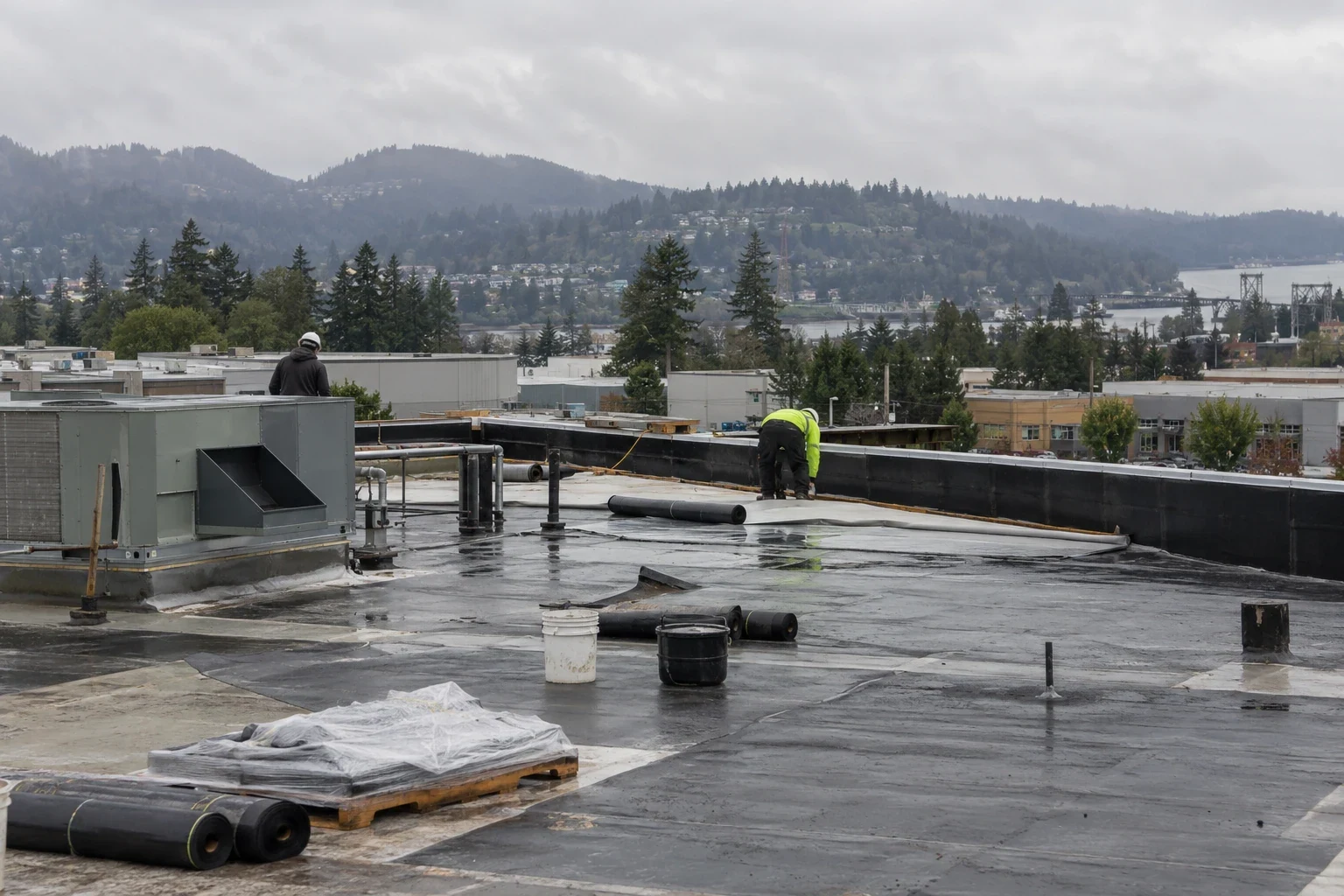
A request for pricing should identify which buildings and roof zones are included, what information the agency will provide, and what the contractor must verify. Record roof dimensions if available, but state whether a field measurement is required. Include access restrictions, occupied hours, security screening, staging, disposal expectations, and any environmental or building documentation that affects the work. If more than one facility is included, give each one a separate identifier and condition record.
For repairs, define the known defect, expected preparation, repair detail, approximate footprint, and treatment of concealed damage. For replacement, state whether tear-off, new insulation, deck repairs, drainage work, edge metal, equipment work, and temporary protection are included or priced as allowances. Avoid asking bidders to infer one another's assumptions from a single lump sum. A roof condition report can establish a common description of observed issues before the agency releases a construction bid.
Questions that affect scope should be answered in the procurement record and distributed consistently. If a site walk is mandatory, identify the contact and the route. The agency controls access and procurement decisions; the roofing team can describe technical conditions and clarify its proposal. A multi-property coordination approach may help track buildings, but public facilities still need their own approval and contracting rules.
Coordinate service around public access
Before work, the facility contact should identify public entrances, staff access, delivery routes, emergency access, restricted rooms, and hours when noise or staging must be limited. A city office, library, maintenance building, and public works site can each have different operating constraints. Confirm who can authorize roof entry, issue keys or escorts, and approve a change if the crew encounters a condition outside the bid.
Where a building remains open, divide the work into clearly marked roof zones and identify any area below that needs protection. The agency should advise occupants and manage public routes; the contractor should state the crew's work area, material movement, and expected duration. If a weather change or concealed condition requires a pause, document which area was made safe and what decision is needed to resume.
For Kent City Hall or a Kent Public Works facility, do not assume that access arrangements at one property apply to another. Provide current security and safety instructions for each address. We can include an access and staging plan in the proposal and confirm it with the designated contact before mobilization. Related occupied-building phasing can describe sequencing, while the scope should still identify who manages notices and interior operations.
Preserve evidence for the next budget cycle
Public owners benefit from reports that show how a recommendation follows from an observation. Use dated photographs, roof-zone labels, a description of visible seams and transitions, and a list of areas that were inaccessible. If a test opening or moisture survey is proposed, state the question it answers and where the result applies. One opening is evidence about one point, not every roof area on the property.
Keep repair invoices, warranty correspondence, inspection findings, test results, bids, approvals, and closeout photos under the same asset number. When concealed deck or insulation damage appears, pause at the contract's decision point, document the condition, and obtain authorization for added work. The record should distinguish included work from an allowance, change, or owner-directed exclusion. This makes later review clearer for facilities, procurement, finance, and auditors.
The airport station's historic data gives a regional view of seasonal weather, but the agency's calendar and current forecast govern a project window. Review both before each exposed-work phase. A capital planning review can place confirmed needs into a funding sequence without assuming that a regional average predicts a particular roof's performance.
Choose the right next step without pre-judging the roof
A small, well-defined leak may be handled as a repair when the surrounding material is sound. Several unrelated failures, repeated emergency calls, or broad material deterioration may justify a condition assessment or replacement comparison. A useful recommendation explains its basis and limitations. Building use, age, or a neighboring property's result should not substitute for an inspection of the roof under consideration.
For a repair, the agency should know the access needs, work limits, expected protection, and any conditions that change price. For a larger program, compare the structures and phases individually, including roof area, assembly assumptions, drainage, penetrations, equipment coordination, deck allowance, disposal, and warranty requirements. If drawings are unavailable or roof access is limited, list that gap as an assumption instead of presenting an unverified quantity as fact.
Public agencies can also coordinate vendor review with general contractors when roof work is part of a larger project. A roof at a civic property near Downtown Kent needs its own access and staging plan; industrial buildings in Kent Valley have different roof and operating constraints. Send the asset list, procurement timeline, record set, access rules, and decision contact to define a practical starting scope.
Commercial Roofing Questions
Can an inspection be used as a public bid specification?
An inspection documents observed conditions and limitations. Whether it is adequate for procurement depends on the agency's requirements and the project's scope. We can prepare a condition record or discuss additional measurements and details, while the agency determines its bid and contracting process.
What should an agency include in a roofing request for proposals?
Identify buildings and roof zones, available drawings, access requirements, work hours, known leaks, testing expectations, disposal, protection, and how concealed conditions will be handled. State whether bidders should measure, include allowances, or provide alternates so offers can be compared on consistent assumptions.
How are concealed conditions handled during a public project?
The contract should define a stop point, documentation, pricing basis, and approval authority. If removal exposes a condition outside the stated scope, record its location and evidence, then obtain the required agency direction before proceeding with added work.
Can work be phased around a public building that remains open?
Often, if the owner approves access, staging, public routes, and work windows. We can describe roofing zones and sequencing. The agency remains responsible for occupant notices and facility operations, and both parties should agree how weather or unexpected conditions affect the phase.
Related Roofing Work
Build a clear, reviewable facility scope
Share the building list, available roof plans, prior maintenance records, procurement schedule, site-access rules, and the person authorized to direct work. We will identify observed conditions, assumptions, and next steps for agency review.