
Commercial Roof Warranty Management in Kent, WA
Roofing Capabilities
A warranty document helps only when the owner can identify the covered roof, find its terms, and show what maintenance or repair has occurred. We help organize the roof record, inspect accessible conditions, and document work in a way that can be matched to the building and system. The issuer decides coverage. We document accessible conditions and completed roofing work, then provide those observations for the property's warranty record.
Kent Valley includes manufacturing, aerospace, logistics, and distribution properties, while Downtown Kent includes civic, business, cultural, housing, and transit uses. A portfolio that includes Kent Station may also have a property manager, tenant, and owner involved in roof access. These settings affect who receives notices and records, not the terms of an individual warranty. Keep the issuer, property, system, and roof area clearly identified.
Send the warranty document, roof plan, service history, prior repairs, inspection dates, and any open leak report. We can help identify missing maintenance records and the next action the owner should confirm with the issuer.
Which terms should the asset file preserve?
Keep the full issued document, amendments, system description, covered property address, effective date, issuer contact, and any stated inspection, maintenance, or notice requirements together. Do not rely on a sales proposal or product brochure as a substitute for the actual warranty. If the roof was altered, repaired, coated, or fitted with new equipment, preserve the scope, installer record, approval, and completion photos for that work.
Record the roof areas covered and any exclusions or limits stated in the document. A main building and a detached canopy may not share the same assembly or paperwork. If an address or owner name changed, retain the transfer or issuer correspondence with the original file. Roof asset records can keep these identifiers aligned, while a condition report can document accessible findings and limitations on a specific visit.
Copy any system, product, installer, or claim identifiers exactly as they appear in the issued record. If a field is blank or unclear, flag it for follow-up instead of completing it from memory. That small control helps an owner match a service request to the correct warranty and avoids applying a roof detail from one building to another.
When the warranty language calls for notice or a particular form, follow the issuer's actual instructions and deadlines. We can provide dated photographs and descriptions of roof conditions, but the owner remains responsible for submitting notice and obtaining a coverage response.
How can routine work support the record?
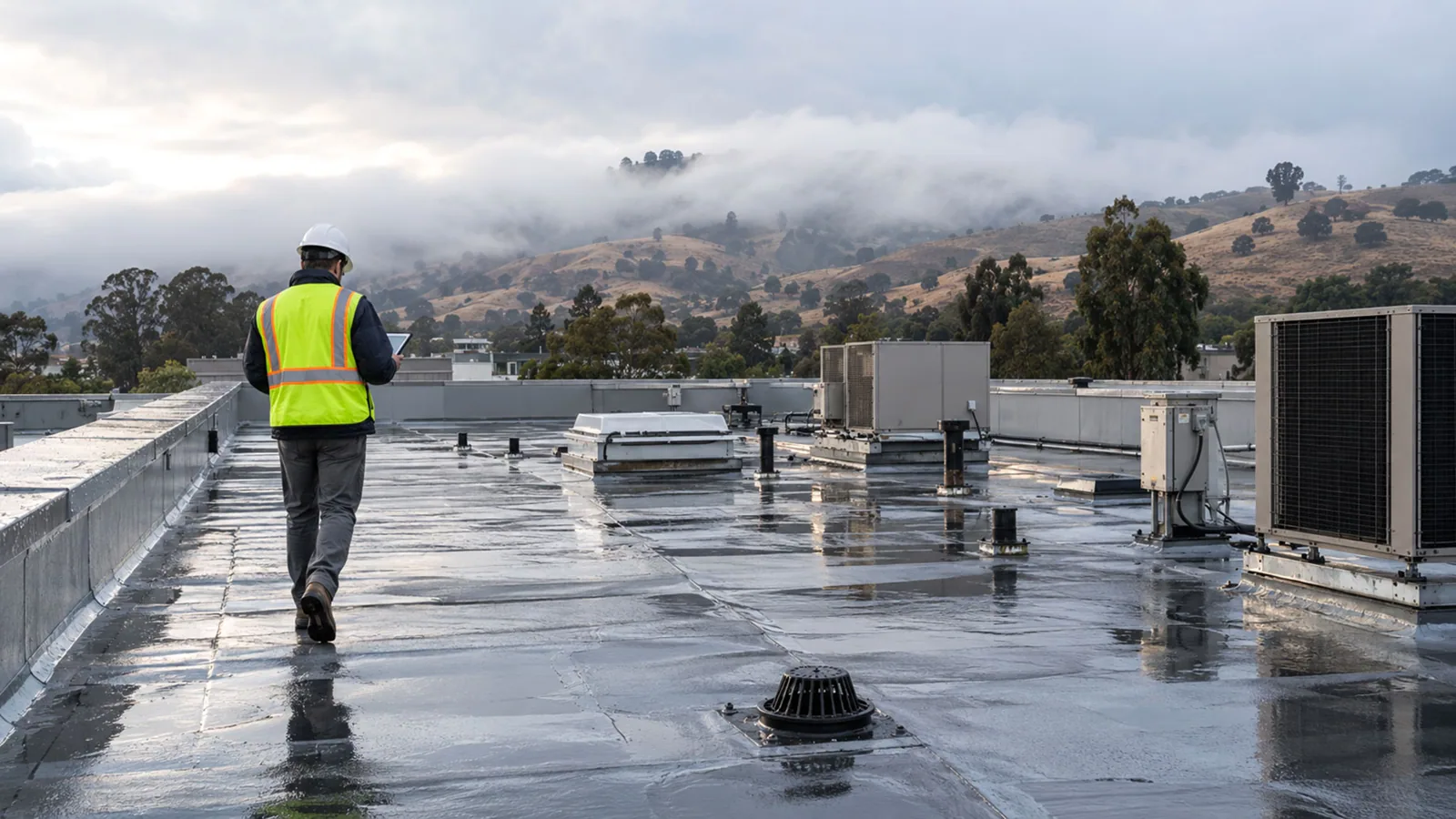
Match each inspection to the covered roof area and date. Record drains, seams, flashings, curbs, penetrations, prior patches, and any visible damage, then attach photos with labels that can be found later. Keep completed repairs distinct from recommendations still awaiting approval. If a maintenance visit found an area inaccessible, note it rather than treating the whole roof as checked.
Nearby Sea-Tac normals show more precipitation during the cool season than midsummer. That regional pattern can inform a review calendar, but the warranty does not become valid or invalid based on a climate average. Use the property's terms, roof condition, and actual weather when scheduling maintenance. A preventive maintenance visit can document accessible details, and a roof inspection can address a reported condition that needs a separate review.
At a Kent Valley facility, coordinate with the operator before roof access or equipment work. Near Kent Station or in Downtown Kent, confirm the building's property contact and shared access rules. The field record should identify who released access, what zone was examined, and what action was completed.
What should happen when a leak or repair is reported?
Log the date, interior location, whether water is active, and the roof zone if known. Compare the report with prior repairs and warranty terms before changing the assembly. If urgent protection is needed, document the area covered, materials used, and what remains open. Do not delay an active safety or water-protection response while searching for paperwork; preserve the record as soon as practical.
Before cutting, coating, recovering, or replacing part of a covered roof, determine whether the document requires notice, inspection, or written approval. We can describe the proposed work and provide supporting photos or details. The issuer determines whether the work affects coverage. A defined repair scope should identify preparation and materials, and a replacement estimate should state any assumptions about existing warranty conditions without promising a particular result.
If the roof has multiple systems or repair dates, keep a separate record for each area. The Kent Valley industrial inventory and Downtown Kent's mixed-use properties do not create a uniform warranty process. Follow the document issued for the actual address and system.
Keep coverage records intact through ownership changes
When ownership, property management, or a tenant contact changes, hand off the original warranty, roof plan, service log, open claims, and issuer correspondence. Identify who may authorize inspections and who sends required notices. If documents are missing, mark that gap and request a copy from the issuer or prior owner. Do not reconstruct a warranty term from an invoice or an informal note. Record the handoff date and name the person responsible for retaining the file.
For a portfolio, use one document index but retain site-specific files. Kent Station and a Kent Valley industrial property can have different building identifiers, roof access, and owners. The common index should make those differences clear rather than merge files by company name. A multi-site roof program can coordinate inspections while keeping each warranty and work history attached to its building.
Share the warranty, roof record, recent service documents, access window, and decision date. We will organize the roofing evidence the owner needs to review and identify what still requires direction from the warranty issuer.
Commercial Roofing Questions
Can a roofer confirm that a manufacturer warranty is still valid?
The issuer makes that determination under the document it issued. We can inspect accessible conditions, organize repair records, and describe proposed work, but only the issuer can confirm coverage or effect of an alteration.
What records should be kept after a roof repair?
Keep the approved scope, date, roof-zone location, materials, photographs, change approvals, and any correspondence required by the warranty. Attach the records to the covered building and system so the next inspection can find them.
Should the owner notify the issuer before making a repair?
Check the actual warranty for notice, inspection, and approval requirements. If water or safety needs immediate protection, document the condition and temporary action, then follow the issuer's process as soon as the situation allows.
How should warranty records transfer to a new property manager?
Provide the full document, amendments, roof plan, inspection and repair history, open notices, issuer contacts, and approval responsibilities. List missing items so they can be requested instead of treating an incomplete file as complete.
Related Roofing Work
Send the issued document and the roof service history
Share the warranty, roof plan, inspection dates, repair records, and the next decision deadline. We will organize roofing observations and identify what the owner should confirm with the issuer before authorizing work.