
Apartment Roofing in Kent, WA
Property Types We Roof
An apartment roof serves more than the top floor. It protects occupied units, corridors, laundry or amenity spaces, and building systems that residents depend on every day. A roof leak can prompt several reports for one condition, or one report may represent a different issue from the one next door. Commercial Roofing Contractors Kent can inspect the reported areas, document what is visible, and give ownership a written basis for repair, maintenance, or replacement decisions.
For an initial review, provide the property address, roof plans, prior repairs, dates and locations of water entry, and the contact authorized to arrange access. Include occupied-unit constraints, resident notice requirements, quiet hours, parking rules, roof-entry procedures, and any rooftop equipment with a separate service provider. Downtown Kent is planned for a dense mix of businesses, government, culture, housing, and transit. Kent East Hill is another distinct residential and commercial area in the city. Those local places provide context, while the property's own access policies and work windows must come from its manager.
We do not assume that the ceiling stain marks the roof opening, or that an older roof automatically needs replacement. The inspection should state what was observed, what remains concealed, and what next step would resolve a material uncertainty.
Coordinate resident notices, entry, and common areas
Before a site visit, confirm how the management team handles resident notifications and whether an escort is needed for roof access. Identify stairwells, roof hatches, locked mechanical rooms, balconies, and other access points that may pass through occupied or controlled areas. Mark common areas that should remain clear, including parking, walkways, fire lanes, and entrances. These rules vary by property, so the manager's instructions should shape the visit and work sequence.
Leak reports are easier to compare when each one includes the unit or common-area location, date, photographs, whether the condition is active, and any prior interior repair. Avoid sharing resident information beyond what is needed to locate and investigate the condition. If an occupied unit must be entered, management should arrange notice and access under its own procedures. The roofing scope can describe roof-side work and any interior coordination specifically included, without assuming responsibility for resident relations or repairs outside that scope.
For larger properties, roof sections may cover different buildings, wings, or additions. Ask whether plans identify separate roofs or whether past repair records distinguish them. A roof map can connect each reported location to the relevant section and help prevent a building-wide conclusion from being drawn from one isolated leak. If the initial visit cannot safely reach an area, list that limitation and discuss a follow-up access plan.
Follow the water path and document visible roof details
Water can travel along a roof deck, insulation joint, pipe, or structural member before it appears on an apartment ceiling. A stain near an exterior wall or bathroom may also involve plumbing, ventilation, or condensation. We compare the timing and location of the report with roof-side observations and repair history. Dated photos and a simple floor-plan mark help distinguish separate symptoms and identify whether a prior repair is in the same area.
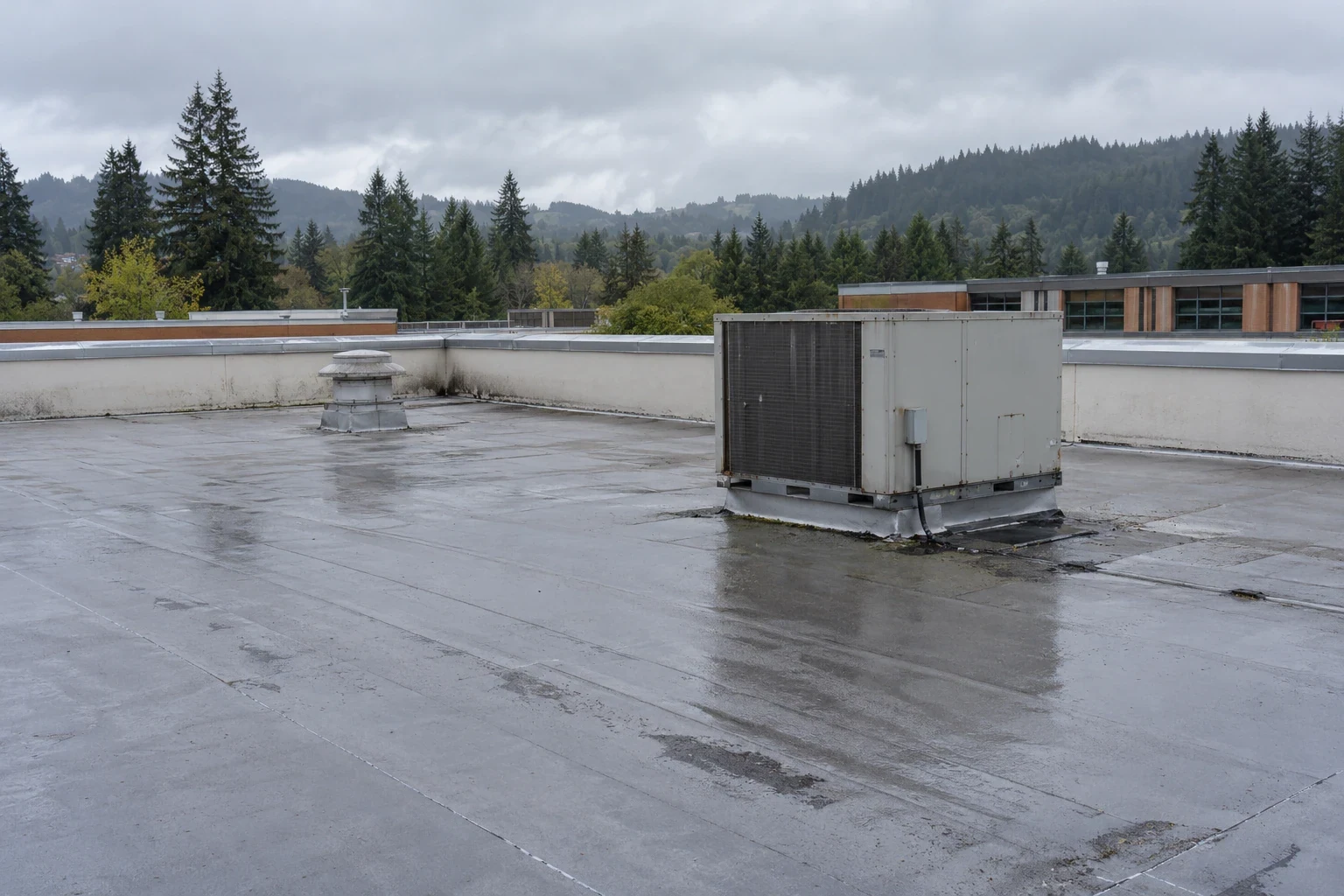
On the roof, document visible membrane or panel condition, seams, penetrations, flashing, equipment curbs, edges, and drainage details associated with the reports. Note any temporary patches or visibly altered areas. If the assembly is covered or an area cannot be accessed, say so. A visual visit cannot confirm concealed moisture or every layer of the roof. If testing or selective opening is recommended, explain which question it can answer and where it would occur.
A property with multiple buildings may have different roof assemblies and service histories. Keep findings separated by building or roof zone when possible. This lets ownership decide whether a repair should address one section, whether another area needs its own inspection, or whether a capital review should compare multiple roofs. The report should not merge distinct structures into one condition statement simply because they share an address.
Compare immediate correction with planned replacement
When inspection finds a localized defect and the surrounding roof remains suitable for repair, targeted work may address the immediate concern. Repeated leaks, widespread wear, failing transitions, or a history of short-lived patches can support evaluating a larger scope. The proposal should explain which observations lead to the recommendation and identify the areas included. For a multi-building community, separate scopes can help ownership prioritize work without confusing one building's needs with another's.
A repair document should state the location, visible defect, work method, access assumptions, and relevant limitations. Replacement planning should identify roof boundaries, assembly assumptions, preparation, penetrations and edges, drainage, temporary protection, and how work will be phased around residents. State what happens if concealed damage is found and who may authorize added work. If apartment operations require notice or access controls, include those conditions in the schedule assumptions for management to confirm.
Keep a roof file with plans, dated inspection notes, resident leak tickets, repair invoices, photographs, warranty records, and closeout documents. A recurring review can help ownership see whether problems are increasing or remain isolated. Any maintenance interval should be based on roof type, site conditions, records, and the contractor's findings rather than a one-size-fits-all calendar.
Keep project updates and maintenance records usable
Name the property representative who can approve access, receive updates, and authorize changes. Confirm resident notice practices, quiet hours, parking, staging, and the way active leaks are reported. If another trade must handle rooftop equipment or a building system, identify that party and responsibility before the project begins. A phased plan can show roof zones, access paths, protection, and items still open after each stage.
During work, note completed areas, temporary measures, changed conditions, and any schedule adjustment. If a concealed condition changes the scope, present the location and available options to the authorized decision-maker before performing additional work. At closeout, provide the agreed photographs and documents, identify any remaining maintenance observations, and state whether a follow-up review is recommended. That gives the manager a reliable record for residents and future planning.
An apartment roof may share access concerns with hotel roofs, senior living roofs, and office roofs, but each property needs its own condition record. A reroofing sequence for occupied apartments can define resident routes and protection; roof maintenance can track recurring conditions between projects. A commercial roof inspection near Kent East Hill still begins with the building's leak log, roof map, and access rules.
Commercial Roofing Questions
How should apartment managers prepare for a roof inspection?
Gather roof plans, prior reports, leak tickets with dates and locations, repair invoices, access instructions, and resident-notice procedures. Identify separate buildings or roof sections and name an on-site contact. If access to an occupied unit or controlled room may be needed, management should arrange it through its normal process.
Can roof work be phased by building?
Often, if roof boundaries and transitions allow a safe sequence. The inspection can identify separate assemblies and conditions, after which the proposal can describe each phase, access needs, and temporary conditions. Management should confirm resident notice, parking, and scheduling limits for each building.
Does every ceiling stain mean water came through the roof?
No. Plumbing, ventilation, condensation, and other conditions can produce interior moisture, and roof water can travel before it becomes visible. We compare the report with roof observations and relevant records. If the source is not established, the report should identify the uncertainty and any useful next investigation.
Who contacts residents during roofing work?
The property manager should confirm and handle resident notices under the property's procedures unless the contract assigns a specific communication task to the roofing team. The roofing scope can provide work locations and timing for those notices, and name the project contact for new roof-related reports.
Related Roofing Work
Connect building access rules with roof findings
Send the property address, roof records, leak tickets, building map, resident notice practices, and access constraints. We will inspect the reported areas and return a written scope that identifies conditions, limitations, and next steps.